Lin Li, Xin Zhang, Jiayao Yan, Jingyi Guo, Fangcen Liu, Xiao Wei, Qin Liu, Kongcheng Wang, Baorui Liu
{"title":"肺、头颈部和食道鳞状细胞癌的一组癌睾丸抗原:对生物标志物和治疗靶点的意义。","authors":"Lin Li, Xin Zhang, Jiayao Yan, Jingyi Guo, Fangcen Liu, Xiao Wei, Qin Liu, Kongcheng Wang, Baorui Liu","doi":"10.1007/s12672-025-01804-z","DOIUrl":null,"url":null,"abstract":"<p><p>This study aims to investigate the expression of seven cancer testis antigens (MAGE-A1, MAGE-A4, MAGE-A10, MAGE-A11, PRAME, NY-ESO-1 and KK-LC-1) in pan squamous cell carcinoma and their prognostic value, thus assessing the potential of these CTAs as immunotherapeutic targets. The protein expression of these CTAs was evaluated by immunohistochemistry in 60 lung squamous cell carcinoma (LUSC), 62 esophageal squamous cell carcinoma (ESCA) and 62 head and neck squamous cell carcinoma (HNSC). The relationship between CTAs expression and progression-free survival (PFS) was assessed. PD-L1 expression and tumor-infiltrating lymphocytes were also collected and correlated with CTAs expression. The prognostic impact of CTAs gene expression was evaluated using the Kaplan-Meier Plotter website. CTAs expression was 0-48% in ESCA, 3%-77% in LUSC, and 3%-71% in HNSC. Analysis of PFS showed that MAGE-A1 expression in HNSC (**p < 0.01), PRAME in LUSC (p = 0.008, **p < 0.01), MAGE-A10 (p = 0.012, *p < 0.05) and PRAME (p = 0.021, *p < 0.05) in ESCA were significantly correlated with PFS. In all three cancers, coexpression of three CTAs was used as a cutoff value for grouping, and the results showed a significant difference in PFS between these two groups. Moreover, CTAs expression was significantly correlated with PD-L1 expression and T cell infiltration. These findings indicate a high incidence of CTA expression in HNSC, LUSC and ESCA, which was correlated with PD-L1 expression, T cell infiltration, and tumor progression. The results suggest that cancer testis antigens could be feasible vaccine targets in squamous cell carcinoma.</p>","PeriodicalId":11148,"journal":{"name":"Discover. Oncology","volume":"16 1","pages":"88"},"PeriodicalIF":2.9000,"publicationDate":"2025-01-26","publicationTypes":"Journal Article","fieldsOfStudy":null,"isOpenAccess":false,"openAccessPdf":"https://www.ncbi.nlm.nih.gov/pmc/articles/PMC11769918/pdf/","citationCount":"0","resultStr":"{\"title\":\"A panel of cancer testis antigens in squamous cell carcinoma of the lung, head and neck, and esophagus: implication for biomarkers and therapeutic targets.\",\"authors\":\"Lin Li, Xin Zhang, Jiayao Yan, Jingyi Guo, Fangcen Liu, Xiao Wei, Qin Liu, Kongcheng Wang, Baorui Liu\",\"doi\":\"10.1007/s12672-025-01804-z\",\"DOIUrl\":null,\"url\":null,\"abstract\":\"<p><p>This study aims to investigate the expression of seven cancer testis antigens (MAGE-A1, MAGE-A4, MAGE-A10, MAGE-A11, PRAME, NY-ESO-1 and KK-LC-1) in pan squamous cell carcinoma and their prognostic value, thus assessing the potential of these CTAs as immunotherapeutic targets. The protein expression of these CTAs was evaluated by immunohistochemistry in 60 lung squamous cell carcinoma (LUSC), 62 esophageal squamous cell carcinoma (ESCA) and 62 head and neck squamous cell carcinoma (HNSC). The relationship between CTAs expression and progression-free survival (PFS) was assessed. PD-L1 expression and tumor-infiltrating lymphocytes were also collected and correlated with CTAs expression. The prognostic impact of CTAs gene expression was evaluated using the Kaplan-Meier Plotter website. CTAs expression was 0-48% in ESCA, 3%-77% in LUSC, and 3%-71% in HNSC. Analysis of PFS showed that MAGE-A1 expression in HNSC (**p < 0.01), PRAME in LUSC (p = 0.008, **p < 0.01), MAGE-A10 (p = 0.012, *p < 0.05) and PRAME (p = 0.021, *p < 0.05) in ESCA were significantly correlated with PFS. In all three cancers, coexpression of three CTAs was used as a cutoff value for grouping, and the results showed a significant difference in PFS between these two groups. Moreover, CTAs expression was significantly correlated with PD-L1 expression and T cell infiltration. These findings indicate a high incidence of CTA expression in HNSC, LUSC and ESCA, which was correlated with PD-L1 expression, T cell infiltration, and tumor progression. The results suggest that cancer testis antigens could be feasible vaccine targets in squamous cell carcinoma.</p>\",\"PeriodicalId\":11148,\"journal\":{\"name\":\"Discover. Oncology\",\"volume\":\"16 1\",\"pages\":\"88\"},\"PeriodicalIF\":2.9000,\"publicationDate\":\"2025-01-26\",\"publicationTypes\":\"Journal Article\",\"fieldsOfStudy\":null,\"isOpenAccess\":false,\"openAccessPdf\":\"https://www.ncbi.nlm.nih.gov/pmc/articles/PMC11769918/pdf/\",\"citationCount\":\"0\",\"resultStr\":null,\"platform\":\"Semanticscholar\",\"paperid\":null,\"PeriodicalName\":\"Discover. Oncology\",\"FirstCategoryId\":\"3\",\"ListUrlMain\":\"https://doi.org/10.1007/s12672-025-01804-z\",\"RegionNum\":4,\"RegionCategory\":\"医学\",\"ArticlePicture\":[],\"TitleCN\":null,\"AbstractTextCN\":null,\"PMCID\":null,\"EPubDate\":\"\",\"PubModel\":\"\",\"JCR\":\"Q3\",\"JCRName\":\"ENDOCRINOLOGY & METABOLISM\",\"Score\":null,\"Total\":0}","platform":"Semanticscholar","paperid":null,"PeriodicalName":"Discover. Oncology","FirstCategoryId":"3","ListUrlMain":"https://doi.org/10.1007/s12672-025-01804-z","RegionNum":4,"RegionCategory":"医学","ArticlePicture":[],"TitleCN":null,"AbstractTextCN":null,"PMCID":null,"EPubDate":"","PubModel":"","JCR":"Q3","JCRName":"ENDOCRINOLOGY & METABOLISM","Score":null,"Total":0}
A panel of cancer testis antigens in squamous cell carcinoma of the lung, head and neck, and esophagus: implication for biomarkers and therapeutic targets.
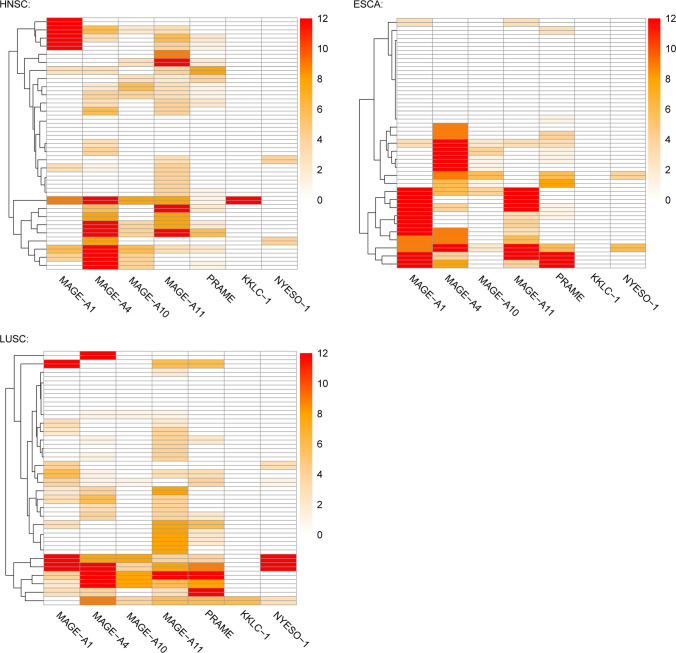
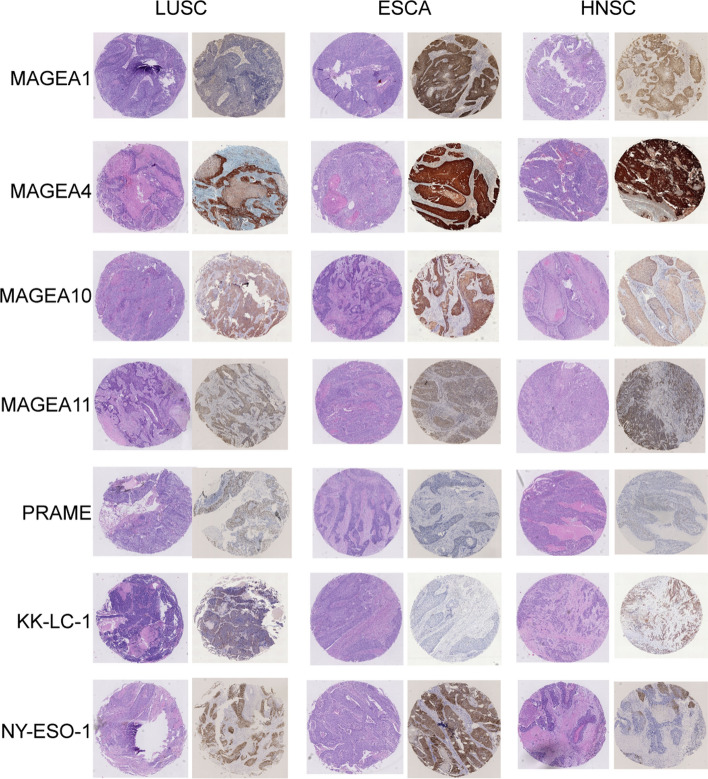
This study aims to investigate the expression of seven cancer testis antigens (MAGE-A1, MAGE-A4, MAGE-A10, MAGE-A11, PRAME, NY-ESO-1 and KK-LC-1) in pan squamous cell carcinoma and their prognostic value, thus assessing the potential of these CTAs as immunotherapeutic targets. The protein expression of these CTAs was evaluated by immunohistochemistry in 60 lung squamous cell carcinoma (LUSC), 62 esophageal squamous cell carcinoma (ESCA) and 62 head and neck squamous cell carcinoma (HNSC). The relationship between CTAs expression and progression-free survival (PFS) was assessed. PD-L1 expression and tumor-infiltrating lymphocytes were also collected and correlated with CTAs expression. The prognostic impact of CTAs gene expression was evaluated using the Kaplan-Meier Plotter website. CTAs expression was 0-48% in ESCA, 3%-77% in LUSC, and 3%-71% in HNSC. Analysis of PFS showed that MAGE-A1 expression in HNSC (**p < 0.01), PRAME in LUSC (p = 0.008, **p < 0.01), MAGE-A10 (p = 0.012, *p < 0.05) and PRAME (p = 0.021, *p < 0.05) in ESCA were significantly correlated with PFS. In all three cancers, coexpression of three CTAs was used as a cutoff value for grouping, and the results showed a significant difference in PFS between these two groups. Moreover, CTAs expression was significantly correlated with PD-L1 expression and T cell infiltration. These findings indicate a high incidence of CTA expression in HNSC, LUSC and ESCA, which was correlated with PD-L1 expression, T cell infiltration, and tumor progression. The results suggest that cancer testis antigens could be feasible vaccine targets in squamous cell carcinoma.






 京公网安备 11010802042870号
京ICP备2023020795号-1
京公网安备 11010802042870号
京ICP备2023020795号-1

 分享
分享
 求助内容:
求助内容: 应助结果提醒方式:
 扫码关注我们
