Solomon Kibret Birhanie, Jacob Hans, Jennifer Thieme Castellon, Ale Macias, Rubi Casas, Huy Hoang, Deanna Mormile, Kecia Pitts-Love, Michelle Q Brown
{"title":"南加州西谷地区一年来定向投放不育昆虫后埃及伊蚊数量减少。","authors":"Solomon Kibret Birhanie, Jacob Hans, Jennifer Thieme Castellon, Ale Macias, Rubi Casas, Huy Hoang, Deanna Mormile, Kecia Pitts-Love, Michelle Q Brown","doi":"10.3390/insects16010081","DOIUrl":null,"url":null,"abstract":"<p><p><i>Aedes aegypti</i> is of great public health concern because of its vectorial capacity to transmit various arboviruses such as Zika, yellow fever, dengue, and chikungunya. In California, its expanding geographic distribution has been unrestrained. This urgently calls for innovative tools such as the use of sterile insect technique (SIT) to strengthen invasive <i>Aedes</i> control. This study aimed to determine the efficacy of combining an SIT application into integrated vector management (IVM) strategies in invasive <i>Aedes</i> control in the West Valley region of southern California. A total of 25 <i>Aedes</i> hotspots, grouped into two cohorts-sites that received SIT treatment only (<i>n</i> = 9) and sites that received both SIT and In2Care<sup>®</sup> Mosquito Stations (<i>n</i> = 16)-were selected for this study. Biweekly, X-ray irradiated male <i>Ae. aegypti</i> mosquitoes were released between April and November 2024. Data from weekly BG Sentinel-2 traps were utilized to compare the mosquito densities between the pre-intervention (2023) and intervention (2024) periods for both cohorts. In addition, a subset of samples (<i>n</i> = 50) of irradiated male mosquitoes were placed in a separate cage with freshly emerged unirradiated female mosquitoes to evaluate the level of sterility of the eggs from these mosquitoes. <i>Aedes</i>-related service requests made by the District's residents were also compared between the pre-intervention and intervention periods to indirectly determine the effect of optimizing the control strategies on overall mosquito problems. A total of 106,608 sterile male <i>Ae. aegypti</i> were released between April and November 2024. The cohort with the SIT only application showed a 44% reduction in the number of female <i>Ae. aegypti</i> per trap-night during the intervention period compared with the pre-intervention period. At sites with In2Care Mosquito Stations that also received SIT treatment, the mosquito density dropped by 65% during the intervention period compared with the pre-intervention period. The number of <i>Aedes</i>-related service requests during the intervention year (<i>n</i> = 367) was 45% lower than the pre-intervention year (<i>n</i> = 656). Over 99.6% eggs collected from female mosquitoes mated with irradiated males did not hatch, indicating a high level of sterility of the irradiated males utilized for our SIT application. Here, we demonstrated the potential of SIT when combined with IVM strategies such as In2Care<sup>®</sup> Mosquito Stations, offering a holistic approach to reducing the public health risks associated with <i>Aedes</i>-borne diseases.</p>","PeriodicalId":13642,"journal":{"name":"Insects","volume":"16 1","pages":""},"PeriodicalIF":2.9000,"publicationDate":"2025-01-15","publicationTypes":"Journal Article","fieldsOfStudy":null,"isOpenAccess":false,"openAccessPdf":"https://www.ncbi.nlm.nih.gov/pmc/articles/PMC11765725/pdf/","citationCount":"0","resultStr":"{\"title\":\"Reduction in <i>Aedes aegypti</i> Population After a Year-Long Application of Targeted Sterile Insect Releases in the West Valley Region of Southern California.\",\"authors\":\"Solomon Kibret Birhanie, Jacob Hans, Jennifer Thieme Castellon, Ale Macias, Rubi Casas, Huy Hoang, Deanna Mormile, Kecia Pitts-Love, Michelle Q Brown\",\"doi\":\"10.3390/insects16010081\",\"DOIUrl\":null,\"url\":null,\"abstract\":\"<p><p><i>Aedes aegypti</i> is of great public health concern because of its vectorial capacity to transmit various arboviruses such as Zika, yellow fever, dengue, and chikungunya. In California, its expanding geographic distribution has been unrestrained. This urgently calls for innovative tools such as the use of sterile insect technique (SIT) to strengthen invasive <i>Aedes</i> control. This study aimed to determine the efficacy of combining an SIT application into integrated vector management (IVM) strategies in invasive <i>Aedes</i> control in the West Valley region of southern California. A total of 25 <i>Aedes</i> hotspots, grouped into two cohorts-sites that received SIT treatment only (<i>n</i> = 9) and sites that received both SIT and In2Care<sup>®</sup> Mosquito Stations (<i>n</i> = 16)-were selected for this study. Biweekly, X-ray irradiated male <i>Ae. aegypti</i> mosquitoes were released between April and November 2024. Data from weekly BG Sentinel-2 traps were utilized to compare the mosquito densities between the pre-intervention (2023) and intervention (2024) periods for both cohorts. In addition, a subset of samples (<i>n</i> = 50) of irradiated male mosquitoes were placed in a separate cage with freshly emerged unirradiated female mosquitoes to evaluate the level of sterility of the eggs from these mosquitoes. <i>Aedes</i>-related service requests made by the District's residents were also compared between the pre-intervention and intervention periods to indirectly determine the effect of optimizing the control strategies on overall mosquito problems. A total of 106,608 sterile male <i>Ae. aegypti</i> were released between April and November 2024. The cohort with the SIT only application showed a 44% reduction in the number of female <i>Ae. aegypti</i> per trap-night during the intervention period compared with the pre-intervention period. At sites with In2Care Mosquito Stations that also received SIT treatment, the mosquito density dropped by 65% during the intervention period compared with the pre-intervention period. The number of <i>Aedes</i>-related service requests during the intervention year (<i>n</i> = 367) was 45% lower than the pre-intervention year (<i>n</i> = 656). Over 99.6% eggs collected from female mosquitoes mated with irradiated males did not hatch, indicating a high level of sterility of the irradiated males utilized for our SIT application. Here, we demonstrated the potential of SIT when combined with IVM strategies such as In2Care<sup>®</sup> Mosquito Stations, offering a holistic approach to reducing the public health risks associated with <i>Aedes</i>-borne diseases.</p>\",\"PeriodicalId\":13642,\"journal\":{\"name\":\"Insects\",\"volume\":\"16 1\",\"pages\":\"\"},\"PeriodicalIF\":2.9000,\"publicationDate\":\"2025-01-15\",\"publicationTypes\":\"Journal Article\",\"fieldsOfStudy\":null,\"isOpenAccess\":false,\"openAccessPdf\":\"https://www.ncbi.nlm.nih.gov/pmc/articles/PMC11765725/pdf/\",\"citationCount\":\"0\",\"resultStr\":null,\"platform\":\"Semanticscholar\",\"paperid\":null,\"PeriodicalName\":\"Insects\",\"FirstCategoryId\":\"97\",\"ListUrlMain\":\"https://doi.org/10.3390/insects16010081\",\"RegionNum\":2,\"RegionCategory\":\"农林科学\",\"ArticlePicture\":[],\"TitleCN\":null,\"AbstractTextCN\":null,\"PMCID\":null,\"EPubDate\":\"\",\"PubModel\":\"\",\"JCR\":\"Q1\",\"JCRName\":\"ENTOMOLOGY\",\"Score\":null,\"Total\":0}","platform":"Semanticscholar","paperid":null,"PeriodicalName":"Insects","FirstCategoryId":"97","ListUrlMain":"https://doi.org/10.3390/insects16010081","RegionNum":2,"RegionCategory":"农林科学","ArticlePicture":[],"TitleCN":null,"AbstractTextCN":null,"PMCID":null,"EPubDate":"","PubModel":"","JCR":"Q1","JCRName":"ENTOMOLOGY","Score":null,"Total":0}
Reduction in Aedes aegypti Population After a Year-Long Application of Targeted Sterile Insect Releases in the West Valley Region of Southern California.
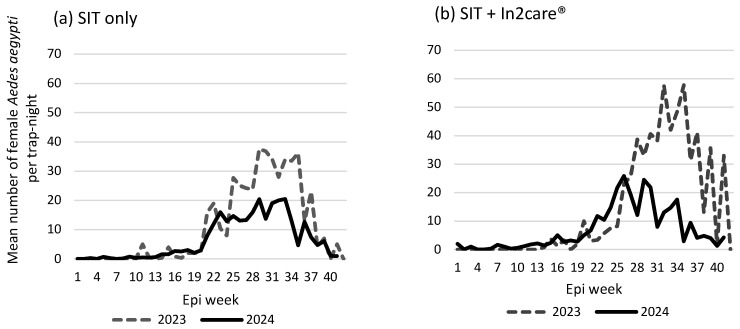
Aedes aegypti is of great public health concern because of its vectorial capacity to transmit various arboviruses such as Zika, yellow fever, dengue, and chikungunya. In California, its expanding geographic distribution has been unrestrained. This urgently calls for innovative tools such as the use of sterile insect technique (SIT) to strengthen invasive Aedes control. This study aimed to determine the efficacy of combining an SIT application into integrated vector management (IVM) strategies in invasive Aedes control in the West Valley region of southern California. A total of 25 Aedes hotspots, grouped into two cohorts-sites that received SIT treatment only (n = 9) and sites that received both SIT and In2Care® Mosquito Stations (n = 16)-were selected for this study. Biweekly, X-ray irradiated male Ae. aegypti mosquitoes were released between April and November 2024. Data from weekly BG Sentinel-2 traps were utilized to compare the mosquito densities between the pre-intervention (2023) and intervention (2024) periods for both cohorts. In addition, a subset of samples (n = 50) of irradiated male mosquitoes were placed in a separate cage with freshly emerged unirradiated female mosquitoes to evaluate the level of sterility of the eggs from these mosquitoes. Aedes-related service requests made by the District's residents were also compared between the pre-intervention and intervention periods to indirectly determine the effect of optimizing the control strategies on overall mosquito problems. A total of 106,608 sterile male Ae. aegypti were released between April and November 2024. The cohort with the SIT only application showed a 44% reduction in the number of female Ae. aegypti per trap-night during the intervention period compared with the pre-intervention period. At sites with In2Care Mosquito Stations that also received SIT treatment, the mosquito density dropped by 65% during the intervention period compared with the pre-intervention period. The number of Aedes-related service requests during the intervention year (n = 367) was 45% lower than the pre-intervention year (n = 656). Over 99.6% eggs collected from female mosquitoes mated with irradiated males did not hatch, indicating a high level of sterility of the irradiated males utilized for our SIT application. Here, we demonstrated the potential of SIT when combined with IVM strategies such as In2Care® Mosquito Stations, offering a holistic approach to reducing the public health risks associated with Aedes-borne diseases.
InsectsAgricultural and Biological Sciences-Insect Science
CiteScore
5.10
自引率
10.00%
发文量
1013
审稿时长
21.77 days
期刊介绍:
Insects (ISSN 2075-4450) is an international, peer-reviewed open access journal of entomology published by MDPI online quarterly. It publishes reviews, research papers and communications related to the biology, physiology and the behavior of insects and arthropods. Our aim is to encourage scientists to publish their experimental and theoretical results in as much detail as possible. There is no restriction on the length of the papers. The full experimental details must be provided so that the results can be reproduced. Electronic files regarding the full details of the experimental procedure, if unable to be published in a normal way, can be deposited as supplementary material.






 京公网安备 11010802042870号
京ICP备2023020795号-1
京公网安备 11010802042870号
京ICP备2023020795号-1

 分享
分享
 求助内容:
求助内容: 应助结果提醒方式:
 扫码关注我们
