Marcello Candelli, Marta Sacco Fernandez, Cristina Triunfo, Andrea Piccioni, Veronica Ojetti, Francesco Franceschi, Giulia Pignataro
{"title":"创伤弧菌:脓毒症的研究综述。","authors":"Marcello Candelli, Marta Sacco Fernandez, Cristina Triunfo, Andrea Piccioni, Veronica Ojetti, Francesco Franceschi, Giulia Pignataro","doi":"10.3390/microorganisms13010128","DOIUrl":null,"url":null,"abstract":"<p><p><i>Vibrio vulnificus</i> (<i>V. vulnificus</i>) is a Gram-negative, halophilic bacillus known for causing severe infections such as gastroenteritis, necrotizing fasciitis, and septic shock, with mortality rates exceeding 50% in high-risk individuals. Transmission occurs primarily through the consumption of contaminated seafood, exposure of open wounds to infected water, or, in rare cases, insect bites. The bacterium thrives in warm, brackish waters with high salinity levels, and its prevalence is rising due to the effects of climate change, including warming ocean temperatures and expanding coastal habitats. High-risk populations include individuals with underlying conditions such as chronic liver disease, diabetes, or immunosuppression, which heighten susceptibility to severe outcomes. The pathogenicity of <i>V. vulnificus</i> is mediated by an array of virulence factors, including hemolysins, proteases, and capsular polysaccharides, as well as mechanisms facilitating iron acquisition and immune system evasion. Clinical manifestations range from localized gastrointestinal symptoms to life-threatening systemic infections such as septicemia. Rare but severe complications, including pneumonia and meningitis, have also been reported. Treatment typically involves the use of doxycycline in combination with third-generation cephalosporins, although the emergence of multidrug-resistant strains is an escalating concern. Alternative therapeutic approaches under investigation include natural compounds such as resveratrol and the application of antimicrobial blue light. For necrotizing infections, prompt and aggressive surgical intervention remains essential to improving patient outcomes. As global temperatures continue to rise, understanding the epidemiology of <i>V. vulnificus</i> and developing innovative therapeutic strategies are critical to mitigating its growing public health impact.</p>","PeriodicalId":18667,"journal":{"name":"Microorganisms","volume":"13 1","pages":""},"PeriodicalIF":4.2000,"publicationDate":"2025-01-10","publicationTypes":"Journal Article","fieldsOfStudy":null,"isOpenAccess":false,"openAccessPdf":"https://www.ncbi.nlm.nih.gov/pmc/articles/PMC11768060/pdf/","citationCount":"0","resultStr":"{\"title\":\"<i>Vibrio vulnificus</i>-A Review with a Special Focus on Sepsis.\",\"authors\":\"Marcello Candelli, Marta Sacco Fernandez, Cristina Triunfo, Andrea Piccioni, Veronica Ojetti, Francesco Franceschi, Giulia Pignataro\",\"doi\":\"10.3390/microorganisms13010128\",\"DOIUrl\":null,\"url\":null,\"abstract\":\"<p><p><i>Vibrio vulnificus</i> (<i>V. vulnificus</i>) is a Gram-negative, halophilic bacillus known for causing severe infections such as gastroenteritis, necrotizing fasciitis, and septic shock, with mortality rates exceeding 50% in high-risk individuals. Transmission occurs primarily through the consumption of contaminated seafood, exposure of open wounds to infected water, or, in rare cases, insect bites. The bacterium thrives in warm, brackish waters with high salinity levels, and its prevalence is rising due to the effects of climate change, including warming ocean temperatures and expanding coastal habitats. High-risk populations include individuals with underlying conditions such as chronic liver disease, diabetes, or immunosuppression, which heighten susceptibility to severe outcomes. The pathogenicity of <i>V. vulnificus</i> is mediated by an array of virulence factors, including hemolysins, proteases, and capsular polysaccharides, as well as mechanisms facilitating iron acquisition and immune system evasion. Clinical manifestations range from localized gastrointestinal symptoms to life-threatening systemic infections such as septicemia. Rare but severe complications, including pneumonia and meningitis, have also been reported. Treatment typically involves the use of doxycycline in combination with third-generation cephalosporins, although the emergence of multidrug-resistant strains is an escalating concern. Alternative therapeutic approaches under investigation include natural compounds such as resveratrol and the application of antimicrobial blue light. For necrotizing infections, prompt and aggressive surgical intervention remains essential to improving patient outcomes. As global temperatures continue to rise, understanding the epidemiology of <i>V. vulnificus</i> and developing innovative therapeutic strategies are critical to mitigating its growing public health impact.</p>\",\"PeriodicalId\":18667,\"journal\":{\"name\":\"Microorganisms\",\"volume\":\"13 1\",\"pages\":\"\"},\"PeriodicalIF\":4.2000,\"publicationDate\":\"2025-01-10\",\"publicationTypes\":\"Journal Article\",\"fieldsOfStudy\":null,\"isOpenAccess\":false,\"openAccessPdf\":\"https://www.ncbi.nlm.nih.gov/pmc/articles/PMC11768060/pdf/\",\"citationCount\":\"0\",\"resultStr\":null,\"platform\":\"Semanticscholar\",\"paperid\":null,\"PeriodicalName\":\"Microorganisms\",\"FirstCategoryId\":\"99\",\"ListUrlMain\":\"https://doi.org/10.3390/microorganisms13010128\",\"RegionNum\":2,\"RegionCategory\":\"生物学\",\"ArticlePicture\":[],\"TitleCN\":null,\"AbstractTextCN\":null,\"PMCID\":null,\"EPubDate\":\"\",\"PubModel\":\"\",\"JCR\":\"Q2\",\"JCRName\":\"MICROBIOLOGY\",\"Score\":null,\"Total\":0}","platform":"Semanticscholar","paperid":null,"PeriodicalName":"Microorganisms","FirstCategoryId":"99","ListUrlMain":"https://doi.org/10.3390/microorganisms13010128","RegionNum":2,"RegionCategory":"生物学","ArticlePicture":[],"TitleCN":null,"AbstractTextCN":null,"PMCID":null,"EPubDate":"","PubModel":"","JCR":"Q2","JCRName":"MICROBIOLOGY","Score":null,"Total":0}
Vibrio vulnificus-A Review with a Special Focus on Sepsis.
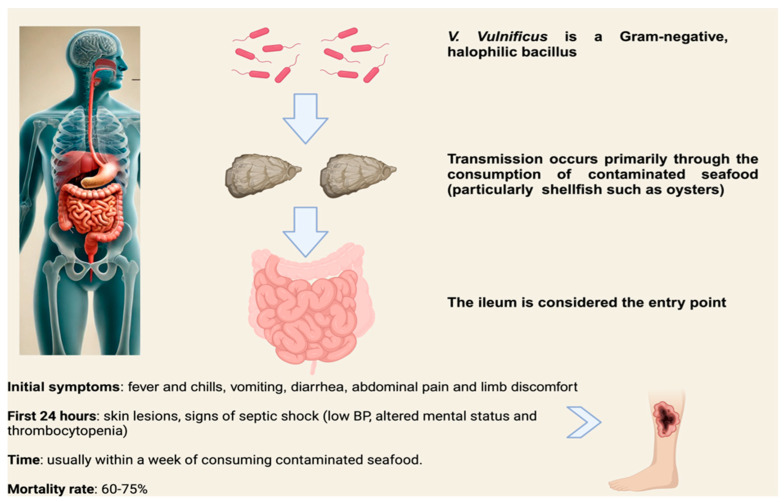
Vibrio vulnificus (V. vulnificus) is a Gram-negative, halophilic bacillus known for causing severe infections such as gastroenteritis, necrotizing fasciitis, and septic shock, with mortality rates exceeding 50% in high-risk individuals. Transmission occurs primarily through the consumption of contaminated seafood, exposure of open wounds to infected water, or, in rare cases, insect bites. The bacterium thrives in warm, brackish waters with high salinity levels, and its prevalence is rising due to the effects of climate change, including warming ocean temperatures and expanding coastal habitats. High-risk populations include individuals with underlying conditions such as chronic liver disease, diabetes, or immunosuppression, which heighten susceptibility to severe outcomes. The pathogenicity of V. vulnificus is mediated by an array of virulence factors, including hemolysins, proteases, and capsular polysaccharides, as well as mechanisms facilitating iron acquisition and immune system evasion. Clinical manifestations range from localized gastrointestinal symptoms to life-threatening systemic infections such as septicemia. Rare but severe complications, including pneumonia and meningitis, have also been reported. Treatment typically involves the use of doxycycline in combination with third-generation cephalosporins, although the emergence of multidrug-resistant strains is an escalating concern. Alternative therapeutic approaches under investigation include natural compounds such as resveratrol and the application of antimicrobial blue light. For necrotizing infections, prompt and aggressive surgical intervention remains essential to improving patient outcomes. As global temperatures continue to rise, understanding the epidemiology of V. vulnificus and developing innovative therapeutic strategies are critical to mitigating its growing public health impact.
期刊介绍:
Microorganisms (ISSN 2076-2607) is an international, peer-reviewed open access journal which provides an advanced forum for studies related to prokaryotic and eukaryotic microorganisms, viruses and prions. It publishes reviews, research papers and communications. Our aim is to encourage scientists to publish their experimental and theoretical results in as much detail as possible. There is no restriction on the length of the papers. The full experimental details must be provided so that the results can be reproduced. Electronic files and software regarding the full details of the calculation or experimental procedure, if unable to be published in a normal way, can be deposited as supplementary electronic material.






 京公网安备 11010802042870号
京ICP备2023020795号-1
京公网安备 11010802042870号
京ICP备2023020795号-1

 分享
分享
 求助内容:
求助内容: 应助结果提醒方式:
 扫码关注我们
