Audrey Charlebois, Nicolas Deslauriers, Lila Maduro, Martine Boulianne
{"title":"鸡产气荚膜梭菌IV型蛋白的免疫原性。","authors":"Audrey Charlebois, Nicolas Deslauriers, Lila Maduro, Martine Boulianne","doi":"10.3390/microorganisms13010120","DOIUrl":null,"url":null,"abstract":"<p><p><i>Clostridium perfringens</i>, the causative agent of necrotic enteritis in chickens, is controlled by in-feed antibiotics. With increasing pressure to reduce antimicrobial use, the development of alternative preventive tools is needed. Type IV pili proteins have been shown to be immunogenic in many Gram-positive bacteria. The aims of this study were to evaluate the immunogenic potential of pilins (PilA1, PilA2 and PilA3) from <i>C. perfringens</i> in chickens and to verify their ability to protect against necrotic enteritis. Chickens were immunized twice with 50 µg of recombinant proteins and adjuvant, resulting in a good and specific serum antibody response. Next, one-day-old chicks were injected three times with the same vaccines, and then infected with <i>C. perfringens</i>. Mean OD<sub>450</sub> values ten times higher than the controls were obtained for IgY (<i>p</i> < 0.05) and a significantly lower cecal count of <i>C. perfringens</i> was observed in the birds injected with PilA3. However, no reduction in the severity of intestinal lesions was observed. All three pilin proteins were shown to be highly immunogenic in the chickens. Although immunization with the pilins did not protect the birds against necrotic enteritis in this study, it was interesting to observe that vaccination with the recombinant PilA3 protein reduced <i>C. perfringens</i> cecal colonization.</p>","PeriodicalId":18667,"journal":{"name":"Microorganisms","volume":"13 1","pages":""},"PeriodicalIF":4.2000,"publicationDate":"2025-01-09","publicationTypes":"Journal Article","fieldsOfStudy":null,"isOpenAccess":false,"openAccessPdf":"https://www.ncbi.nlm.nih.gov/pmc/articles/PMC11767711/pdf/","citationCount":"0","resultStr":"{\"title\":\"Immunogenicity of Type IV Pilin Proteins from <i>Clostridium perfringens</i> in Chickens.\",\"authors\":\"Audrey Charlebois, Nicolas Deslauriers, Lila Maduro, Martine Boulianne\",\"doi\":\"10.3390/microorganisms13010120\",\"DOIUrl\":null,\"url\":null,\"abstract\":\"<p><p><i>Clostridium perfringens</i>, the causative agent of necrotic enteritis in chickens, is controlled by in-feed antibiotics. With increasing pressure to reduce antimicrobial use, the development of alternative preventive tools is needed. Type IV pili proteins have been shown to be immunogenic in many Gram-positive bacteria. The aims of this study were to evaluate the immunogenic potential of pilins (PilA1, PilA2 and PilA3) from <i>C. perfringens</i> in chickens and to verify their ability to protect against necrotic enteritis. Chickens were immunized twice with 50 µg of recombinant proteins and adjuvant, resulting in a good and specific serum antibody response. Next, one-day-old chicks were injected three times with the same vaccines, and then infected with <i>C. perfringens</i>. Mean OD<sub>450</sub> values ten times higher than the controls were obtained for IgY (<i>p</i> < 0.05) and a significantly lower cecal count of <i>C. perfringens</i> was observed in the birds injected with PilA3. However, no reduction in the severity of intestinal lesions was observed. All three pilin proteins were shown to be highly immunogenic in the chickens. Although immunization with the pilins did not protect the birds against necrotic enteritis in this study, it was interesting to observe that vaccination with the recombinant PilA3 protein reduced <i>C. perfringens</i> cecal colonization.</p>\",\"PeriodicalId\":18667,\"journal\":{\"name\":\"Microorganisms\",\"volume\":\"13 1\",\"pages\":\"\"},\"PeriodicalIF\":4.2000,\"publicationDate\":\"2025-01-09\",\"publicationTypes\":\"Journal Article\",\"fieldsOfStudy\":null,\"isOpenAccess\":false,\"openAccessPdf\":\"https://www.ncbi.nlm.nih.gov/pmc/articles/PMC11767711/pdf/\",\"citationCount\":\"0\",\"resultStr\":null,\"platform\":\"Semanticscholar\",\"paperid\":null,\"PeriodicalName\":\"Microorganisms\",\"FirstCategoryId\":\"99\",\"ListUrlMain\":\"https://doi.org/10.3390/microorganisms13010120\",\"RegionNum\":2,\"RegionCategory\":\"生物学\",\"ArticlePicture\":[],\"TitleCN\":null,\"AbstractTextCN\":null,\"PMCID\":null,\"EPubDate\":\"\",\"PubModel\":\"\",\"JCR\":\"Q2\",\"JCRName\":\"MICROBIOLOGY\",\"Score\":null,\"Total\":0}","platform":"Semanticscholar","paperid":null,"PeriodicalName":"Microorganisms","FirstCategoryId":"99","ListUrlMain":"https://doi.org/10.3390/microorganisms13010120","RegionNum":2,"RegionCategory":"生物学","ArticlePicture":[],"TitleCN":null,"AbstractTextCN":null,"PMCID":null,"EPubDate":"","PubModel":"","JCR":"Q2","JCRName":"MICROBIOLOGY","Score":null,"Total":0}
Immunogenicity of Type IV Pilin Proteins from Clostridium perfringens in Chickens.
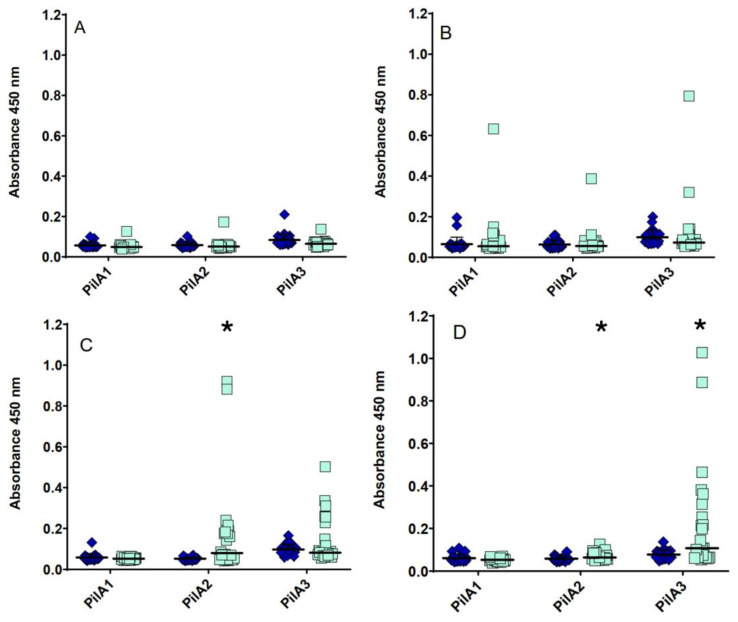
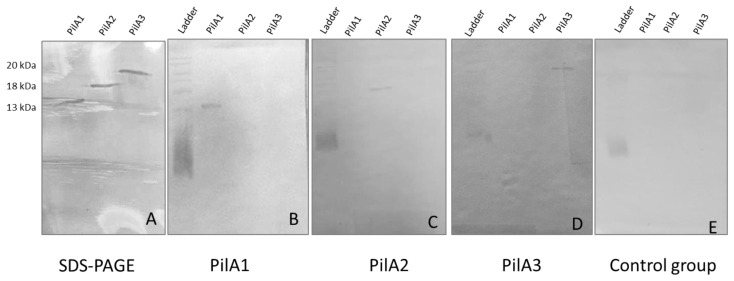
Clostridium perfringens, the causative agent of necrotic enteritis in chickens, is controlled by in-feed antibiotics. With increasing pressure to reduce antimicrobial use, the development of alternative preventive tools is needed. Type IV pili proteins have been shown to be immunogenic in many Gram-positive bacteria. The aims of this study were to evaluate the immunogenic potential of pilins (PilA1, PilA2 and PilA3) from C. perfringens in chickens and to verify their ability to protect against necrotic enteritis. Chickens were immunized twice with 50 µg of recombinant proteins and adjuvant, resulting in a good and specific serum antibody response. Next, one-day-old chicks were injected three times with the same vaccines, and then infected with C. perfringens. Mean OD450 values ten times higher than the controls were obtained for IgY (p < 0.05) and a significantly lower cecal count of C. perfringens was observed in the birds injected with PilA3. However, no reduction in the severity of intestinal lesions was observed. All three pilin proteins were shown to be highly immunogenic in the chickens. Although immunization with the pilins did not protect the birds against necrotic enteritis in this study, it was interesting to observe that vaccination with the recombinant PilA3 protein reduced C. perfringens cecal colonization.
期刊介绍:
Microorganisms (ISSN 2076-2607) is an international, peer-reviewed open access journal which provides an advanced forum for studies related to prokaryotic and eukaryotic microorganisms, viruses and prions. It publishes reviews, research papers and communications. Our aim is to encourage scientists to publish their experimental and theoretical results in as much detail as possible. There is no restriction on the length of the papers. The full experimental details must be provided so that the results can be reproduced. Electronic files and software regarding the full details of the calculation or experimental procedure, if unable to be published in a normal way, can be deposited as supplementary electronic material.





 京公网安备 11010802042870号
京ICP备2023020795号-1
京公网安备 11010802042870号
京ICP备2023020795号-1

 分享
分享
 求助内容:
求助内容: 应助结果提醒方式:
 扫码关注我们
