{"title":"足细胞中的Ca2+-肌动蛋白-细胞骨架轴是蛋白尿肾病免疫抑制治疗的重要非免疫靶点。","authors":"Agnes Hackl, Lutz T Weber","doi":"10.1007/s00467-025-06670-z","DOIUrl":null,"url":null,"abstract":"<p><p>The integrity of the filtration barrier of the kidney relies on the proper composition of podocyte interdigitating foot processes. Their architecture is supported by a complex actin-cytoskeleton. Following podocyte stress or injury, podocytes encounter structural changes, including rearrangement of the actin network and subsequent effacement of the foot processes. Immunosuppressive drugs, which are currently used as treatment in proteinuric kidney diseases, have been shown to exert not only immune-mediated effects. This review will focus on the direct effects of glucocorticoids, cyclosporine A, tacrolimus, mycophenolate mofetil, and rituximab on podocytes by regulation of Ca<sup>2+</sup> ion channels and consecutive downstream signaling which prevent cytoskeletal rearrangements and ultimately proteinuria. In addition, the efficacy of these drugs in genetic nephrotic syndrome will be discussed.</p>","PeriodicalId":19735,"journal":{"name":"Pediatric Nephrology","volume":" ","pages":"2729-2739"},"PeriodicalIF":2.6000,"publicationDate":"2025-09-01","publicationTypes":"Journal Article","fieldsOfStudy":null,"isOpenAccess":false,"openAccessPdf":"https://www.ncbi.nlm.nih.gov/pmc/articles/PMC12296978/pdf/","citationCount":"0","resultStr":"{\"title\":\"The Ca<sup>2+</sup>-actin-cytoskeleton axis in podocytes is an important, non-immunologic target of immunosuppressive therapy in proteinuric kidney diseases.\",\"authors\":\"Agnes Hackl, Lutz T Weber\",\"doi\":\"10.1007/s00467-025-06670-z\",\"DOIUrl\":null,\"url\":null,\"abstract\":\"<p><p>The integrity of the filtration barrier of the kidney relies on the proper composition of podocyte interdigitating foot processes. Their architecture is supported by a complex actin-cytoskeleton. Following podocyte stress or injury, podocytes encounter structural changes, including rearrangement of the actin network and subsequent effacement of the foot processes. Immunosuppressive drugs, which are currently used as treatment in proteinuric kidney diseases, have been shown to exert not only immune-mediated effects. This review will focus on the direct effects of glucocorticoids, cyclosporine A, tacrolimus, mycophenolate mofetil, and rituximab on podocytes by regulation of Ca<sup>2+</sup> ion channels and consecutive downstream signaling which prevent cytoskeletal rearrangements and ultimately proteinuria. In addition, the efficacy of these drugs in genetic nephrotic syndrome will be discussed.</p>\",\"PeriodicalId\":19735,\"journal\":{\"name\":\"Pediatric Nephrology\",\"volume\":\" \",\"pages\":\"2729-2739\"},\"PeriodicalIF\":2.6000,\"publicationDate\":\"2025-09-01\",\"publicationTypes\":\"Journal Article\",\"fieldsOfStudy\":null,\"isOpenAccess\":false,\"openAccessPdf\":\"https://www.ncbi.nlm.nih.gov/pmc/articles/PMC12296978/pdf/\",\"citationCount\":\"0\",\"resultStr\":null,\"platform\":\"Semanticscholar\",\"paperid\":null,\"PeriodicalName\":\"Pediatric Nephrology\",\"FirstCategoryId\":\"3\",\"ListUrlMain\":\"https://doi.org/10.1007/s00467-025-06670-z\",\"RegionNum\":3,\"RegionCategory\":\"医学\",\"ArticlePicture\":[],\"TitleCN\":null,\"AbstractTextCN\":null,\"PMCID\":null,\"EPubDate\":\"2025/1/25 0:00:00\",\"PubModel\":\"Epub\",\"JCR\":\"Q1\",\"JCRName\":\"PEDIATRICS\",\"Score\":null,\"Total\":0}","platform":"Semanticscholar","paperid":null,"PeriodicalName":"Pediatric Nephrology","FirstCategoryId":"3","ListUrlMain":"https://doi.org/10.1007/s00467-025-06670-z","RegionNum":3,"RegionCategory":"医学","ArticlePicture":[],"TitleCN":null,"AbstractTextCN":null,"PMCID":null,"EPubDate":"2025/1/25 0:00:00","PubModel":"Epub","JCR":"Q1","JCRName":"PEDIATRICS","Score":null,"Total":0}
The Ca2+-actin-cytoskeleton axis in podocytes is an important, non-immunologic target of immunosuppressive therapy in proteinuric kidney diseases.
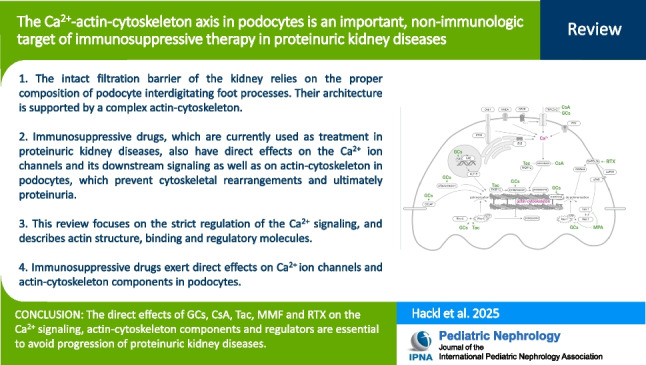
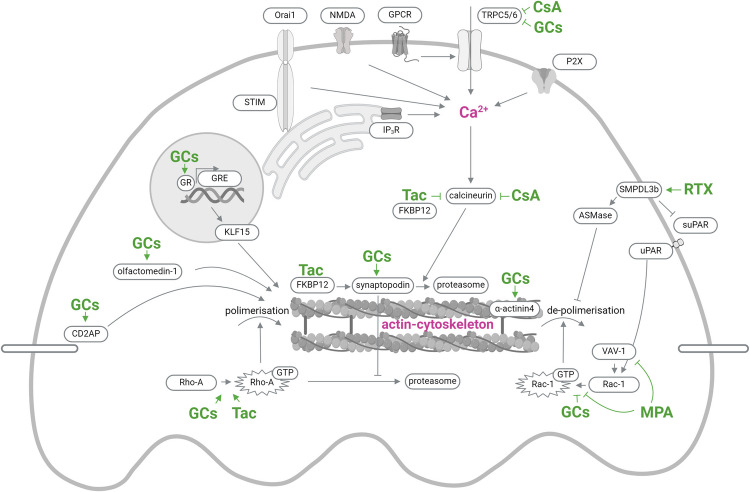
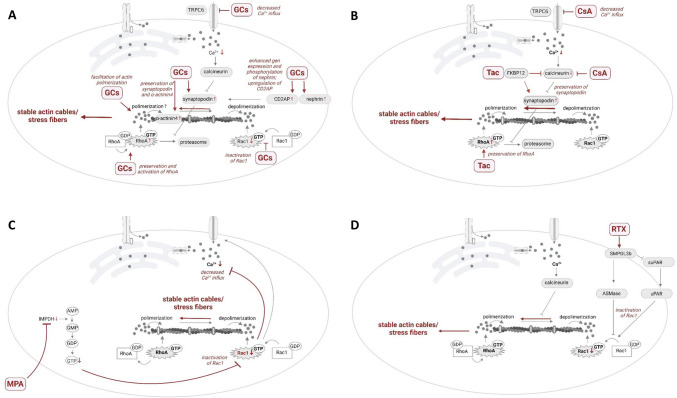
The integrity of the filtration barrier of the kidney relies on the proper composition of podocyte interdigitating foot processes. Their architecture is supported by a complex actin-cytoskeleton. Following podocyte stress or injury, podocytes encounter structural changes, including rearrangement of the actin network and subsequent effacement of the foot processes. Immunosuppressive drugs, which are currently used as treatment in proteinuric kidney diseases, have been shown to exert not only immune-mediated effects. This review will focus on the direct effects of glucocorticoids, cyclosporine A, tacrolimus, mycophenolate mofetil, and rituximab on podocytes by regulation of Ca2+ ion channels and consecutive downstream signaling which prevent cytoskeletal rearrangements and ultimately proteinuria. In addition, the efficacy of these drugs in genetic nephrotic syndrome will be discussed.
期刊介绍:
International Pediatric Nephrology Association
Pediatric Nephrology publishes original clinical research related to acute and chronic diseases that affect renal function, blood pressure, and fluid and electrolyte disorders in children. Studies may involve medical, surgical, nutritional, physiologic, biochemical, genetic, pathologic or immunologic aspects of disease, imaging techniques or consequences of acute or chronic kidney disease. There are 12 issues per year that contain Editorial Commentaries, Reviews, Educational Reviews, Original Articles, Brief Reports, Rapid Communications, Clinical Quizzes, and Letters to the Editors.




 京公网安备 11010802042870号
京ICP备2023020795号-1
京公网安备 11010802042870号
京ICP备2023020795号-1

 分享
分享
 求助内容:
求助内容: 应助结果提醒方式:
 扫码关注我们
