Chang-Chin Wu, Yu-Wei Fang, Chikang Wang, Chien-Yu Lin
{"title":"美国代表性成年人血清柠檬烯水平与肌肉健康呈正相关","authors":"Chang-Chin Wu, Yu-Wei Fang, Chikang Wang, Chien-Yu Lin","doi":"10.3390/ph18010074","DOIUrl":null,"url":null,"abstract":"<p><p><b>Background/Objectives:</b> Monoterpenes, a class of organic compounds with the molecular formula C<sub>10</sub>H<sub>16</sub>, have garnered significant attention for their potential medicinal benefits. Emerging evidence suggests they may positively influence skeletal muscle function. However, the impact of monoterpene exposure on muscle strength and mass in humans remains unclear. <b>Methods</b>: To explore this relationship, we analyzed data from 1202 adults (aged ≥ 18 years) who participated in the 2013-2014 National Health and Nutrition Examination Survey (NHANES), focusing on serum levels of three specific monoterpenes-α-pinene, β-pinene, and limonene-and their association with hand grip strength and lean muscle mass. <b>Results:</b> Our analysis revealed that, except for test 2 of hand 1, all grip strength measures showed a positive correlation with ln-limonene levels. The β coefficient for combined grip strength was 2.409 (S.E. = 0.891, <i>p</i> = 0.015). Positive associations were also found between serum limonene levels and lean muscle mass. The β coefficient for the Appendicular Skeletal Muscle Mass Index (ASMI) was 0.138 (S.E. = 0.041, <i>p</i> = 0.004). Furthermore, combined grip strength and ASMI significantly increased across limonene quintiles (<i>p</i> for trend = 0.005 and 0.006, respectively). However, none of the three monoterpene levels showed a significant association with clinically defined low muscle mass or low muscle strength. <b>Conclusions:</b> Our findings suggest a plausible association between exposure to limonene, hand grip strength, and lean muscle mass among adults in the United States. Further investigation is needed to fully understand the underlying mechanisms and medical significance of this association.</p>","PeriodicalId":20198,"journal":{"name":"Pharmaceuticals","volume":"18 1","pages":""},"PeriodicalIF":4.8000,"publicationDate":"2025-01-10","publicationTypes":"Journal Article","fieldsOfStudy":null,"isOpenAccess":false,"openAccessPdf":"https://www.ncbi.nlm.nih.gov/pmc/articles/PMC11768618/pdf/","citationCount":"0","resultStr":"{\"title\":\"Positive Correlation Between Serum Limonene Levels and Muscle Health in a Representative Adult Population in the United States.\",\"authors\":\"Chang-Chin Wu, Yu-Wei Fang, Chikang Wang, Chien-Yu Lin\",\"doi\":\"10.3390/ph18010074\",\"DOIUrl\":null,\"url\":null,\"abstract\":\"<p><p><b>Background/Objectives:</b> Monoterpenes, a class of organic compounds with the molecular formula C<sub>10</sub>H<sub>16</sub>, have garnered significant attention for their potential medicinal benefits. Emerging evidence suggests they may positively influence skeletal muscle function. However, the impact of monoterpene exposure on muscle strength and mass in humans remains unclear. <b>Methods</b>: To explore this relationship, we analyzed data from 1202 adults (aged ≥ 18 years) who participated in the 2013-2014 National Health and Nutrition Examination Survey (NHANES), focusing on serum levels of three specific monoterpenes-α-pinene, β-pinene, and limonene-and their association with hand grip strength and lean muscle mass. <b>Results:</b> Our analysis revealed that, except for test 2 of hand 1, all grip strength measures showed a positive correlation with ln-limonene levels. The β coefficient for combined grip strength was 2.409 (S.E. = 0.891, <i>p</i> = 0.015). Positive associations were also found between serum limonene levels and lean muscle mass. The β coefficient for the Appendicular Skeletal Muscle Mass Index (ASMI) was 0.138 (S.E. = 0.041, <i>p</i> = 0.004). Furthermore, combined grip strength and ASMI significantly increased across limonene quintiles (<i>p</i> for trend = 0.005 and 0.006, respectively). However, none of the three monoterpene levels showed a significant association with clinically defined low muscle mass or low muscle strength. <b>Conclusions:</b> Our findings suggest a plausible association between exposure to limonene, hand grip strength, and lean muscle mass among adults in the United States. Further investigation is needed to fully understand the underlying mechanisms and medical significance of this association.</p>\",\"PeriodicalId\":20198,\"journal\":{\"name\":\"Pharmaceuticals\",\"volume\":\"18 1\",\"pages\":\"\"},\"PeriodicalIF\":4.8000,\"publicationDate\":\"2025-01-10\",\"publicationTypes\":\"Journal Article\",\"fieldsOfStudy\":null,\"isOpenAccess\":false,\"openAccessPdf\":\"https://www.ncbi.nlm.nih.gov/pmc/articles/PMC11768618/pdf/\",\"citationCount\":\"0\",\"resultStr\":null,\"platform\":\"Semanticscholar\",\"paperid\":null,\"PeriodicalName\":\"Pharmaceuticals\",\"FirstCategoryId\":\"3\",\"ListUrlMain\":\"https://doi.org/10.3390/ph18010074\",\"RegionNum\":3,\"RegionCategory\":\"医学\",\"ArticlePicture\":[],\"TitleCN\":null,\"AbstractTextCN\":null,\"PMCID\":null,\"EPubDate\":\"\",\"PubModel\":\"\",\"JCR\":\"Q2\",\"JCRName\":\"CHEMISTRY, MEDICINAL\",\"Score\":null,\"Total\":0}","platform":"Semanticscholar","paperid":null,"PeriodicalName":"Pharmaceuticals","FirstCategoryId":"3","ListUrlMain":"https://doi.org/10.3390/ph18010074","RegionNum":3,"RegionCategory":"医学","ArticlePicture":[],"TitleCN":null,"AbstractTextCN":null,"PMCID":null,"EPubDate":"","PubModel":"","JCR":"Q2","JCRName":"CHEMISTRY, MEDICINAL","Score":null,"Total":0}
引用次数: 0
摘要
背景/目的:单萜烯是一类分子式为C10H16的有机化合物,因其潜在的药用价值而备受关注。新出现的证据表明,它们可能对骨骼肌功能产生积极影响。然而,单萜烯暴露对人体肌肉力量和质量的影响尚不清楚。方法:为了探讨这种关系,我们分析了参加2013-2014年国家健康与营养调查(NHANES)的1202名成年人(年龄≥18岁)的数据,重点研究了三种特定单萜烯-α-蒎烯、β-蒎烯和柠檬烯-的血清水平及其与握力和瘦肌肉质量的关系。结果:我们的分析显示,除了手1的测试2,所有握力测量都与ln-柠檬烯水平呈正相关。综合握力的β系数为2.409 (S.E. = 0.891, p = 0.015)。血清柠檬烯水平与瘦肌肉质量之间也存在正相关。阑尾骨骼肌质量指数(ASMI)的β系数为0.138 (S.E. = 0.041, p = 0.004)。此外,综合握力和ASMI在柠檬烯五分位数中显著增加(趋势p分别= 0.005和0.006)。然而,这三种单萜素水平均未显示出与临床定义的低肌肉量或低肌肉力量有显著关联。结论:我们的研究结果表明,在美国成年人中,柠檬烯暴露、握力和瘦肌肉质量之间存在似是而非的联系。需要进一步调查以充分了解这种关联的潜在机制和医学意义。
Positive Correlation Between Serum Limonene Levels and Muscle Health in a Representative Adult Population in the United States.
Background/Objectives: Monoterpenes, a class of organic compounds with the molecular formula C10H16, have garnered significant attention for their potential medicinal benefits. Emerging evidence suggests they may positively influence skeletal muscle function. However, the impact of monoterpene exposure on muscle strength and mass in humans remains unclear. Methods: To explore this relationship, we analyzed data from 1202 adults (aged ≥ 18 years) who participated in the 2013-2014 National Health and Nutrition Examination Survey (NHANES), focusing on serum levels of three specific monoterpenes-α-pinene, β-pinene, and limonene-and their association with hand grip strength and lean muscle mass. Results: Our analysis revealed that, except for test 2 of hand 1, all grip strength measures showed a positive correlation with ln-limonene levels. The β coefficient for combined grip strength was 2.409 (S.E. = 0.891, p = 0.015). Positive associations were also found between serum limonene levels and lean muscle mass. The β coefficient for the Appendicular Skeletal Muscle Mass Index (ASMI) was 0.138 (S.E. = 0.041, p = 0.004). Furthermore, combined grip strength and ASMI significantly increased across limonene quintiles (p for trend = 0.005 and 0.006, respectively). However, none of the three monoterpene levels showed a significant association with clinically defined low muscle mass or low muscle strength. Conclusions: Our findings suggest a plausible association between exposure to limonene, hand grip strength, and lean muscle mass among adults in the United States. Further investigation is needed to fully understand the underlying mechanisms and medical significance of this association.
PharmaceuticalsPharmacology, Toxicology and Pharmaceutics-Pharmaceutical Science
CiteScore
6.10
自引率
4.30%
发文量
1332
审稿时长
6 weeks
期刊介绍:
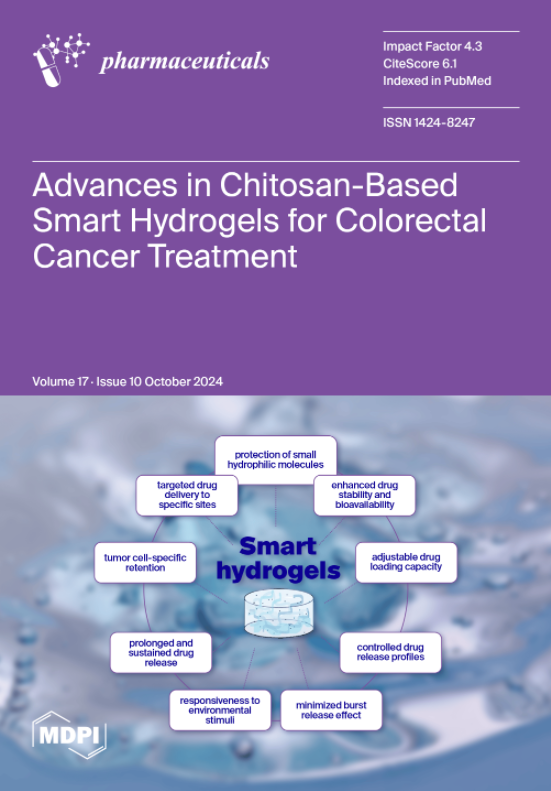
Pharmaceuticals (ISSN 1424-8247) is an international scientific journal of medicinal chemistry and related drug sciences.Our aim is to publish updated reviews as well as research articles with comprehensive theoretical and experimental details. Short communications are also accepted; therefore, there is no restriction on the maximum length of the papers.






 京公网安备 11010802042870号
京ICP备2023020795号-1
京公网安备 11010802042870号
京ICP备2023020795号-1

 分享
分享
 求助内容:
求助内容: 应助结果提醒方式:
 扫码关注我们
