Alice Melani, Marco Bonaso, Letizia Biso, Benedetta Zucchini, Ciro Conversano, Marco Scarselli
{"title":"揭示致幻剂:从神经回路到治疗应用。","authors":"Alice Melani, Marco Bonaso, Letizia Biso, Benedetta Zucchini, Ciro Conversano, Marco Scarselli","doi":"10.3390/ph18010130","DOIUrl":null,"url":null,"abstract":"<p><p>Psychedelics, historically celebrated for their cultural and spiritual significance, have emerged as potential breakthrough therapeutic agents due to their profound effects on consciousness, emotional processing, mood, and neural plasticity. This review explores the mechanisms underlying psychedelics' effects, focusing on their ability to modulate brain connectivity and neural circuit activity, including the default mode network (DMN), cortico-striatal thalamo-cortical (CSTC) loops, and the relaxed beliefs under psychedelics (REBUS) model. Advanced neuroimaging techniques reveal psychedelics' capacity to enhance functional connectivity between sensory cerebral areas while reducing the connections between associative brain areas, decreasing the rigidity and rendering the brain more plastic and susceptible to external changings, offering insights into their therapeutic outcome. The most relevant clinical trials of 3,4-methylenedioxymethamphetamine (MDMA), psilocybin, and lysergic acid diethylamide (LSD) demonstrate significant efficacy in treating treatment-resistant psychiatric conditions such as post-traumatic stress disorder (PTSD), depression, and anxiety, with favorable safety profiles. Despite these advancements, critical gaps remain in linking psychedelics' molecular actions to their clinical efficacy. This review highlights the need for further research to integrate mechanistic insights and optimize psychedelics as tools for both therapy and understanding human cognition.</p>","PeriodicalId":20198,"journal":{"name":"Pharmaceuticals","volume":"18 1","pages":""},"PeriodicalIF":4.8000,"publicationDate":"2025-01-19","publicationTypes":"Journal Article","fieldsOfStudy":null,"isOpenAccess":false,"openAccessPdf":"https://www.ncbi.nlm.nih.gov/pmc/articles/PMC11769142/pdf/","citationCount":"0","resultStr":"{\"title\":\"Uncovering Psychedelics: From Neural Circuits to Therapeutic Applications.\",\"authors\":\"Alice Melani, Marco Bonaso, Letizia Biso, Benedetta Zucchini, Ciro Conversano, Marco Scarselli\",\"doi\":\"10.3390/ph18010130\",\"DOIUrl\":null,\"url\":null,\"abstract\":\"<p><p>Psychedelics, historically celebrated for their cultural and spiritual significance, have emerged as potential breakthrough therapeutic agents due to their profound effects on consciousness, emotional processing, mood, and neural plasticity. This review explores the mechanisms underlying psychedelics' effects, focusing on their ability to modulate brain connectivity and neural circuit activity, including the default mode network (DMN), cortico-striatal thalamo-cortical (CSTC) loops, and the relaxed beliefs under psychedelics (REBUS) model. Advanced neuroimaging techniques reveal psychedelics' capacity to enhance functional connectivity between sensory cerebral areas while reducing the connections between associative brain areas, decreasing the rigidity and rendering the brain more plastic and susceptible to external changings, offering insights into their therapeutic outcome. The most relevant clinical trials of 3,4-methylenedioxymethamphetamine (MDMA), psilocybin, and lysergic acid diethylamide (LSD) demonstrate significant efficacy in treating treatment-resistant psychiatric conditions such as post-traumatic stress disorder (PTSD), depression, and anxiety, with favorable safety profiles. Despite these advancements, critical gaps remain in linking psychedelics' molecular actions to their clinical efficacy. This review highlights the need for further research to integrate mechanistic insights and optimize psychedelics as tools for both therapy and understanding human cognition.</p>\",\"PeriodicalId\":20198,\"journal\":{\"name\":\"Pharmaceuticals\",\"volume\":\"18 1\",\"pages\":\"\"},\"PeriodicalIF\":4.8000,\"publicationDate\":\"2025-01-19\",\"publicationTypes\":\"Journal Article\",\"fieldsOfStudy\":null,\"isOpenAccess\":false,\"openAccessPdf\":\"https://www.ncbi.nlm.nih.gov/pmc/articles/PMC11769142/pdf/\",\"citationCount\":\"0\",\"resultStr\":null,\"platform\":\"Semanticscholar\",\"paperid\":null,\"PeriodicalName\":\"Pharmaceuticals\",\"FirstCategoryId\":\"3\",\"ListUrlMain\":\"https://doi.org/10.3390/ph18010130\",\"RegionNum\":3,\"RegionCategory\":\"医学\",\"ArticlePicture\":[],\"TitleCN\":null,\"AbstractTextCN\":null,\"PMCID\":null,\"EPubDate\":\"\",\"PubModel\":\"\",\"JCR\":\"Q2\",\"JCRName\":\"CHEMISTRY, MEDICINAL\",\"Score\":null,\"Total\":0}","platform":"Semanticscholar","paperid":null,"PeriodicalName":"Pharmaceuticals","FirstCategoryId":"3","ListUrlMain":"https://doi.org/10.3390/ph18010130","RegionNum":3,"RegionCategory":"医学","ArticlePicture":[],"TitleCN":null,"AbstractTextCN":null,"PMCID":null,"EPubDate":"","PubModel":"","JCR":"Q2","JCRName":"CHEMISTRY, MEDICINAL","Score":null,"Total":0}
Uncovering Psychedelics: From Neural Circuits to Therapeutic Applications.
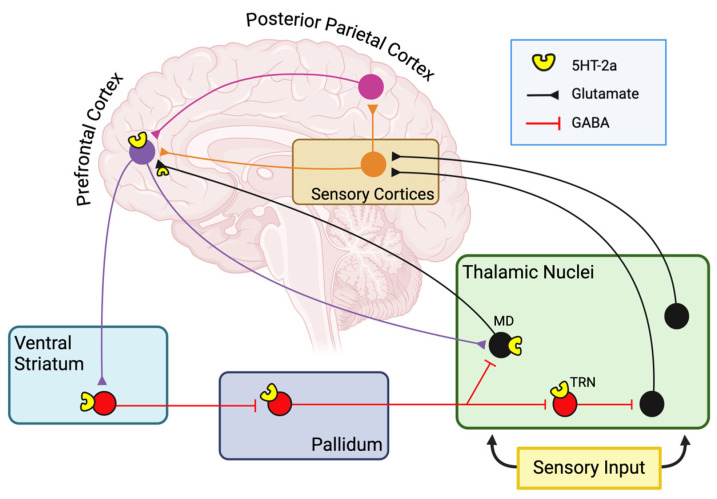
Psychedelics, historically celebrated for their cultural and spiritual significance, have emerged as potential breakthrough therapeutic agents due to their profound effects on consciousness, emotional processing, mood, and neural plasticity. This review explores the mechanisms underlying psychedelics' effects, focusing on their ability to modulate brain connectivity and neural circuit activity, including the default mode network (DMN), cortico-striatal thalamo-cortical (CSTC) loops, and the relaxed beliefs under psychedelics (REBUS) model. Advanced neuroimaging techniques reveal psychedelics' capacity to enhance functional connectivity between sensory cerebral areas while reducing the connections between associative brain areas, decreasing the rigidity and rendering the brain more plastic and susceptible to external changings, offering insights into their therapeutic outcome. The most relevant clinical trials of 3,4-methylenedioxymethamphetamine (MDMA), psilocybin, and lysergic acid diethylamide (LSD) demonstrate significant efficacy in treating treatment-resistant psychiatric conditions such as post-traumatic stress disorder (PTSD), depression, and anxiety, with favorable safety profiles. Despite these advancements, critical gaps remain in linking psychedelics' molecular actions to their clinical efficacy. This review highlights the need for further research to integrate mechanistic insights and optimize psychedelics as tools for both therapy and understanding human cognition.
PharmaceuticalsPharmacology, Toxicology and Pharmaceutics-Pharmaceutical Science
CiteScore
6.10
自引率
4.30%
发文量
1332
审稿时长
6 weeks
期刊介绍:
Pharmaceuticals (ISSN 1424-8247) is an international scientific journal of medicinal chemistry and related drug sciences.Our aim is to publish updated reviews as well as research articles with comprehensive theoretical and experimental details. Short communications are also accepted; therefore, there is no restriction on the maximum length of the papers.





 京公网安备 11010802042870号
京ICP备2023020795号-1
京公网安备 11010802042870号
京ICP备2023020795号-1

 分享
分享
 求助内容:
求助内容: 应助结果提醒方式:
 扫码关注我们
