{"title":"肿瘤基质靶向治疗的促进:模型难度和共培养类器官方法。","authors":"Qiu-Shi Feng, Xiao-Feng Shan, Vicky Yau, Zhi-Gang Cai, Shang Xie","doi":"10.3390/ph18010062","DOIUrl":null,"url":null,"abstract":"<p><p><b>Background:</b> Tumors, as intricate ecosystems, comprise oncocytes and the highly dynamic tumor stroma. Tumor stroma, representing the non-cancerous and non-cellular composition of the tumor microenvironment (TME), plays a crucial role in oncogenesis and progression, through its interactions with biological, chemical, and mechanical signals. This review aims to analyze the challenges of stroma mimicry models, and highlight advanced personalized co-culture approaches for recapitulating tumor stroma using patient-derived tumor organoids (PDTOs). <b>Methods:</b> This review synthesizes findings from recent studies on tumor stroma composition, stromal remodeling, and the spatiotemporal heterogeneities of the TME. It explores popular stroma-related models, co-culture systems integrating PDTOs with stromal elements, and advanced techniques to improve stroma mimicry. <b>Results:</b> Stroma remodeling, driven by stromal cells, highlights the dynamism and heterogeneity of the TME. PDTOs, derived from tumor tissues or cancer-specific stem cells, accurately mimic the tissue-specific and genetic features of primary tumors, making them valuable for drug screening. Co-culture models combining PDTOs with stromal elements effectively recreate the dynamic TME, showing promise in personalized anti-cancer therapy. Advanced co-culture techniques and flexible combinations enhance the precision of tumor-stroma recapitulation. <b>Conclusions:</b> PDTO-based co-culture systems offer a promising platform for stroma mimicry and personalized anti-cancer therapy development. This review underscores the importance of refining these models to advance precision medicine and improve therapeutic outcomes.</p>","PeriodicalId":20198,"journal":{"name":"Pharmaceuticals","volume":"18 1","pages":""},"PeriodicalIF":5.7000,"publicationDate":"2025-01-08","publicationTypes":"Journal Article","fieldsOfStudy":null,"isOpenAccess":false,"openAccessPdf":"https://www.ncbi.nlm.nih.gov/pmc/articles/PMC11769033/pdf/","citationCount":"0","resultStr":"{\"title\":\"Facilitation of Tumor Stroma-Targeted Therapy: Model Difficulty and Co-Culture Organoid Method.\",\"authors\":\"Qiu-Shi Feng, Xiao-Feng Shan, Vicky Yau, Zhi-Gang Cai, Shang Xie\",\"doi\":\"10.3390/ph18010062\",\"DOIUrl\":null,\"url\":null,\"abstract\":\"<p><p><b>Background:</b> Tumors, as intricate ecosystems, comprise oncocytes and the highly dynamic tumor stroma. Tumor stroma, representing the non-cancerous and non-cellular composition of the tumor microenvironment (TME), plays a crucial role in oncogenesis and progression, through its interactions with biological, chemical, and mechanical signals. This review aims to analyze the challenges of stroma mimicry models, and highlight advanced personalized co-culture approaches for recapitulating tumor stroma using patient-derived tumor organoids (PDTOs). <b>Methods:</b> This review synthesizes findings from recent studies on tumor stroma composition, stromal remodeling, and the spatiotemporal heterogeneities of the TME. It explores popular stroma-related models, co-culture systems integrating PDTOs with stromal elements, and advanced techniques to improve stroma mimicry. <b>Results:</b> Stroma remodeling, driven by stromal cells, highlights the dynamism and heterogeneity of the TME. PDTOs, derived from tumor tissues or cancer-specific stem cells, accurately mimic the tissue-specific and genetic features of primary tumors, making them valuable for drug screening. Co-culture models combining PDTOs with stromal elements effectively recreate the dynamic TME, showing promise in personalized anti-cancer therapy. Advanced co-culture techniques and flexible combinations enhance the precision of tumor-stroma recapitulation. <b>Conclusions:</b> PDTO-based co-culture systems offer a promising platform for stroma mimicry and personalized anti-cancer therapy development. This review underscores the importance of refining these models to advance precision medicine and improve therapeutic outcomes.</p>\",\"PeriodicalId\":20198,\"journal\":{\"name\":\"Pharmaceuticals\",\"volume\":\"18 1\",\"pages\":\"\"},\"PeriodicalIF\":5.7000,\"publicationDate\":\"2025-01-08\",\"publicationTypes\":\"Journal Article\",\"fieldsOfStudy\":null,\"isOpenAccess\":false,\"openAccessPdf\":\"https://www.ncbi.nlm.nih.gov/pmc/articles/PMC11769033/pdf/\",\"citationCount\":\"0\",\"resultStr\":null,\"platform\":\"Semanticscholar\",\"paperid\":null,\"PeriodicalName\":\"Pharmaceuticals\",\"FirstCategoryId\":\"3\",\"ListUrlMain\":\"https://doi.org/10.3390/ph18010062\",\"RegionNum\":3,\"RegionCategory\":\"医学\",\"ArticlePicture\":[],\"TitleCN\":null,\"AbstractTextCN\":null,\"PMCID\":null,\"EPubDate\":\"\",\"PubModel\":\"\",\"JCR\":\"Q2\",\"JCRName\":\"CHEMISTRY, MEDICINAL\",\"Score\":null,\"Total\":0}","platform":"Semanticscholar","paperid":null,"PeriodicalName":"Pharmaceuticals","FirstCategoryId":"3","ListUrlMain":"https://doi.org/10.3390/ph18010062","RegionNum":3,"RegionCategory":"医学","ArticlePicture":[],"TitleCN":null,"AbstractTextCN":null,"PMCID":null,"EPubDate":"","PubModel":"","JCR":"Q2","JCRName":"CHEMISTRY, MEDICINAL","Score":null,"Total":0}
Facilitation of Tumor Stroma-Targeted Therapy: Model Difficulty and Co-Culture Organoid Method.
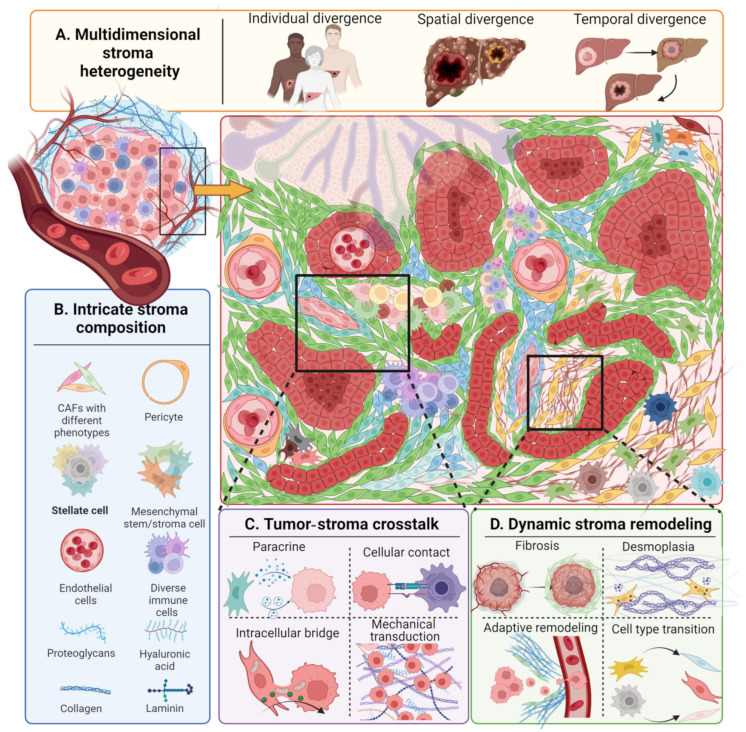
Background: Tumors, as intricate ecosystems, comprise oncocytes and the highly dynamic tumor stroma. Tumor stroma, representing the non-cancerous and non-cellular composition of the tumor microenvironment (TME), plays a crucial role in oncogenesis and progression, through its interactions with biological, chemical, and mechanical signals. This review aims to analyze the challenges of stroma mimicry models, and highlight advanced personalized co-culture approaches for recapitulating tumor stroma using patient-derived tumor organoids (PDTOs). Methods: This review synthesizes findings from recent studies on tumor stroma composition, stromal remodeling, and the spatiotemporal heterogeneities of the TME. It explores popular stroma-related models, co-culture systems integrating PDTOs with stromal elements, and advanced techniques to improve stroma mimicry. Results: Stroma remodeling, driven by stromal cells, highlights the dynamism and heterogeneity of the TME. PDTOs, derived from tumor tissues or cancer-specific stem cells, accurately mimic the tissue-specific and genetic features of primary tumors, making them valuable for drug screening. Co-culture models combining PDTOs with stromal elements effectively recreate the dynamic TME, showing promise in personalized anti-cancer therapy. Advanced co-culture techniques and flexible combinations enhance the precision of tumor-stroma recapitulation. Conclusions: PDTO-based co-culture systems offer a promising platform for stroma mimicry and personalized anti-cancer therapy development. This review underscores the importance of refining these models to advance precision medicine and improve therapeutic outcomes.
PharmaceuticalsPharmacology, Toxicology and Pharmaceutics-Pharmaceutical Science
CiteScore
6.10
自引率
4.30%
发文量
1332
审稿时长
6 weeks
期刊介绍:
Pharmaceuticals (ISSN 1424-8247) is an international scientific journal of medicinal chemistry and related drug sciences.Our aim is to publish updated reviews as well as research articles with comprehensive theoretical and experimental details. Short communications are also accepted; therefore, there is no restriction on the maximum length of the papers.






 京公网安备 11010802042870号
京ICP备2023020795号-1
京公网安备 11010802042870号
京ICP备2023020795号-1

 分享
分享
 求助内容:
求助内容: 应助结果提醒方式:
 扫码关注我们
