{"title":"苏云金芽孢杆菌Cry1A杀虫毒素及其消化物不刺激培养大鼠肥大细胞释放组胺","authors":"Hisashi Ohto, Mayumi Ohno, Miho Suganuma-Katagiri, Takashi Hara, Yoko Egawa, Kazuya Tomimoto, Kosuke Haginoya, Hidetaka Hori, Yuzuri Iwamoto, Tohru Hayakawa","doi":"10.3390/biology14010015","DOIUrl":null,"url":null,"abstract":"<p><p>Public acceptance of genetically modified crops engineered with <i>Bacillus thuringiensis</i> (Bt) insecticidal protein genes (BT-GMCs), which confer resistance to various lepidopteran insect pests, is generally lacking. As a major concern over BT-GMCs is the allergenicity of insecticidal proteins, alleviating safety concerns should help increase public acceptance. In this study, three lepidopteran-specific Bt toxins, Cry1Aa, Cy1Ab, and Cry1Ac, were treated with simulated digestive fluids under various conditions. Western blotting using antiserum raised against individual segments (α-helices of domain I and β-sheets of domains II and III) of Cry1Aa showed that digestion produces a variety of polypeptides. In particular, the transmembrane α4-α5 of domain I, which may retain the ability to form pores, was the most resistant to digestion. Intact Cry1A toxins and these digests were then applied to RBL-2H3 cultured rat mast cells to determine whether the toxins directly induce histamine release. However, fluorescence microscopy revealed no specific binding of Cry1A toxins to RBL-2H3 cultured rat mast cells. In addition, neither the OPA method nor HPLC analysis detected significant histamine release from mast cells treated with Cry1A toxins and these digests. Our results provide important data supporting the safety of Cry1A toxins and potentially BT-GMCs.</p>","PeriodicalId":48624,"journal":{"name":"Biology-Basel","volume":"14 1","pages":""},"PeriodicalIF":3.5000,"publicationDate":"2024-12-27","publicationTypes":"Journal Article","fieldsOfStudy":null,"isOpenAccess":false,"openAccessPdf":"https://www.ncbi.nlm.nih.gov/pmc/articles/PMC11763312/pdf/","citationCount":"0","resultStr":"{\"title\":\"<i>Bacillus thuringiensis</i> Cry1A Insecticidal Toxins and Their Digests Do Not Stimulate Histamine Release from Cultured Rat Mast Cells.\",\"authors\":\"Hisashi Ohto, Mayumi Ohno, Miho Suganuma-Katagiri, Takashi Hara, Yoko Egawa, Kazuya Tomimoto, Kosuke Haginoya, Hidetaka Hori, Yuzuri Iwamoto, Tohru Hayakawa\",\"doi\":\"10.3390/biology14010015\",\"DOIUrl\":null,\"url\":null,\"abstract\":\"<p><p>Public acceptance of genetically modified crops engineered with <i>Bacillus thuringiensis</i> (Bt) insecticidal protein genes (BT-GMCs), which confer resistance to various lepidopteran insect pests, is generally lacking. As a major concern over BT-GMCs is the allergenicity of insecticidal proteins, alleviating safety concerns should help increase public acceptance. In this study, three lepidopteran-specific Bt toxins, Cry1Aa, Cy1Ab, and Cry1Ac, were treated with simulated digestive fluids under various conditions. Western blotting using antiserum raised against individual segments (α-helices of domain I and β-sheets of domains II and III) of Cry1Aa showed that digestion produces a variety of polypeptides. In particular, the transmembrane α4-α5 of domain I, which may retain the ability to form pores, was the most resistant to digestion. Intact Cry1A toxins and these digests were then applied to RBL-2H3 cultured rat mast cells to determine whether the toxins directly induce histamine release. However, fluorescence microscopy revealed no specific binding of Cry1A toxins to RBL-2H3 cultured rat mast cells. In addition, neither the OPA method nor HPLC analysis detected significant histamine release from mast cells treated with Cry1A toxins and these digests. Our results provide important data supporting the safety of Cry1A toxins and potentially BT-GMCs.</p>\",\"PeriodicalId\":48624,\"journal\":{\"name\":\"Biology-Basel\",\"volume\":\"14 1\",\"pages\":\"\"},\"PeriodicalIF\":3.5000,\"publicationDate\":\"2024-12-27\",\"publicationTypes\":\"Journal Article\",\"fieldsOfStudy\":null,\"isOpenAccess\":false,\"openAccessPdf\":\"https://www.ncbi.nlm.nih.gov/pmc/articles/PMC11763312/pdf/\",\"citationCount\":\"0\",\"resultStr\":null,\"platform\":\"Semanticscholar\",\"paperid\":null,\"PeriodicalName\":\"Biology-Basel\",\"FirstCategoryId\":\"99\",\"ListUrlMain\":\"https://doi.org/10.3390/biology14010015\",\"RegionNum\":3,\"RegionCategory\":\"生物学\",\"ArticlePicture\":[],\"TitleCN\":null,\"AbstractTextCN\":null,\"PMCID\":null,\"EPubDate\":\"\",\"PubModel\":\"\",\"JCR\":\"Q1\",\"JCRName\":\"BIOLOGY\",\"Score\":null,\"Total\":0}","platform":"Semanticscholar","paperid":null,"PeriodicalName":"Biology-Basel","FirstCategoryId":"99","ListUrlMain":"https://doi.org/10.3390/biology14010015","RegionNum":3,"RegionCategory":"生物学","ArticlePicture":[],"TitleCN":null,"AbstractTextCN":null,"PMCID":null,"EPubDate":"","PubModel":"","JCR":"Q1","JCRName":"BIOLOGY","Score":null,"Total":0}
Bacillus thuringiensis Cry1A Insecticidal Toxins and Their Digests Do Not Stimulate Histamine Release from Cultured Rat Mast Cells.
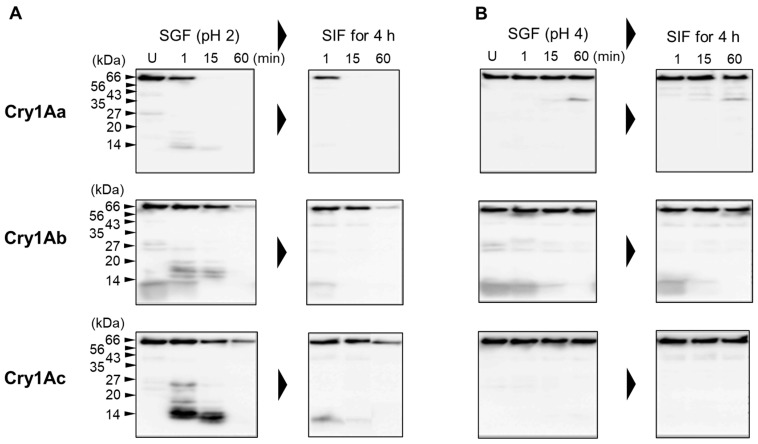
Public acceptance of genetically modified crops engineered with Bacillus thuringiensis (Bt) insecticidal protein genes (BT-GMCs), which confer resistance to various lepidopteran insect pests, is generally lacking. As a major concern over BT-GMCs is the allergenicity of insecticidal proteins, alleviating safety concerns should help increase public acceptance. In this study, three lepidopteran-specific Bt toxins, Cry1Aa, Cy1Ab, and Cry1Ac, were treated with simulated digestive fluids under various conditions. Western blotting using antiserum raised against individual segments (α-helices of domain I and β-sheets of domains II and III) of Cry1Aa showed that digestion produces a variety of polypeptides. In particular, the transmembrane α4-α5 of domain I, which may retain the ability to form pores, was the most resistant to digestion. Intact Cry1A toxins and these digests were then applied to RBL-2H3 cultured rat mast cells to determine whether the toxins directly induce histamine release. However, fluorescence microscopy revealed no specific binding of Cry1A toxins to RBL-2H3 cultured rat mast cells. In addition, neither the OPA method nor HPLC analysis detected significant histamine release from mast cells treated with Cry1A toxins and these digests. Our results provide important data supporting the safety of Cry1A toxins and potentially BT-GMCs.
期刊介绍:
Biology (ISSN 2079-7737) is an international, peer-reviewed, quick-refereeing open access journal of Biological Science published by MDPI online. It publishes reviews, research papers and communications in all areas of biology and at the interface of related disciplines. Our aim is to encourage scientists to publish their experimental and theoretical results in as much detail as possible. There is no restriction on the length of the papers. The full experimental details must be provided so that the results can be reproduced. Electronic files regarding the full details of the experimental procedure, if unable to be published in a normal way, can be deposited as supplementary material.






 京公网安备 11010802042870号
京ICP备2023020795号-1
京公网安备 11010802042870号
京ICP备2023020795号-1

 分享
分享
 求助内容:
求助内容: 应助结果提醒方式:
 扫码关注我们
