Andrea Baccelli, Deepa Gopalan, Rachel J Davies, Gulammehdi Haji, Wendy Gin-Sing, Luke S Howard, Francesco Lo Giudice
{"title":"如何可靠地测量肺动脉高压的脑卒中容量指数:热稀释、直接和间接Fick和心脏MRI的比较。","authors":"Andrea Baccelli, Deepa Gopalan, Rachel J Davies, Gulammehdi Haji, Wendy Gin-Sing, Luke S Howard, Francesco Lo Giudice","doi":"10.3390/life15010054","DOIUrl":null,"url":null,"abstract":"<p><strong>Background: </strong>Stroke volume index (SVI) is an important prognostic parameter in pulmonary arterial hypertension (PAH). The direct Fick (DF) method represents the gold standard for measuring it. Indirect Fick (IF) and thermodilution (TD) are simpler and widely used alternatives. However, data on the accuracy of these methods in estimating SVI in PAH are scant. We aimed to compare these different invasive methods, and in a subgroup of patients, to a non-invasive method using MRI.</p><p><strong>Methods: </strong>We enrolled 103 PAH patients undergoing a diagnostic or follow-up right heart catheterization at our centre (mean age 56 years, 56% female). The Bland-Altman analysis was used to assess agreement between methods. Potential demographic, clinical, and hemodynamic biases were explored. The accuracy of cardiac magnetic resonance (CMR)-derived SVI was assessed in a subset of patients.</p><p><strong>Results: </strong>The mean bias for IF-SVI vs. DF-SVI was -5.53 mL/min/m<sup>2</sup> with a median percentage error (PE) of 15%. The mean bias was lower, 0.09 mL/min/m<sup>2</sup>, for TD-SVI vs. DF-SVI with a median PE of 10%. Low cardiac index and severe tricuspid regurgitation (TR) were associated with a greater bias between TD and DF. CMR-SVI showed good accuracy and precision even in patients with severe TR, compared to DF.</p><p><strong>Conclusions: </strong>The indirect Fick is the less reliable method to assess SVI also in PAH patients. Thermodilution is a valid alternative to direct Fick, but it should be used with caution in patients with severe TR or low cardiac index. SVI measured by cardiac MRI is a promising non-invasive alternative, especially in patients with severe TR. Our observation needs to be confirmed by other series and larger studies.</p>","PeriodicalId":56144,"journal":{"name":"Life-Basel","volume":"15 1","pages":""},"PeriodicalIF":3.9000,"publicationDate":"2025-01-03","publicationTypes":"Journal Article","fieldsOfStudy":null,"isOpenAccess":false,"openAccessPdf":"https://www.ncbi.nlm.nih.gov/pmc/articles/PMC11766935/pdf/","citationCount":"0","resultStr":"{\"title\":\"How to Reliably Measure Stroke Volume Index in Pulmonary Arterial Hypertension: A Comparison of Thermodilution, Direct and Indirect Fick, and Cardiac MRI.\",\"authors\":\"Andrea Baccelli, Deepa Gopalan, Rachel J Davies, Gulammehdi Haji, Wendy Gin-Sing, Luke S Howard, Francesco Lo Giudice\",\"doi\":\"10.3390/life15010054\",\"DOIUrl\":null,\"url\":null,\"abstract\":\"<p><strong>Background: </strong>Stroke volume index (SVI) is an important prognostic parameter in pulmonary arterial hypertension (PAH). The direct Fick (DF) method represents the gold standard for measuring it. Indirect Fick (IF) and thermodilution (TD) are simpler and widely used alternatives. However, data on the accuracy of these methods in estimating SVI in PAH are scant. We aimed to compare these different invasive methods, and in a subgroup of patients, to a non-invasive method using MRI.</p><p><strong>Methods: </strong>We enrolled 103 PAH patients undergoing a diagnostic or follow-up right heart catheterization at our centre (mean age 56 years, 56% female). The Bland-Altman analysis was used to assess agreement between methods. Potential demographic, clinical, and hemodynamic biases were explored. The accuracy of cardiac magnetic resonance (CMR)-derived SVI was assessed in a subset of patients.</p><p><strong>Results: </strong>The mean bias for IF-SVI vs. DF-SVI was -5.53 mL/min/m<sup>2</sup> with a median percentage error (PE) of 15%. The mean bias was lower, 0.09 mL/min/m<sup>2</sup>, for TD-SVI vs. DF-SVI with a median PE of 10%. Low cardiac index and severe tricuspid regurgitation (TR) were associated with a greater bias between TD and DF. CMR-SVI showed good accuracy and precision even in patients with severe TR, compared to DF.</p><p><strong>Conclusions: </strong>The indirect Fick is the less reliable method to assess SVI also in PAH patients. Thermodilution is a valid alternative to direct Fick, but it should be used with caution in patients with severe TR or low cardiac index. SVI measured by cardiac MRI is a promising non-invasive alternative, especially in patients with severe TR. Our observation needs to be confirmed by other series and larger studies.</p>\",\"PeriodicalId\":56144,\"journal\":{\"name\":\"Life-Basel\",\"volume\":\"15 1\",\"pages\":\"\"},\"PeriodicalIF\":3.9000,\"publicationDate\":\"2025-01-03\",\"publicationTypes\":\"Journal Article\",\"fieldsOfStudy\":null,\"isOpenAccess\":false,\"openAccessPdf\":\"https://www.ncbi.nlm.nih.gov/pmc/articles/PMC11766935/pdf/\",\"citationCount\":\"0\",\"resultStr\":null,\"platform\":\"Semanticscholar\",\"paperid\":null,\"PeriodicalName\":\"Life-Basel\",\"FirstCategoryId\":\"99\",\"ListUrlMain\":\"https://doi.org/10.3390/life15010054\",\"RegionNum\":3,\"RegionCategory\":\"生物学\",\"ArticlePicture\":[],\"TitleCN\":null,\"AbstractTextCN\":null,\"PMCID\":null,\"EPubDate\":\"\",\"PubModel\":\"\",\"JCR\":\"Q1\",\"JCRName\":\"BIOLOGY\",\"Score\":null,\"Total\":0}","platform":"Semanticscholar","paperid":null,"PeriodicalName":"Life-Basel","FirstCategoryId":"99","ListUrlMain":"https://doi.org/10.3390/life15010054","RegionNum":3,"RegionCategory":"生物学","ArticlePicture":[],"TitleCN":null,"AbstractTextCN":null,"PMCID":null,"EPubDate":"","PubModel":"","JCR":"Q1","JCRName":"BIOLOGY","Score":null,"Total":0}
How to Reliably Measure Stroke Volume Index in Pulmonary Arterial Hypertension: A Comparison of Thermodilution, Direct and Indirect Fick, and Cardiac MRI.
Background: Stroke volume index (SVI) is an important prognostic parameter in pulmonary arterial hypertension (PAH). The direct Fick (DF) method represents the gold standard for measuring it. Indirect Fick (IF) and thermodilution (TD) are simpler and widely used alternatives. However, data on the accuracy of these methods in estimating SVI in PAH are scant. We aimed to compare these different invasive methods, and in a subgroup of patients, to a non-invasive method using MRI.
Methods: We enrolled 103 PAH patients undergoing a diagnostic or follow-up right heart catheterization at our centre (mean age 56 years, 56% female). The Bland-Altman analysis was used to assess agreement between methods. Potential demographic, clinical, and hemodynamic biases were explored. The accuracy of cardiac magnetic resonance (CMR)-derived SVI was assessed in a subset of patients.
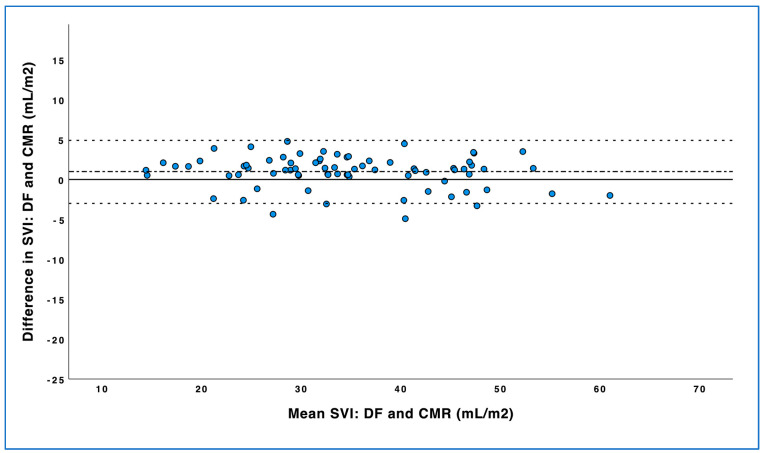
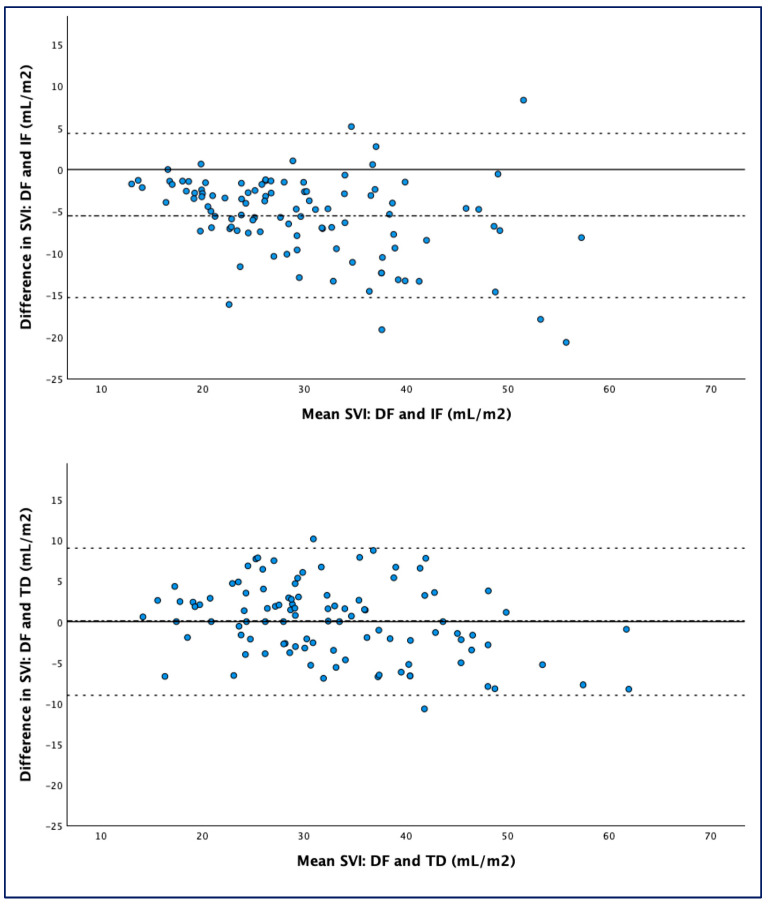
Results: The mean bias for IF-SVI vs. DF-SVI was -5.53 mL/min/m2 with a median percentage error (PE) of 15%. The mean bias was lower, 0.09 mL/min/m2, for TD-SVI vs. DF-SVI with a median PE of 10%. Low cardiac index and severe tricuspid regurgitation (TR) were associated with a greater bias between TD and DF. CMR-SVI showed good accuracy and precision even in patients with severe TR, compared to DF.
Conclusions: The indirect Fick is the less reliable method to assess SVI also in PAH patients. Thermodilution is a valid alternative to direct Fick, but it should be used with caution in patients with severe TR or low cardiac index. SVI measured by cardiac MRI is a promising non-invasive alternative, especially in patients with severe TR. Our observation needs to be confirmed by other series and larger studies.
Life-BaselBiochemistry, Genetics and Molecular Biology-General Biochemistry,Genetics and Molecular Biology
CiteScore
4.30
自引率
6.20%
发文量
1798
审稿时长
11 weeks
期刊介绍:
Life (ISSN 2075-1729) is an international, peer-reviewed open access journal of scientific studies related to fundamental themes in Life Sciences, especially those concerned with the origins of life and evolution of biosystems. Our aim is to encourage scientists to publish their experimental and theoretical results in as much detail as possible. There is no restriction on the length of the papers.






 京公网安备 11010802042870号
京ICP备2023020795号-1
京公网安备 11010802042870号
京ICP备2023020795号-1

 分享
分享
 求助内容:
求助内容: 应助结果提醒方式:
 扫码关注我们
