Shirley Shapiro Ben David, Roni Romano, Daniella Rahamim-Cohen, Joseph Azuri, Shira Greenfeld, Ben Gedassi, Uri Lerner
{"title":"人工智能驱动的决策支持减少了门诊尿路感染中的抗生素错配和不当使用","authors":"Shirley Shapiro Ben David, Roni Romano, Daniella Rahamim-Cohen, Joseph Azuri, Shira Greenfeld, Ben Gedassi, Uri Lerner","doi":"10.1038/s41746-024-01400-5","DOIUrl":null,"url":null,"abstract":"<p>Urinary tract infections (UTIs) often prompt empiric outpatient antibiotic prescriptions, risking mismatches. This study evaluates the impact of “UTI Smart-Set” (UTIS), an AI-driven decision-support tool, on prescribing patterns and mismatches in a large outpatient organization. UTIS integrates machine learning forecasts of antibiotic resistance, patient data, and guidelines into a user-friendly order set for UTI management. From 6/1/2021–8/31/2022, 171,010 UTI diagnoses were recorded, with UTIS used in 75,630 cases involving antibiotic prescriptions. Overall acceptance rate of UTIS recommendations was 66.0%. Among 19,287 cases with urine cultures, antibiotic mismatch rate was significantly lower when UTIS recommendations were followed (8.9% vs. 14.2%, <i>p</i> < 0.0001). Among women over 18, mismatch rate was 47.5% lower, and among women over 50, 55.6% lower (<i>p</i> < 0.001). Additionally, an overall reduction of 80.5% in ciprofloxacin usage (6.4% vs 32.9%, <i>p</i> < 0.0001) was observed. UTIS improved prescribing accuracy, reduced mismatches, and minimized quinolone use, highlighting AI’s potential for personalized infection management.</p>","PeriodicalId":19349,"journal":{"name":"NPJ Digital Medicine","volume":"22 1","pages":""},"PeriodicalIF":15.1000,"publicationDate":"2025-01-27","publicationTypes":"Journal Article","fieldsOfStudy":null,"isOpenAccess":false,"openAccessPdf":"","citationCount":"0","resultStr":"{\"title\":\"AI driven decision support reduces antibiotic mismatches and inappropriate use in outpatient urinary tract infections\",\"authors\":\"Shirley Shapiro Ben David, Roni Romano, Daniella Rahamim-Cohen, Joseph Azuri, Shira Greenfeld, Ben Gedassi, Uri Lerner\",\"doi\":\"10.1038/s41746-024-01400-5\",\"DOIUrl\":null,\"url\":null,\"abstract\":\"<p>Urinary tract infections (UTIs) often prompt empiric outpatient antibiotic prescriptions, risking mismatches. This study evaluates the impact of “UTI Smart-Set” (UTIS), an AI-driven decision-support tool, on prescribing patterns and mismatches in a large outpatient organization. UTIS integrates machine learning forecasts of antibiotic resistance, patient data, and guidelines into a user-friendly order set for UTI management. From 6/1/2021–8/31/2022, 171,010 UTI diagnoses were recorded, with UTIS used in 75,630 cases involving antibiotic prescriptions. Overall acceptance rate of UTIS recommendations was 66.0%. Among 19,287 cases with urine cultures, antibiotic mismatch rate was significantly lower when UTIS recommendations were followed (8.9% vs. 14.2%, <i>p</i> < 0.0001). Among women over 18, mismatch rate was 47.5% lower, and among women over 50, 55.6% lower (<i>p</i> < 0.001). Additionally, an overall reduction of 80.5% in ciprofloxacin usage (6.4% vs 32.9%, <i>p</i> < 0.0001) was observed. UTIS improved prescribing accuracy, reduced mismatches, and minimized quinolone use, highlighting AI’s potential for personalized infection management.</p>\",\"PeriodicalId\":19349,\"journal\":{\"name\":\"NPJ Digital Medicine\",\"volume\":\"22 1\",\"pages\":\"\"},\"PeriodicalIF\":15.1000,\"publicationDate\":\"2025-01-27\",\"publicationTypes\":\"Journal Article\",\"fieldsOfStudy\":null,\"isOpenAccess\":false,\"openAccessPdf\":\"\",\"citationCount\":\"0\",\"resultStr\":null,\"platform\":\"Semanticscholar\",\"paperid\":null,\"PeriodicalName\":\"NPJ Digital Medicine\",\"FirstCategoryId\":\"3\",\"ListUrlMain\":\"https://doi.org/10.1038/s41746-024-01400-5\",\"RegionNum\":1,\"RegionCategory\":\"医学\",\"ArticlePicture\":[],\"TitleCN\":null,\"AbstractTextCN\":null,\"PMCID\":null,\"EPubDate\":\"\",\"PubModel\":\"\",\"JCR\":\"Q1\",\"JCRName\":\"HEALTH CARE SCIENCES & SERVICES\",\"Score\":null,\"Total\":0}","platform":"Semanticscholar","paperid":null,"PeriodicalName":"NPJ Digital Medicine","FirstCategoryId":"3","ListUrlMain":"https://doi.org/10.1038/s41746-024-01400-5","RegionNum":1,"RegionCategory":"医学","ArticlePicture":[],"TitleCN":null,"AbstractTextCN":null,"PMCID":null,"EPubDate":"","PubModel":"","JCR":"Q1","JCRName":"HEALTH CARE SCIENCES & SERVICES","Score":null,"Total":0}
引用次数: 0
摘要
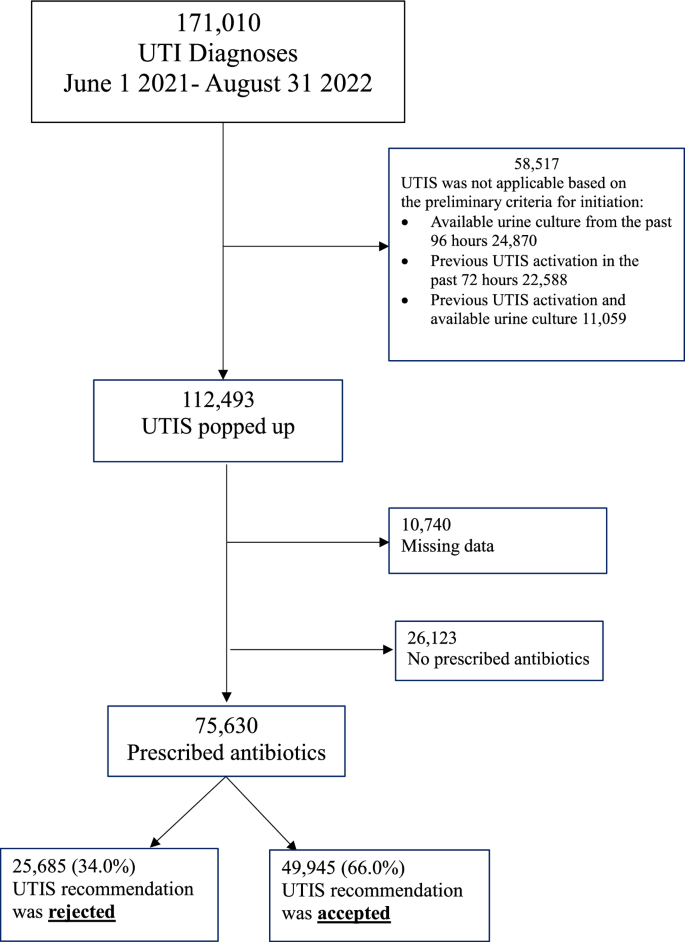
尿路感染(uti)经常提示经验门诊抗生素处方,风险不匹配。本研究评估了“UTI智能集”(UTIS)的影响,这是一种人工智能驱动的决策支持工具,对大型门诊组织的处方模式和不匹配的影响。UTIS将抗生素耐药性的机器学习预测、患者数据和指南整合到一个用户友好的尿路感染管理命令集中。从2021年1月6日至2022年8月31日,记录了171,010例尿路感染诊断,其中75,630例尿路感染涉及抗生素处方。UTIS推荐的总体接受率为66.0%。在19287例尿培养病例中,当遵循尿路感染推荐时,抗生素错配率显著降低(8.9% vs. 14.2%, p < 0.0001)。18岁以上女性的错配率低47.5%,50岁以上女性的错配率低55.6% (p < 0.001)。此外,观察到环丙沙星使用总体减少80.5% (6.4% vs 32.9%, p < 0.0001)。UTIS提高了处方准确性,减少了错配,并最大限度地减少了喹诺酮类药物的使用,突出了人工智能在个性化感染管理方面的潜力。
AI driven decision support reduces antibiotic mismatches and inappropriate use in outpatient urinary tract infections
Urinary tract infections (UTIs) often prompt empiric outpatient antibiotic prescriptions, risking mismatches. This study evaluates the impact of “UTI Smart-Set” (UTIS), an AI-driven decision-support tool, on prescribing patterns and mismatches in a large outpatient organization. UTIS integrates machine learning forecasts of antibiotic resistance, patient data, and guidelines into a user-friendly order set for UTI management. From 6/1/2021–8/31/2022, 171,010 UTI diagnoses were recorded, with UTIS used in 75,630 cases involving antibiotic prescriptions. Overall acceptance rate of UTIS recommendations was 66.0%. Among 19,287 cases with urine cultures, antibiotic mismatch rate was significantly lower when UTIS recommendations were followed (8.9% vs. 14.2%, p < 0.0001). Among women over 18, mismatch rate was 47.5% lower, and among women over 50, 55.6% lower (p < 0.001). Additionally, an overall reduction of 80.5% in ciprofloxacin usage (6.4% vs 32.9%, p < 0.0001) was observed. UTIS improved prescribing accuracy, reduced mismatches, and minimized quinolone use, highlighting AI’s potential for personalized infection management.
期刊介绍:
npj Digital Medicine is an online open-access journal that focuses on publishing peer-reviewed research in the field of digital medicine. The journal covers various aspects of digital medicine, including the application and implementation of digital and mobile technologies in clinical settings, virtual healthcare, and the use of artificial intelligence and informatics.
The primary goal of the journal is to support innovation and the advancement of healthcare through the integration of new digital and mobile technologies. When determining if a manuscript is suitable for publication, the journal considers four important criteria: novelty, clinical relevance, scientific rigor, and digital innovation.





 京公网安备 11010802042870号
京ICP备2023020795号-1
京公网安备 11010802042870号
京ICP备2023020795号-1

 分享
分享
 求助内容:
求助内容: 应助结果提醒方式:
 扫码关注我们
