{"title":"利用右室功能预测围产期心肌病恢复的进展:一项单中心前瞻性队列研究。","authors":"Mohammad Rizki Akbar, Sylvie Sakasasmita, Chaerul Achmad, Triwedya Indra Dewi, Melawati Hasan, Hawani Sasmaya Prameswari","doi":"10.2147/IJGM.S477008","DOIUrl":null,"url":null,"abstract":"<p><strong>Introduction: </strong>Peripartum cardiomyopathy (PPCM) is a pregnancy related cardiomyopathy with a high potential for recovery. One of the contemporary predictors studied in cardiomyopathy is right ventricular (RV) function during initial presentation.</p><p><strong>Purpose: </strong>This study aimed to determine the role of RV systolic function based on the various RV function parameters by two-dimensional transthoracic echocardiography (2DE) to predict PPCM recovery within 6 months of follow-up and identify the most accurate parameter among them.</p><p><strong>Patients and methods: </strong>This was a prospective cohort study that include all patients registered in the \"Long Term Registry on Patients with Peripartum Cardiomyopathy\" at Dr. Hasan Sadikin General Hospital Indonesia during period of September 2014 until December 2022. Right ventricular systolic dysfunction was defined as abnormal value in one or more parameter(s), including tricuspid annular plane systolic excursion (TAPSE), fractional area change (FAC), S', right ventricular free wall longitudinal strain (RVFWLS) and right ventricular global longitudinal strain (RVGLS). Left ventricular ejection fraction was measured on initial examination and after 6-month follow up to define recovery.</p><p><strong>Results: </strong>A total of 95 patients were included in this study. There were 33 patients (34.7%) with reduced initial RV systolic function. Sixty-four patients (67.4%) recovered within 6 months follow up. The recovery rate of patients with initial RV systolic dysfunction is lower than patients with normal RV systolic function (51.5% vs 75.8%, p = 0.016). This study showed that initial RV systolic dysfunction can predict poor LV function recovery in PPCM patients (OR 0.340; 95% CI:0.120-0.959; p = 0.041). Among all RV function parameters, only FAC (OR 1.076; 95% CI:1.003-1.154; p = 0.040)) and RVGLS (OR 0.768; 95% CI: 0.595-0.991; p = 0.042) emerged as independent predictors of PPCM recovery.</p><p><strong>Conclusion: </strong>Right ventricular function in terms of FAC and/or RVGLS at initial diagnosis can be used as a predictor for PPCM recovery at 6 months follow-up.</p>","PeriodicalId":14131,"journal":{"name":"International Journal of General Medicine","volume":"18 ","pages":"299-308"},"PeriodicalIF":2.0000,"publicationDate":"2025-01-20","publicationTypes":"Journal Article","fieldsOfStudy":null,"isOpenAccess":false,"openAccessPdf":"https://www.ncbi.nlm.nih.gov/pmc/articles/PMC11758858/pdf/","citationCount":"0","resultStr":"{\"title\":\"The Advances in Utilizing Right Ventricular Function as a Predictor of Peripartum Cardiomyopathy Recovery: A Single Centre Prospective Cohort Study.\",\"authors\":\"Mohammad Rizki Akbar, Sylvie Sakasasmita, Chaerul Achmad, Triwedya Indra Dewi, Melawati Hasan, Hawani Sasmaya Prameswari\",\"doi\":\"10.2147/IJGM.S477008\",\"DOIUrl\":null,\"url\":null,\"abstract\":\"<p><strong>Introduction: </strong>Peripartum cardiomyopathy (PPCM) is a pregnancy related cardiomyopathy with a high potential for recovery. One of the contemporary predictors studied in cardiomyopathy is right ventricular (RV) function during initial presentation.</p><p><strong>Purpose: </strong>This study aimed to determine the role of RV systolic function based on the various RV function parameters by two-dimensional transthoracic echocardiography (2DE) to predict PPCM recovery within 6 months of follow-up and identify the most accurate parameter among them.</p><p><strong>Patients and methods: </strong>This was a prospective cohort study that include all patients registered in the \\\"Long Term Registry on Patients with Peripartum Cardiomyopathy\\\" at Dr. Hasan Sadikin General Hospital Indonesia during period of September 2014 until December 2022. Right ventricular systolic dysfunction was defined as abnormal value in one or more parameter(s), including tricuspid annular plane systolic excursion (TAPSE), fractional area change (FAC), S', right ventricular free wall longitudinal strain (RVFWLS) and right ventricular global longitudinal strain (RVGLS). Left ventricular ejection fraction was measured on initial examination and after 6-month follow up to define recovery.</p><p><strong>Results: </strong>A total of 95 patients were included in this study. There were 33 patients (34.7%) with reduced initial RV systolic function. Sixty-four patients (67.4%) recovered within 6 months follow up. The recovery rate of patients with initial RV systolic dysfunction is lower than patients with normal RV systolic function (51.5% vs 75.8%, p = 0.016). This study showed that initial RV systolic dysfunction can predict poor LV function recovery in PPCM patients (OR 0.340; 95% CI:0.120-0.959; p = 0.041). Among all RV function parameters, only FAC (OR 1.076; 95% CI:1.003-1.154; p = 0.040)) and RVGLS (OR 0.768; 95% CI: 0.595-0.991; p = 0.042) emerged as independent predictors of PPCM recovery.</p><p><strong>Conclusion: </strong>Right ventricular function in terms of FAC and/or RVGLS at initial diagnosis can be used as a predictor for PPCM recovery at 6 months follow-up.</p>\",\"PeriodicalId\":14131,\"journal\":{\"name\":\"International Journal of General Medicine\",\"volume\":\"18 \",\"pages\":\"299-308\"},\"PeriodicalIF\":2.0000,\"publicationDate\":\"2025-01-20\",\"publicationTypes\":\"Journal Article\",\"fieldsOfStudy\":null,\"isOpenAccess\":false,\"openAccessPdf\":\"https://www.ncbi.nlm.nih.gov/pmc/articles/PMC11758858/pdf/\",\"citationCount\":\"0\",\"resultStr\":null,\"platform\":\"Semanticscholar\",\"paperid\":null,\"PeriodicalName\":\"International Journal of General Medicine\",\"FirstCategoryId\":\"3\",\"ListUrlMain\":\"https://doi.org/10.2147/IJGM.S477008\",\"RegionNum\":4,\"RegionCategory\":\"医学\",\"ArticlePicture\":[],\"TitleCN\":null,\"AbstractTextCN\":null,\"PMCID\":null,\"EPubDate\":\"2025/1/1 0:00:00\",\"PubModel\":\"eCollection\",\"JCR\":\"Q2\",\"JCRName\":\"MEDICINE, GENERAL & INTERNAL\",\"Score\":null,\"Total\":0}","platform":"Semanticscholar","paperid":null,"PeriodicalName":"International Journal of General Medicine","FirstCategoryId":"3","ListUrlMain":"https://doi.org/10.2147/IJGM.S477008","RegionNum":4,"RegionCategory":"医学","ArticlePicture":[],"TitleCN":null,"AbstractTextCN":null,"PMCID":null,"EPubDate":"2025/1/1 0:00:00","PubModel":"eCollection","JCR":"Q2","JCRName":"MEDICINE, GENERAL & INTERNAL","Score":null,"Total":0}
引用次数: 0
摘要
围产期心肌病(PPCM)是一种与妊娠相关的心肌病,具有很高的恢复潜力。心肌病研究的当代预测因素之一是初始表现时的右心室(RV)功能。目的:本研究旨在通过经胸二维超声心动图(2DE)检测右心室各项功能参数,确定右心室收缩功能在预测PPCM随访6个月内恢复情况中的作用,并确定其中最准确的参数。患者和方法:这是一项前瞻性队列研究,包括2014年9月至2022年12月期间在印度尼西亚Dr. Hasan Sadikin总医院“围产期心肌病患者长期登记”中登记的所有患者。右心室收缩功能障碍定义为一个或多个参数的异常值,包括三尖瓣环平面收缩偏移(TAPSE)、分数面积变化(FAC)、s '、右心室自由壁纵向应变(RVFWLS)和右心室整体纵向应变(RVGLS)。在初始检查和6个月随访后测量左心室射血分数以确定恢复情况。结果:本研究共纳入95例患者。33例患者(34.7%)初始右心室收缩功能降低。64例患者(67.4%)在随访6个月内痊愈。初始右心室收缩功能障碍患者的恢复率低于右心室收缩功能正常患者(51.5% vs 75.8%, p = 0.016)。本研究表明,初始左室收缩功能障碍可预测PPCM患者左室功能恢复不良(OR 0.340;95%置信区间:0.120—-0.959;P = 0.041)。在所有RV函数参数中,只有FAC (OR 1.076;95%置信区间:1.003—-1.154;p = 0.040))和RVGLS (OR 0.768;95% ci: 0.595-0.991;p = 0.042)成为PPCM恢复的独立预测因子。结论:初始诊断时的FAC和/或RVGLS的右心室功能可作为6个月随访时PPCM恢复的预测指标。
The Advances in Utilizing Right Ventricular Function as a Predictor of Peripartum Cardiomyopathy Recovery: A Single Centre Prospective Cohort Study.
Introduction: Peripartum cardiomyopathy (PPCM) is a pregnancy related cardiomyopathy with a high potential for recovery. One of the contemporary predictors studied in cardiomyopathy is right ventricular (RV) function during initial presentation.
Purpose: This study aimed to determine the role of RV systolic function based on the various RV function parameters by two-dimensional transthoracic echocardiography (2DE) to predict PPCM recovery within 6 months of follow-up and identify the most accurate parameter among them.
Patients and methods: This was a prospective cohort study that include all patients registered in the "Long Term Registry on Patients with Peripartum Cardiomyopathy" at Dr. Hasan Sadikin General Hospital Indonesia during period of September 2014 until December 2022. Right ventricular systolic dysfunction was defined as abnormal value in one or more parameter(s), including tricuspid annular plane systolic excursion (TAPSE), fractional area change (FAC), S', right ventricular free wall longitudinal strain (RVFWLS) and right ventricular global longitudinal strain (RVGLS). Left ventricular ejection fraction was measured on initial examination and after 6-month follow up to define recovery.
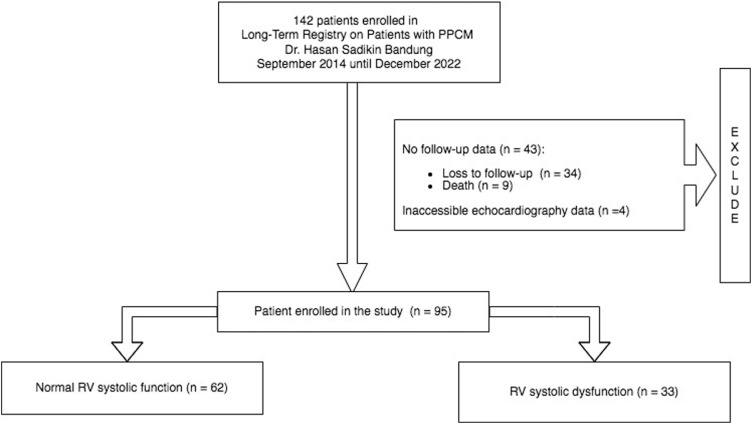
Results: A total of 95 patients were included in this study. There were 33 patients (34.7%) with reduced initial RV systolic function. Sixty-four patients (67.4%) recovered within 6 months follow up. The recovery rate of patients with initial RV systolic dysfunction is lower than patients with normal RV systolic function (51.5% vs 75.8%, p = 0.016). This study showed that initial RV systolic dysfunction can predict poor LV function recovery in PPCM patients (OR 0.340; 95% CI:0.120-0.959; p = 0.041). Among all RV function parameters, only FAC (OR 1.076; 95% CI:1.003-1.154; p = 0.040)) and RVGLS (OR 0.768; 95% CI: 0.595-0.991; p = 0.042) emerged as independent predictors of PPCM recovery.
Conclusion: Right ventricular function in terms of FAC and/or RVGLS at initial diagnosis can be used as a predictor for PPCM recovery at 6 months follow-up.
期刊介绍:
The International Journal of General Medicine is an international, peer-reviewed, open access journal that focuses on general and internal medicine, pathogenesis, epidemiology, diagnosis, monitoring and treatment protocols. The journal is characterized by the rapid reporting of reviews, original research and clinical studies across all disease areas.
A key focus of the journal is the elucidation of disease processes and management protocols resulting in improved outcomes for the patient. Patient perspectives such as satisfaction, quality of life, health literacy and communication and their role in developing new healthcare programs and optimizing clinical outcomes are major areas of interest for the journal.
As of 1st April 2019, the International Journal of General Medicine will no longer consider meta-analyses for publication.





 京公网安备 11010802042870号
京ICP备2023020795号-1
京公网安备 11010802042870号
京ICP备2023020795号-1

 分享
分享
 求助内容:
求助内容: 应助结果提醒方式:
 扫码关注我们
