María Laura Gigena , Dong Xiao , Fangzhou Li , Chengyu Wu , Yuhong Zhang
{"title":"煤基微生物改性矿物黑粘土克服寒冷地区露天矿山排土场植物生长挑战的方法学研究。","authors":"María Laura Gigena , Dong Xiao , Fangzhou Li , Chengyu Wu , Yuhong Zhang","doi":"10.1016/j.mex.2024.103138","DOIUrl":null,"url":null,"abstract":"<div><div>A critical challenge in ecological restoration of open-pit mine dumps in cold regions with limited topsoil resources is how to rapidly mitigate the plant growth-inhibitory effects of mineral black clay, thereby converting it into arable soil. Leveraging the high degradation capacity of coal seam-associated microorganisms on fossil carbon materials, combined with soil conditioning techniques, this study developed a microbial-based approach for modifying black clay. Seed germination experiments informed both laboratory and field trial designs. This approach focused on removing germination-inhibiting compounds, establishing a plant-compatible soil ecological environment, and employing composite strategies to reduce soil viscosity. Field experiments demonstrated that in-situ microbial modification of black clay effectively supports ecological restoration, enhances plant growth. To refine and implement this microbial-based bioremediation strategy in practical ecological restoration efforts, two key technical methods were employed:<ul><li><span>•</span><span><div>A comprehensive experimental protocol was established for black clay bioremediation, covering both laboratory-scale and field test procedures, ensuring the approach can be readily adapted to diverse environmental conditions.</div></span></li><li><span>•</span><span><div>By incorporating the characteristics of local species, employing representative seed germination tests to assess plant compatibility can facilitate a rapid evaluation of the bioconversion of mineral substrates into arable soils.</div></span></li></ul></div></div>","PeriodicalId":18446,"journal":{"name":"MethodsX","volume":"14 ","pages":"Article 103138"},"PeriodicalIF":1.9000,"publicationDate":"2025-06-01","publicationTypes":"Journal Article","fieldsOfStudy":null,"isOpenAccess":false,"openAccessPdf":"https://www.ncbi.nlm.nih.gov/pmc/articles/PMC11758207/pdf/","citationCount":"0","resultStr":"{\"title\":\"Methodological study on coal-based microbial modification of mineral black clay to overcome plant growth challenges on open-pit mine dumps in cold regions\",\"authors\":\"María Laura Gigena , Dong Xiao , Fangzhou Li , Chengyu Wu , Yuhong Zhang\",\"doi\":\"10.1016/j.mex.2024.103138\",\"DOIUrl\":null,\"url\":null,\"abstract\":\"<div><div>A critical challenge in ecological restoration of open-pit mine dumps in cold regions with limited topsoil resources is how to rapidly mitigate the plant growth-inhibitory effects of mineral black clay, thereby converting it into arable soil. Leveraging the high degradation capacity of coal seam-associated microorganisms on fossil carbon materials, combined with soil conditioning techniques, this study developed a microbial-based approach for modifying black clay. Seed germination experiments informed both laboratory and field trial designs. This approach focused on removing germination-inhibiting compounds, establishing a plant-compatible soil ecological environment, and employing composite strategies to reduce soil viscosity. Field experiments demonstrated that in-situ microbial modification of black clay effectively supports ecological restoration, enhances plant growth. To refine and implement this microbial-based bioremediation strategy in practical ecological restoration efforts, two key technical methods were employed:<ul><li><span>•</span><span><div>A comprehensive experimental protocol was established for black clay bioremediation, covering both laboratory-scale and field test procedures, ensuring the approach can be readily adapted to diverse environmental conditions.</div></span></li><li><span>•</span><span><div>By incorporating the characteristics of local species, employing representative seed germination tests to assess plant compatibility can facilitate a rapid evaluation of the bioconversion of mineral substrates into arable soils.</div></span></li></ul></div></div>\",\"PeriodicalId\":18446,\"journal\":{\"name\":\"MethodsX\",\"volume\":\"14 \",\"pages\":\"Article 103138\"},\"PeriodicalIF\":1.9000,\"publicationDate\":\"2025-06-01\",\"publicationTypes\":\"Journal Article\",\"fieldsOfStudy\":null,\"isOpenAccess\":false,\"openAccessPdf\":\"https://www.ncbi.nlm.nih.gov/pmc/articles/PMC11758207/pdf/\",\"citationCount\":\"0\",\"resultStr\":null,\"platform\":\"Semanticscholar\",\"paperid\":null,\"PeriodicalName\":\"MethodsX\",\"FirstCategoryId\":\"1085\",\"ListUrlMain\":\"https://www.sciencedirect.com/science/article/pii/S2215016124005892\",\"RegionNum\":0,\"RegionCategory\":null,\"ArticlePicture\":[],\"TitleCN\":null,\"AbstractTextCN\":null,\"PMCID\":null,\"EPubDate\":\"2024/12/28 0:00:00\",\"PubModel\":\"Epub\",\"JCR\":\"Q2\",\"JCRName\":\"MULTIDISCIPLINARY SCIENCES\",\"Score\":null,\"Total\":0}","platform":"Semanticscholar","paperid":null,"PeriodicalName":"MethodsX","FirstCategoryId":"1085","ListUrlMain":"https://www.sciencedirect.com/science/article/pii/S2215016124005892","RegionNum":0,"RegionCategory":null,"ArticlePicture":[],"TitleCN":null,"AbstractTextCN":null,"PMCID":null,"EPubDate":"2024/12/28 0:00:00","PubModel":"Epub","JCR":"Q2","JCRName":"MULTIDISCIPLINARY SCIENCES","Score":null,"Total":0}
Methodological study on coal-based microbial modification of mineral black clay to overcome plant growth challenges on open-pit mine dumps in cold regions
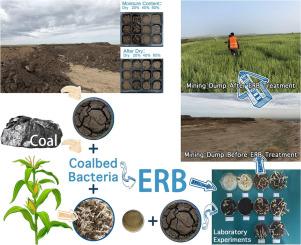
A critical challenge in ecological restoration of open-pit mine dumps in cold regions with limited topsoil resources is how to rapidly mitigate the plant growth-inhibitory effects of mineral black clay, thereby converting it into arable soil. Leveraging the high degradation capacity of coal seam-associated microorganisms on fossil carbon materials, combined with soil conditioning techniques, this study developed a microbial-based approach for modifying black clay. Seed germination experiments informed both laboratory and field trial designs. This approach focused on removing germination-inhibiting compounds, establishing a plant-compatible soil ecological environment, and employing composite strategies to reduce soil viscosity. Field experiments demonstrated that in-situ microbial modification of black clay effectively supports ecological restoration, enhances plant growth. To refine and implement this microbial-based bioremediation strategy in practical ecological restoration efforts, two key technical methods were employed:
•
A comprehensive experimental protocol was established for black clay bioremediation, covering both laboratory-scale and field test procedures, ensuring the approach can be readily adapted to diverse environmental conditions.
•
By incorporating the characteristics of local species, employing representative seed germination tests to assess plant compatibility can facilitate a rapid evaluation of the bioconversion of mineral substrates into arable soils.





 京公网安备 11010802042870号
京ICP备2023020795号-1
京公网安备 11010802042870号
京ICP备2023020795号-1

 分享
分享
 求助内容:
求助内容: 应助结果提醒方式:
 扫码关注我们
