Woo-Ju Kim, Se-Yeon Park, Goo-Hyun Mun, Sa-Ik Bang, Byung-Joon Jeon, Jai-Kyong Pyon, Kyeong-Tae Lee
{"title":"乳房切除术后皮瓣坏死的假体乳房重建的预后:失败和挽救的预测因素。","authors":"Woo-Ju Kim, Se-Yeon Park, Goo-Hyun Mun, Sa-Ik Bang, Byung-Joon Jeon, Jai-Kyong Pyon, Kyeong-Tae Lee","doi":"10.1007/s00266-025-04695-1","DOIUrl":null,"url":null,"abstract":"<div><h3>Background</h3><p>In the realm of implant-based breast reconstruction, mastectomy flap necrosis (MFN) is a prevalent yet grave complication that poses a threat to the stability of the inserted prosthesis. Although numerous investigations have scrutinized the risk factors for MFN development, few have delved into the aftermath, specifically implant failure or salvage. This study seeks to appraise the prognosis of the implanted prosthesis following MFN occurrence, as well as identify predictors of such outcomes.</p><h3>Methods</h3><p>Among patients who underwent immediate implant-based reconstruction between 2010 and 2022, individuals with MFN development were identified and scrutinized regarding the fate of their prosthesis (salvaged/failed). Independent risk factors were identified using multivariable analyses and subgroup analyses accounting for diverse clinical settings.</p><h3>Results</h3><p>Among a total of 3128 cases, 422 of MFN (194 partial, 228 full-thickness necrosis) were examined. Of them, 384 prostheses (91%) were salvaged, while 38 (9%) failed. Multivariate analysis revealed predictors of reconstruction failure included nipple-sparing mastectomy, larger skin excision, type of acellular dermal matrix used, previous radiotherapy, and full-thickness necrosis, while operation procedures, including type of operation and plane for prosthesis insertion (prepectoral/subpectoral), showed no significant associations. Risk factors differed by insertion plane, with obesity, larger skin excision, and previous radiation history significant in the prepectoral group, and only MFN degree influencing successful salvage in the subpectoral.</p><h3>Conclusions</h3><p>This study sheds light on the importance of understanding the prognosis and potential predictors of implant failure/salvage following MFN, emphasizing the need for tailored approaches to minimize the risk of reconstruction failure.</p><h3>Level of Evidence III</h3><p>This journal requires that authors assign a level of evidence to each article. For a full description of these Evidence-Based Medicine Ratings, please refer to Table of Contents or online Instructions to Authors www.springer.com/00266.</p></div>","PeriodicalId":7609,"journal":{"name":"Aesthetic Plastic Surgery","volume":"49 11","pages":"3081 - 3091"},"PeriodicalIF":2.7000,"publicationDate":"2025-01-27","publicationTypes":"Journal Article","fieldsOfStudy":null,"isOpenAccess":false,"openAccessPdf":"","citationCount":"0","resultStr":"{\"title\":\"Prognosis of Implant-Based Breast Reconstruction After Mastectomy Flap Necrosis: Predictors of Failure and Salvage\",\"authors\":\"Woo-Ju Kim, Se-Yeon Park, Goo-Hyun Mun, Sa-Ik Bang, Byung-Joon Jeon, Jai-Kyong Pyon, Kyeong-Tae Lee\",\"doi\":\"10.1007/s00266-025-04695-1\",\"DOIUrl\":null,\"url\":null,\"abstract\":\"<div><h3>Background</h3><p>In the realm of implant-based breast reconstruction, mastectomy flap necrosis (MFN) is a prevalent yet grave complication that poses a threat to the stability of the inserted prosthesis. Although numerous investigations have scrutinized the risk factors for MFN development, few have delved into the aftermath, specifically implant failure or salvage. This study seeks to appraise the prognosis of the implanted prosthesis following MFN occurrence, as well as identify predictors of such outcomes.</p><h3>Methods</h3><p>Among patients who underwent immediate implant-based reconstruction between 2010 and 2022, individuals with MFN development were identified and scrutinized regarding the fate of their prosthesis (salvaged/failed). Independent risk factors were identified using multivariable analyses and subgroup analyses accounting for diverse clinical settings.</p><h3>Results</h3><p>Among a total of 3128 cases, 422 of MFN (194 partial, 228 full-thickness necrosis) were examined. Of them, 384 prostheses (91%) were salvaged, while 38 (9%) failed. Multivariate analysis revealed predictors of reconstruction failure included nipple-sparing mastectomy, larger skin excision, type of acellular dermal matrix used, previous radiotherapy, and full-thickness necrosis, while operation procedures, including type of operation and plane for prosthesis insertion (prepectoral/subpectoral), showed no significant associations. Risk factors differed by insertion plane, with obesity, larger skin excision, and previous radiation history significant in the prepectoral group, and only MFN degree influencing successful salvage in the subpectoral.</p><h3>Conclusions</h3><p>This study sheds light on the importance of understanding the prognosis and potential predictors of implant failure/salvage following MFN, emphasizing the need for tailored approaches to minimize the risk of reconstruction failure.</p><h3>Level of Evidence III</h3><p>This journal requires that authors assign a level of evidence to each article. For a full description of these Evidence-Based Medicine Ratings, please refer to Table of Contents or online Instructions to Authors www.springer.com/00266.</p></div>\",\"PeriodicalId\":7609,\"journal\":{\"name\":\"Aesthetic Plastic Surgery\",\"volume\":\"49 11\",\"pages\":\"3081 - 3091\"},\"PeriodicalIF\":2.7000,\"publicationDate\":\"2025-01-27\",\"publicationTypes\":\"Journal Article\",\"fieldsOfStudy\":null,\"isOpenAccess\":false,\"openAccessPdf\":\"\",\"citationCount\":\"0\",\"resultStr\":null,\"platform\":\"Semanticscholar\",\"paperid\":null,\"PeriodicalName\":\"Aesthetic Plastic Surgery\",\"FirstCategoryId\":\"3\",\"ListUrlMain\":\"https://link.springer.com/article/10.1007/s00266-025-04695-1\",\"RegionNum\":3,\"RegionCategory\":\"医学\",\"ArticlePicture\":[],\"TitleCN\":null,\"AbstractTextCN\":null,\"PMCID\":null,\"EPubDate\":\"\",\"PubModel\":\"\",\"JCR\":\"Q2\",\"JCRName\":\"SURGERY\",\"Score\":null,\"Total\":0}","platform":"Semanticscholar","paperid":null,"PeriodicalName":"Aesthetic Plastic Surgery","FirstCategoryId":"3","ListUrlMain":"https://link.springer.com/article/10.1007/s00266-025-04695-1","RegionNum":3,"RegionCategory":"医学","ArticlePicture":[],"TitleCN":null,"AbstractTextCN":null,"PMCID":null,"EPubDate":"","PubModel":"","JCR":"Q2","JCRName":"SURGERY","Score":null,"Total":0}
Prognosis of Implant-Based Breast Reconstruction After Mastectomy Flap Necrosis: Predictors of Failure and Salvage
Background
In the realm of implant-based breast reconstruction, mastectomy flap necrosis (MFN) is a prevalent yet grave complication that poses a threat to the stability of the inserted prosthesis. Although numerous investigations have scrutinized the risk factors for MFN development, few have delved into the aftermath, specifically implant failure or salvage. This study seeks to appraise the prognosis of the implanted prosthesis following MFN occurrence, as well as identify predictors of such outcomes.
Methods
Among patients who underwent immediate implant-based reconstruction between 2010 and 2022, individuals with MFN development were identified and scrutinized regarding the fate of their prosthesis (salvaged/failed). Independent risk factors were identified using multivariable analyses and subgroup analyses accounting for diverse clinical settings.
Results
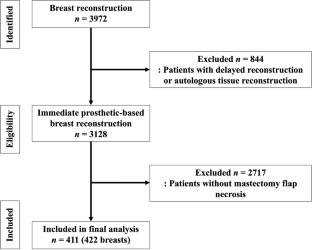
Among a total of 3128 cases, 422 of MFN (194 partial, 228 full-thickness necrosis) were examined. Of them, 384 prostheses (91%) were salvaged, while 38 (9%) failed. Multivariate analysis revealed predictors of reconstruction failure included nipple-sparing mastectomy, larger skin excision, type of acellular dermal matrix used, previous radiotherapy, and full-thickness necrosis, while operation procedures, including type of operation and plane for prosthesis insertion (prepectoral/subpectoral), showed no significant associations. Risk factors differed by insertion plane, with obesity, larger skin excision, and previous radiation history significant in the prepectoral group, and only MFN degree influencing successful salvage in the subpectoral.
Conclusions
This study sheds light on the importance of understanding the prognosis and potential predictors of implant failure/salvage following MFN, emphasizing the need for tailored approaches to minimize the risk of reconstruction failure.
Level of Evidence III
This journal requires that authors assign a level of evidence to each article. For a full description of these Evidence-Based Medicine Ratings, please refer to Table of Contents or online Instructions to Authors www.springer.com/00266.
期刊介绍:
Aesthetic Plastic Surgery is a publication of the International Society of Aesthetic Plastic Surgery and the official journal of the European Association of Societies of Aesthetic Plastic Surgery (EASAPS), Società Italiana di Chirurgia Plastica Ricostruttiva ed Estetica (SICPRE), Vereinigung der Deutschen Aesthetisch Plastischen Chirurgen (VDAPC), the Romanian Aesthetic Surgery Society (RASS), Asociación Española de Cirugía Estética Plástica (AECEP), La Sociedad Argentina de Cirugía Plástica, Estética y Reparadora (SACPER), the Rhinoplasty Society of Europe (RSE), the Iranian Society of Plastic and Aesthetic Surgeons (ISPAS), the Singapore Association of Plastic Surgeons (SAPS), the Australasian Society of Aesthetic Plastic Surgeons (ASAPS), the Egyptian Society of Plastic and Reconstructive Surgeons (ESPRS), and the Sociedad Chilena de Cirugía Plástica, Reconstructiva y Estética (SCCP).
Aesthetic Plastic Surgery provides a forum for original articles advancing the art of aesthetic plastic surgery. Many describe surgical craftsmanship; others deal with complications in surgical procedures and methods by which to treat or avoid them. Coverage includes "second thoughts" on established techniques, which might be abandoned, modified, or improved. Also included are case histories; improvements in surgical instruments, pharmaceuticals, and operating room equipment; and discussions of problems such as the role of psychosocial factors in the doctor-patient and the patient-public interrelationships.
Aesthetic Plastic Surgery is covered in Current Contents/Clinical Medicine, SciSearch, Research Alert, Index Medicus-Medline, and Excerpta Medica/Embase.




 京公网安备 11010802042870号
京ICP备2023020795号-1
京公网安备 11010802042870号
京ICP备2023020795号-1

 分享
分享
 求助内容:
求助内容: 应助结果提醒方式:
 扫码关注我们
