{"title":"18f -氟脱氧葡萄糖正电子发射断层扫描/计算机断层扫描在经导管肺动脉瓣植入术后肺动脉瓣心内膜炎诊断中的关键作用1例","authors":"Kaat Rottiers, Liesbeth Rosseel","doi":"10.1093/ehjcr/ytae667","DOIUrl":null,"url":null,"abstract":"<p><strong>Background: </strong>Patients after transcatheter pulmonary valve implantation (TPVI) are at increased risk for infective prosthetic valve endocarditis. Diagnosis of infective endocarditis (IE) following TPVI is particularly difficult due to impaired visualization of the transcatheter pulmonary valve (TPV) with echocardiography [Delgado V, Ajmone Marsan N, de Waha S, Bonaros N, Brida M, Burri H, et al. 2023 ESC guidelines for the management of endocarditis. <i>Eur Heart J</i> 2023;<b>44</b>:3948-4042]. The aim of this case report is to describe the significant role of 18F-fluorodeoxyglucose positron emission tomography/computed tomography (18F-FDG PET/CT) in diagnosing IE post-TPVI.</p><p><strong>Case summary: </strong>A 22-year-old woman presented to the emergency department with fever and chest pain. Relevant past medical history included a left ventricular outflow membrane resection at infancy, a Ross procedure at the age of 4 with post-operative pacemaker implantation and Melody™ TPVI at the age of 16 because of pulmonary valve stenosis. Blood tests showed elevated inflammatory markers. Transthoracic echocardiography revealed elevated systolic pulmonary artery pressure of 53 mmHg. After 2 days, blood cultures appeared positive for <i>Streptococcus</i> species. Subsequently, transoesophageal echocardiography showed an elevated TPV peak gradient (25 mmHg). No clear valvular nor pacemaker lead vegetations were identified but could not be ruled out as inspection of the TPV was difficult. However, 18F-FDG PET/CT demonstrated heightened metabolism at the TPV, which confirmed the diagnosis of TPV IE. Intravenous antibiotic treatment was administered, which led to clinical improvement and normalization of the inflammatory markers.</p><p><strong>Discussion: </strong>Transthoracic echocardiography and transoesophageal echocardiography often fail to provide adequate assessment, making 18F-FDG PET/CT crucial for diagnosing TPV IE in this case. Important to notice is the possibility of false-negative and false-positive diagnoses and the radiation exposure, particularly in this young population.</p>","PeriodicalId":11910,"journal":{"name":"European Heart Journal: Case Reports","volume":"9 1","pages":"ytae667"},"PeriodicalIF":0.7000,"publicationDate":"2024-12-16","publicationTypes":"Journal Article","fieldsOfStudy":null,"isOpenAccess":false,"openAccessPdf":"https://www.ncbi.nlm.nih.gov/pmc/articles/PMC11770383/pdf/","citationCount":"0","resultStr":"{\"title\":\"The crucial role of 18F-fluorodeoxyglucose positron emission tomography/computed tomography in diagnosing pulmonary valve endocarditis in patients after transcatheter pulmonary valve implantation: a case report.\",\"authors\":\"Kaat Rottiers, Liesbeth Rosseel\",\"doi\":\"10.1093/ehjcr/ytae667\",\"DOIUrl\":null,\"url\":null,\"abstract\":\"<p><strong>Background: </strong>Patients after transcatheter pulmonary valve implantation (TPVI) are at increased risk for infective prosthetic valve endocarditis. Diagnosis of infective endocarditis (IE) following TPVI is particularly difficult due to impaired visualization of the transcatheter pulmonary valve (TPV) with echocardiography [Delgado V, Ajmone Marsan N, de Waha S, Bonaros N, Brida M, Burri H, et al. 2023 ESC guidelines for the management of endocarditis. <i>Eur Heart J</i> 2023;<b>44</b>:3948-4042]. The aim of this case report is to describe the significant role of 18F-fluorodeoxyglucose positron emission tomography/computed tomography (18F-FDG PET/CT) in diagnosing IE post-TPVI.</p><p><strong>Case summary: </strong>A 22-year-old woman presented to the emergency department with fever and chest pain. Relevant past medical history included a left ventricular outflow membrane resection at infancy, a Ross procedure at the age of 4 with post-operative pacemaker implantation and Melody™ TPVI at the age of 16 because of pulmonary valve stenosis. Blood tests showed elevated inflammatory markers. Transthoracic echocardiography revealed elevated systolic pulmonary artery pressure of 53 mmHg. After 2 days, blood cultures appeared positive for <i>Streptococcus</i> species. Subsequently, transoesophageal echocardiography showed an elevated TPV peak gradient (25 mmHg). No clear valvular nor pacemaker lead vegetations were identified but could not be ruled out as inspection of the TPV was difficult. However, 18F-FDG PET/CT demonstrated heightened metabolism at the TPV, which confirmed the diagnosis of TPV IE. Intravenous antibiotic treatment was administered, which led to clinical improvement and normalization of the inflammatory markers.</p><p><strong>Discussion: </strong>Transthoracic echocardiography and transoesophageal echocardiography often fail to provide adequate assessment, making 18F-FDG PET/CT crucial for diagnosing TPV IE in this case. Important to notice is the possibility of false-negative and false-positive diagnoses and the radiation exposure, particularly in this young population.</p>\",\"PeriodicalId\":11910,\"journal\":{\"name\":\"European Heart Journal: Case Reports\",\"volume\":\"9 1\",\"pages\":\"ytae667\"},\"PeriodicalIF\":0.7000,\"publicationDate\":\"2024-12-16\",\"publicationTypes\":\"Journal Article\",\"fieldsOfStudy\":null,\"isOpenAccess\":false,\"openAccessPdf\":\"https://www.ncbi.nlm.nih.gov/pmc/articles/PMC11770383/pdf/\",\"citationCount\":\"0\",\"resultStr\":null,\"platform\":\"Semanticscholar\",\"paperid\":null,\"PeriodicalName\":\"European Heart Journal: Case Reports\",\"FirstCategoryId\":\"1085\",\"ListUrlMain\":\"https://doi.org/10.1093/ehjcr/ytae667\",\"RegionNum\":0,\"RegionCategory\":null,\"ArticlePicture\":[],\"TitleCN\":null,\"AbstractTextCN\":null,\"PMCID\":null,\"EPubDate\":\"2025/1/1 0:00:00\",\"PubModel\":\"eCollection\",\"JCR\":\"Q4\",\"JCRName\":\"CARDIAC & CARDIOVASCULAR SYSTEMS\",\"Score\":null,\"Total\":0}","platform":"Semanticscholar","paperid":null,"PeriodicalName":"European Heart Journal: Case Reports","FirstCategoryId":"1085","ListUrlMain":"https://doi.org/10.1093/ehjcr/ytae667","RegionNum":0,"RegionCategory":null,"ArticlePicture":[],"TitleCN":null,"AbstractTextCN":null,"PMCID":null,"EPubDate":"2025/1/1 0:00:00","PubModel":"eCollection","JCR":"Q4","JCRName":"CARDIAC & CARDIOVASCULAR SYSTEMS","Score":null,"Total":0}
引用次数: 0
摘要
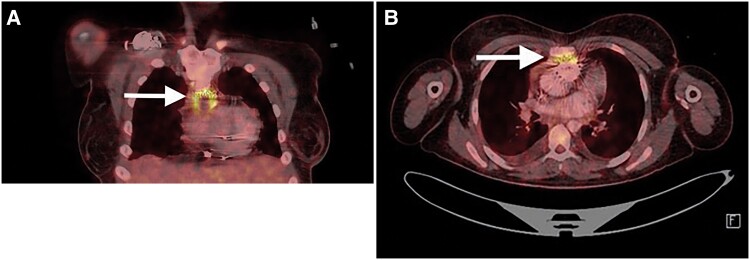
背景:经导管肺动脉瓣植入术(TPVI)后患者发生感染性假瓣膜心内膜炎的风险增加。TPVI后感染性心内膜炎(IE)的诊断尤其困难,因为超声心动图显示经导管肺瓣膜(TPV)受损[Delgado V, Ajmone Marsan N, de Waha S, Bonaros N, Brida M, Burri H,等。2023 ESC心内膜炎治疗指南]。[J].中国生物医学工程学报,2009;22(4):444 - 444。本病例报告的目的是描述18f -氟脱氧葡萄糖正电子发射断层扫描/计算机断层扫描(18F-FDG PET/CT)在诊断tpvi后IE中的重要作用。病例总结:一名22岁女性因发烧和胸痛就诊于急诊科。相关既往病史包括婴儿期左心室流出膜切除术,4岁时Ross手术并术后植入起搏器,16岁时因肺动脉瓣狭窄行Melody™TPVI。血液检查显示炎症标志物升高经胸超声心动图显示肺动脉收缩压升高53毫米汞柱。2天后,血培养出现链球菌阳性。随后,经食管超声心动图显示TPV峰值梯度升高(25mmhg)。没有明确的瓣膜或起搏器导联植被被确定,但不能排除,因为检查冠脉pv是困难的。然而,18F-FDG PET/CT显示TPV处代谢增高,证实了TPV IE的诊断。静脉给予抗生素治疗,导致临床改善和炎症指标正常化。讨论:经胸超声心动图和经食管超声心动图往往不能提供充分的评估,使得18F-FDG PET/CT对于诊断TPV IE至关重要。重要的是要注意假阴性和假阳性诊断和辐射暴露的可能性,特别是在年轻人群中。
The crucial role of 18F-fluorodeoxyglucose positron emission tomography/computed tomography in diagnosing pulmonary valve endocarditis in patients after transcatheter pulmonary valve implantation: a case report.
Background: Patients after transcatheter pulmonary valve implantation (TPVI) are at increased risk for infective prosthetic valve endocarditis. Diagnosis of infective endocarditis (IE) following TPVI is particularly difficult due to impaired visualization of the transcatheter pulmonary valve (TPV) with echocardiography [Delgado V, Ajmone Marsan N, de Waha S, Bonaros N, Brida M, Burri H, et al. 2023 ESC guidelines for the management of endocarditis. Eur Heart J 2023;44:3948-4042]. The aim of this case report is to describe the significant role of 18F-fluorodeoxyglucose positron emission tomography/computed tomography (18F-FDG PET/CT) in diagnosing IE post-TPVI.
Case summary: A 22-year-old woman presented to the emergency department with fever and chest pain. Relevant past medical history included a left ventricular outflow membrane resection at infancy, a Ross procedure at the age of 4 with post-operative pacemaker implantation and Melody™ TPVI at the age of 16 because of pulmonary valve stenosis. Blood tests showed elevated inflammatory markers. Transthoracic echocardiography revealed elevated systolic pulmonary artery pressure of 53 mmHg. After 2 days, blood cultures appeared positive for Streptococcus species. Subsequently, transoesophageal echocardiography showed an elevated TPV peak gradient (25 mmHg). No clear valvular nor pacemaker lead vegetations were identified but could not be ruled out as inspection of the TPV was difficult. However, 18F-FDG PET/CT demonstrated heightened metabolism at the TPV, which confirmed the diagnosis of TPV IE. Intravenous antibiotic treatment was administered, which led to clinical improvement and normalization of the inflammatory markers.
Discussion: Transthoracic echocardiography and transoesophageal echocardiography often fail to provide adequate assessment, making 18F-FDG PET/CT crucial for diagnosing TPV IE in this case. Important to notice is the possibility of false-negative and false-positive diagnoses and the radiation exposure, particularly in this young population.






 京公网安备 11010802042870号
京ICP备2023020795号-1
京公网安备 11010802042870号
京ICP备2023020795号-1

 分享
分享
 求助内容:
求助内容: 应助结果提醒方式:
 扫码关注我们
