Gaohong Di, Sandra Vázquez-Reyes, Blanca Díaz, Carolina Peña-Martinez, Alicia García-Culebras, María I Cuartero, Ana Moraga, Jesús M Pradillo, Elga Esposito, Eng H Lo, María A Moro, Ignacio Lizasoain
{"title":"即使在阿司匹林预处理的情况下,白天服用 DNase-I 也能保护小鼠免于缺血性中风,而不会诱发出血或 tPA 引起的出血转化。","authors":"Gaohong Di, Sandra Vázquez-Reyes, Blanca Díaz, Carolina Peña-Martinez, Alicia García-Culebras, María I Cuartero, Ana Moraga, Jesús M Pradillo, Elga Esposito, Eng H Lo, María A Moro, Ignacio Lizasoain","doi":"10.1161/STROKEAHA.124.049961","DOIUrl":null,"url":null,"abstract":"<p><strong>Background: </strong>Acute ischemic stroke treatment typically involves tissue-type plasminogen activator (tPA) or tenecteplase, but about 50% of patients do not achieve successful reperfusion. The causes of tPA resistance, influenced by thrombus composition and timing, are not fully clear. Neutrophil extracellular traps (NETs), associated with poor outcomes and reperfusion resistance, contribute to thrombosis. DNase-I, which degrades neutrophil extracellular traps, could improve thrombolytic efficacy. However, more studies are needed to understand the impact of DNase-I in tPA-sensitive stroke models, the safety of coadministering DNase-I and tPA regarding hemorrhagic transformation (HT), optimal timing for use, and effects on aspirin-treated animals.</p><p><strong>Methods: </strong>We used in situ thromboembolic stroke, a tPA-sensitive model, where late tPA administration causes HT. Middle cerebral artery occlusion was induced at different zeitgeber times (ZT) to study the optimal timing for administration. DNase-I, tPA, and aspirin were administered at various times to evaluate their effects.</p><p><strong>Results: </strong>DNase-I reduced infarct volume and improved functional outcomes 24 hours post-middle cerebral artery occlusion by decreasing plasma and cortical neutrophil extracellular trap levels. DNase-I caused no bleeding or impact on HT induced by late tPA. Its protective effect was only seen when given during the daytime (rodent inactive phase; ZT4-7), not overnight (active phase; ZT13-16). Chronic aspirin pretreatment increased tPA-induced HT but did not change the protective effects of DNase-I, with or without tPA.</p><p><strong>Conclusions: </strong>Our study demonstrates that daytime (inactive phase) DNase-I administration is a safe and effective treatment for experimental stroke. This is particularly important given the 2 ongoing clinical trials for stroke patients.</p><p><strong>Registration: </strong>URL: https://www.clinicaltrials.gov; Unique identifier: NCT05203224 and NCT05880524.</p>","PeriodicalId":21989,"journal":{"name":"Stroke","volume":"56 2","pages":"527-532"},"PeriodicalIF":8.9000,"publicationDate":"2025-02-01","publicationTypes":"Journal Article","fieldsOfStudy":null,"isOpenAccess":false,"openAccessPdf":"https://www.ncbi.nlm.nih.gov/pmc/articles/PMC11771350/pdf/","citationCount":"0","resultStr":"{\"title\":\"Daytime DNase-I Administration Protects Mice From Ischemic Stroke Without Inducing Bleeding or tPA-Induced Hemorrhagic Transformation, Even With Aspirin Pretreatment.\",\"authors\":\"Gaohong Di, Sandra Vázquez-Reyes, Blanca Díaz, Carolina Peña-Martinez, Alicia García-Culebras, María I Cuartero, Ana Moraga, Jesús M Pradillo, Elga Esposito, Eng H Lo, María A Moro, Ignacio Lizasoain\",\"doi\":\"10.1161/STROKEAHA.124.049961\",\"DOIUrl\":null,\"url\":null,\"abstract\":\"<p><strong>Background: </strong>Acute ischemic stroke treatment typically involves tissue-type plasminogen activator (tPA) or tenecteplase, but about 50% of patients do not achieve successful reperfusion. The causes of tPA resistance, influenced by thrombus composition and timing, are not fully clear. Neutrophil extracellular traps (NETs), associated with poor outcomes and reperfusion resistance, contribute to thrombosis. DNase-I, which degrades neutrophil extracellular traps, could improve thrombolytic efficacy. However, more studies are needed to understand the impact of DNase-I in tPA-sensitive stroke models, the safety of coadministering DNase-I and tPA regarding hemorrhagic transformation (HT), optimal timing for use, and effects on aspirin-treated animals.</p><p><strong>Methods: </strong>We used in situ thromboembolic stroke, a tPA-sensitive model, where late tPA administration causes HT. Middle cerebral artery occlusion was induced at different zeitgeber times (ZT) to study the optimal timing for administration. DNase-I, tPA, and aspirin were administered at various times to evaluate their effects.</p><p><strong>Results: </strong>DNase-I reduced infarct volume and improved functional outcomes 24 hours post-middle cerebral artery occlusion by decreasing plasma and cortical neutrophil extracellular trap levels. DNase-I caused no bleeding or impact on HT induced by late tPA. Its protective effect was only seen when given during the daytime (rodent inactive phase; ZT4-7), not overnight (active phase; ZT13-16). Chronic aspirin pretreatment increased tPA-induced HT but did not change the protective effects of DNase-I, with or without tPA.</p><p><strong>Conclusions: </strong>Our study demonstrates that daytime (inactive phase) DNase-I administration is a safe and effective treatment for experimental stroke. This is particularly important given the 2 ongoing clinical trials for stroke patients.</p><p><strong>Registration: </strong>URL: https://www.clinicaltrials.gov; Unique identifier: NCT05203224 and NCT05880524.</p>\",\"PeriodicalId\":21989,\"journal\":{\"name\":\"Stroke\",\"volume\":\"56 2\",\"pages\":\"527-532\"},\"PeriodicalIF\":8.9000,\"publicationDate\":\"2025-02-01\",\"publicationTypes\":\"Journal Article\",\"fieldsOfStudy\":null,\"isOpenAccess\":false,\"openAccessPdf\":\"https://www.ncbi.nlm.nih.gov/pmc/articles/PMC11771350/pdf/\",\"citationCount\":\"0\",\"resultStr\":null,\"platform\":\"Semanticscholar\",\"paperid\":null,\"PeriodicalName\":\"Stroke\",\"FirstCategoryId\":\"3\",\"ListUrlMain\":\"https://doi.org/10.1161/STROKEAHA.124.049961\",\"RegionNum\":1,\"RegionCategory\":\"医学\",\"ArticlePicture\":[],\"TitleCN\":null,\"AbstractTextCN\":null,\"PMCID\":null,\"EPubDate\":\"2025/1/27 0:00:00\",\"PubModel\":\"Epub\",\"JCR\":\"Q1\",\"JCRName\":\"CLINICAL NEUROLOGY\",\"Score\":null,\"Total\":0}","platform":"Semanticscholar","paperid":null,"PeriodicalName":"Stroke","FirstCategoryId":"3","ListUrlMain":"https://doi.org/10.1161/STROKEAHA.124.049961","RegionNum":1,"RegionCategory":"医学","ArticlePicture":[],"TitleCN":null,"AbstractTextCN":null,"PMCID":null,"EPubDate":"2025/1/27 0:00:00","PubModel":"Epub","JCR":"Q1","JCRName":"CLINICAL NEUROLOGY","Score":null,"Total":0}
Daytime DNase-I Administration Protects Mice From Ischemic Stroke Without Inducing Bleeding or tPA-Induced Hemorrhagic Transformation, Even With Aspirin Pretreatment.
Background: Acute ischemic stroke treatment typically involves tissue-type plasminogen activator (tPA) or tenecteplase, but about 50% of patients do not achieve successful reperfusion. The causes of tPA resistance, influenced by thrombus composition and timing, are not fully clear. Neutrophil extracellular traps (NETs), associated with poor outcomes and reperfusion resistance, contribute to thrombosis. DNase-I, which degrades neutrophil extracellular traps, could improve thrombolytic efficacy. However, more studies are needed to understand the impact of DNase-I in tPA-sensitive stroke models, the safety of coadministering DNase-I and tPA regarding hemorrhagic transformation (HT), optimal timing for use, and effects on aspirin-treated animals.
Methods: We used in situ thromboembolic stroke, a tPA-sensitive model, where late tPA administration causes HT. Middle cerebral artery occlusion was induced at different zeitgeber times (ZT) to study the optimal timing for administration. DNase-I, tPA, and aspirin were administered at various times to evaluate their effects.
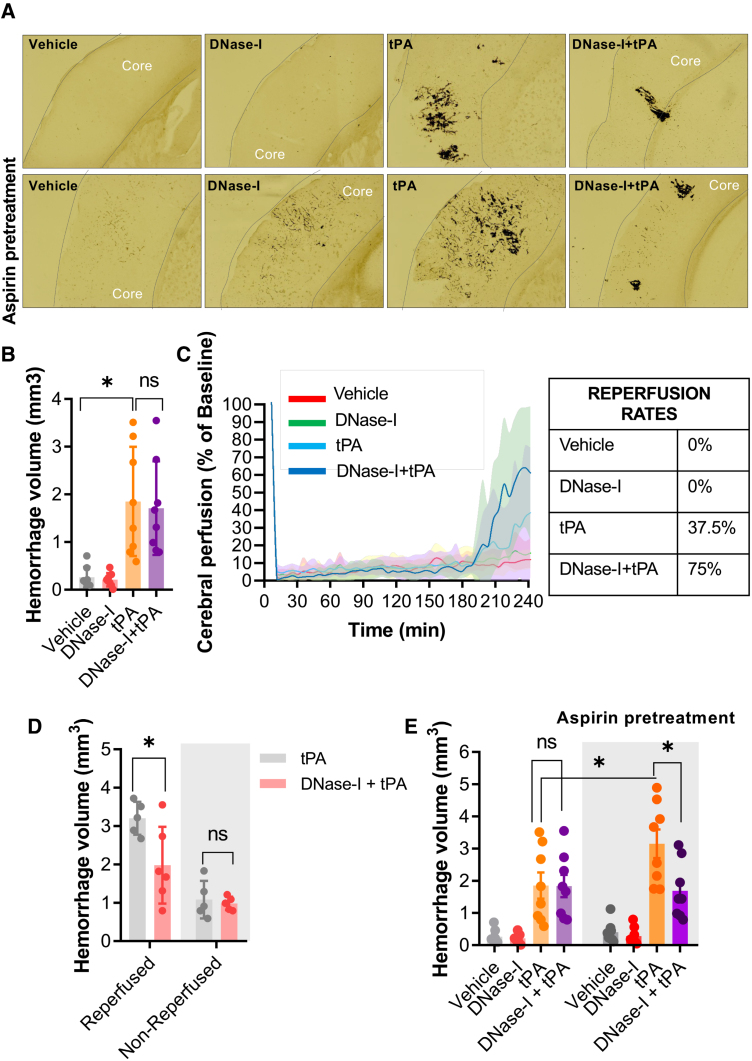
Results: DNase-I reduced infarct volume and improved functional outcomes 24 hours post-middle cerebral artery occlusion by decreasing plasma and cortical neutrophil extracellular trap levels. DNase-I caused no bleeding or impact on HT induced by late tPA. Its protective effect was only seen when given during the daytime (rodent inactive phase; ZT4-7), not overnight (active phase; ZT13-16). Chronic aspirin pretreatment increased tPA-induced HT but did not change the protective effects of DNase-I, with or without tPA.
Conclusions: Our study demonstrates that daytime (inactive phase) DNase-I administration is a safe and effective treatment for experimental stroke. This is particularly important given the 2 ongoing clinical trials for stroke patients.
Registration: URL: https://www.clinicaltrials.gov; Unique identifier: NCT05203224 and NCT05880524.
期刊介绍:
Stroke is a monthly publication that collates reports of clinical and basic investigation of any aspect of the cerebral circulation and its diseases. The publication covers a wide range of disciplines including anesthesiology, critical care medicine, epidemiology, internal medicine, neurology, neuro-ophthalmology, neuropathology, neuropsychology, neurosurgery, nuclear medicine, nursing, radiology, rehabilitation, speech pathology, vascular physiology, and vascular surgery.
The audience of Stroke includes neurologists, basic scientists, cardiologists, vascular surgeons, internists, interventionalists, neurosurgeons, nurses, and physiatrists.
Stroke is indexed in Biological Abstracts, BIOSIS, CAB Abstracts, Chemical Abstracts, CINAHL, Current Contents, Embase, MEDLINE, and Science Citation Index Expanded.





 京公网安备 11010802042870号
京ICP备2023020795号-1
京公网安备 11010802042870号
京ICP备2023020795号-1

 分享
分享
 求助内容:
求助内容: 应助结果提醒方式:
 扫码关注我们
