{"title":"基于流动的体内法枚举翻译核糖体和翻译延伸率。","authors":"Mina O Seedhom, Devin Dersh, Jonathan W Yewdell","doi":"10.21769/BioProtoc.5165","DOIUrl":null,"url":null,"abstract":"<p><p>Protein synthesis is by far the most energetically costly cellular process in rapidly dividing cells. Quantifying translating ribosomes in individual cells and their average mRNA transit rate is arduous. Quantitating assembled ribosomes in individual cells requires electron microscopy and does not indicate ribosome translation status. Measurement of average transit rates entails in vitro pulse-chase radiolabeling of isolated cells or ribosome profiling after ribosome runoff, which is expensive and extremely demanding technically. Here, we detail protocols based on ribosome-mediated nascent chain puromycylation, harringtonine to stall initiating ribosomes while allowing ribosome elongation to continue normally, and cycloheximide to freeze translating ribosomes in place. Each compound is delivered intravenously to mice in the appropriate order, and after ex vivo cell fixation and permeabilization, translating ribosome numbers and transit rates are measured by flow cytometry using a directly conjugated puromycin-specific antibody. Key features • Measure relative numbers of translating ribosomes in mixed single-cell preparations. • Quantitate relative in vivo ribosome transit rates in mixed single-cell preparations. • Detect ribosome stalling in vivo.</p>","PeriodicalId":93907,"journal":{"name":"Bio-protocol","volume":"15 2","pages":"e5165"},"PeriodicalIF":1.1000,"publicationDate":"2025-01-20","publicationTypes":"Journal Article","fieldsOfStudy":null,"isOpenAccess":false,"openAccessPdf":"https://www.ncbi.nlm.nih.gov/pmc/articles/PMC11769755/pdf/","citationCount":"0","resultStr":"{\"title\":\"Flow-based In Vivo Method to Enumerate Translating Ribosomes and Translation Elongation Rate.\",\"authors\":\"Mina O Seedhom, Devin Dersh, Jonathan W Yewdell\",\"doi\":\"10.21769/BioProtoc.5165\",\"DOIUrl\":null,\"url\":null,\"abstract\":\"<p><p>Protein synthesis is by far the most energetically costly cellular process in rapidly dividing cells. Quantifying translating ribosomes in individual cells and their average mRNA transit rate is arduous. Quantitating assembled ribosomes in individual cells requires electron microscopy and does not indicate ribosome translation status. Measurement of average transit rates entails in vitro pulse-chase radiolabeling of isolated cells or ribosome profiling after ribosome runoff, which is expensive and extremely demanding technically. Here, we detail protocols based on ribosome-mediated nascent chain puromycylation, harringtonine to stall initiating ribosomes while allowing ribosome elongation to continue normally, and cycloheximide to freeze translating ribosomes in place. Each compound is delivered intravenously to mice in the appropriate order, and after ex vivo cell fixation and permeabilization, translating ribosome numbers and transit rates are measured by flow cytometry using a directly conjugated puromycin-specific antibody. Key features • Measure relative numbers of translating ribosomes in mixed single-cell preparations. • Quantitate relative in vivo ribosome transit rates in mixed single-cell preparations. • Detect ribosome stalling in vivo.</p>\",\"PeriodicalId\":93907,\"journal\":{\"name\":\"Bio-protocol\",\"volume\":\"15 2\",\"pages\":\"e5165\"},\"PeriodicalIF\":1.1000,\"publicationDate\":\"2025-01-20\",\"publicationTypes\":\"Journal Article\",\"fieldsOfStudy\":null,\"isOpenAccess\":false,\"openAccessPdf\":\"https://www.ncbi.nlm.nih.gov/pmc/articles/PMC11769755/pdf/\",\"citationCount\":\"0\",\"resultStr\":null,\"platform\":\"Semanticscholar\",\"paperid\":null,\"PeriodicalName\":\"Bio-protocol\",\"FirstCategoryId\":\"1085\",\"ListUrlMain\":\"https://doi.org/10.21769/BioProtoc.5165\",\"RegionNum\":0,\"RegionCategory\":null,\"ArticlePicture\":[],\"TitleCN\":null,\"AbstractTextCN\":null,\"PMCID\":null,\"EPubDate\":\"\",\"PubModel\":\"\",\"JCR\":\"Q3\",\"JCRName\":\"BIOLOGY\",\"Score\":null,\"Total\":0}","platform":"Semanticscholar","paperid":null,"PeriodicalName":"Bio-protocol","FirstCategoryId":"1085","ListUrlMain":"https://doi.org/10.21769/BioProtoc.5165","RegionNum":0,"RegionCategory":null,"ArticlePicture":[],"TitleCN":null,"AbstractTextCN":null,"PMCID":null,"EPubDate":"","PubModel":"","JCR":"Q3","JCRName":"BIOLOGY","Score":null,"Total":0}
Flow-based In Vivo Method to Enumerate Translating Ribosomes and Translation Elongation Rate.
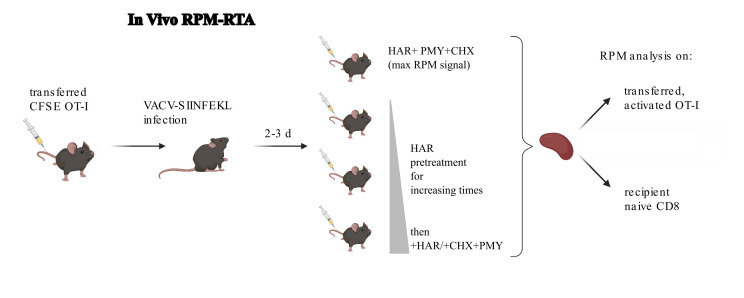
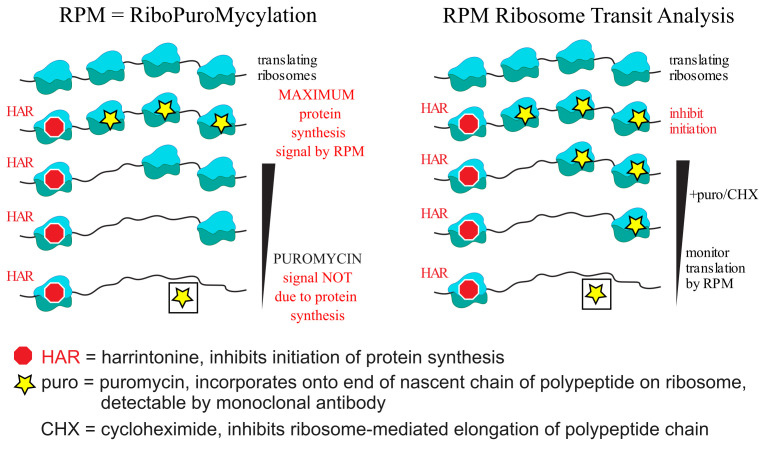
Protein synthesis is by far the most energetically costly cellular process in rapidly dividing cells. Quantifying translating ribosomes in individual cells and their average mRNA transit rate is arduous. Quantitating assembled ribosomes in individual cells requires electron microscopy and does not indicate ribosome translation status. Measurement of average transit rates entails in vitro pulse-chase radiolabeling of isolated cells or ribosome profiling after ribosome runoff, which is expensive and extremely demanding technically. Here, we detail protocols based on ribosome-mediated nascent chain puromycylation, harringtonine to stall initiating ribosomes while allowing ribosome elongation to continue normally, and cycloheximide to freeze translating ribosomes in place. Each compound is delivered intravenously to mice in the appropriate order, and after ex vivo cell fixation and permeabilization, translating ribosome numbers and transit rates are measured by flow cytometry using a directly conjugated puromycin-specific antibody. Key features • Measure relative numbers of translating ribosomes in mixed single-cell preparations. • Quantitate relative in vivo ribosome transit rates in mixed single-cell preparations. • Detect ribosome stalling in vivo.





 京公网安备 11010802042870号
京ICP备2023020795号-1
京公网安备 11010802042870号
京ICP备2023020795号-1

 分享
分享

 求助内容:
求助内容: 应助结果提醒方式:
 扫码关注我们
