Mihai I Tănase, Mara Tanase, Marcel Cosgarea, Gheorghe Doinel Radeanu, Raluca Maria Hendea, Alma A Maniu
{"title":"探讨慢性鼻窦炎伴鼻息肉患者恢复力与疾病严重程度的关系。","authors":"Mihai I Tănase, Mara Tanase, Marcel Cosgarea, Gheorghe Doinel Radeanu, Raluca Maria Hendea, Alma A Maniu","doi":"10.7759/cureus.78027","DOIUrl":null,"url":null,"abstract":"<p><p>Background Chronic rhinosinusitis with nasal polyps (CRSwNP) significantly affects patients' quality of life, impacting both physical and psychological well-being. This study investigated the potential role of resilience in coping with CRSwNP and its relationship to disease severity and cellular proliferation. Methodology Between July 1, 2021, and June 30, 2022, 30 patients diagnosed with CRSwNP were enrolled in a study at Cardiomed Hospital in Cluj-Napoca, Romania. Resilience was assessed using the Connor-Davidson Resilience Scale (CD-RISC), while disease severity was evaluated through patient-reported outcomes (Sino-Nasal Outcome Test (SNOT-22)) and objective measures (Lund-Mackay score). Ki-67 expression was analyzed as a marker of cellular proliferation within nasal polyps. Results No significant correlation was observed between resilience and either SNOT-22 scores or Ki-67 expression. However, a strong positive correlation was found between SNOT-22 scores and Lund-Mackay scores, indicating that patients with more severe symptoms also exhibited greater objective disease burden. In addition, a moderate positive correlation was identified between Ki-67 expression and Lund-Mackay scores, suggesting a potential link between cellular proliferation and disease severity. Conclusion These findings suggest that resilience may not directly influence symptom severity or cellular proliferation in CRSwNP. Further research with larger sample sizes and longitudinal designs is needed to elucidate the complex interplay between resilience, disease pathophysiology, and patient outcomes in CRSwNP. This will ultimately inform the development of more targeted and effective interventions to improve the quality of life for individuals with this chronic condition.</p>","PeriodicalId":93960,"journal":{"name":"Cureus","volume":"17 1","pages":"e78027"},"PeriodicalIF":1.3000,"publicationDate":"2025-01-26","publicationTypes":"Journal Article","fieldsOfStudy":null,"isOpenAccess":false,"openAccessPdf":"https://www.ncbi.nlm.nih.gov/pmc/articles/PMC11770165/pdf/","citationCount":"0","resultStr":"{\"title\":\"Exploring the Link Between Resilience and Disease Severity in Chronic Rhinosinusitis With Nasal Polyps.\",\"authors\":\"Mihai I Tănase, Mara Tanase, Marcel Cosgarea, Gheorghe Doinel Radeanu, Raluca Maria Hendea, Alma A Maniu\",\"doi\":\"10.7759/cureus.78027\",\"DOIUrl\":null,\"url\":null,\"abstract\":\"<p><p>Background Chronic rhinosinusitis with nasal polyps (CRSwNP) significantly affects patients' quality of life, impacting both physical and psychological well-being. This study investigated the potential role of resilience in coping with CRSwNP and its relationship to disease severity and cellular proliferation. Methodology Between July 1, 2021, and June 30, 2022, 30 patients diagnosed with CRSwNP were enrolled in a study at Cardiomed Hospital in Cluj-Napoca, Romania. Resilience was assessed using the Connor-Davidson Resilience Scale (CD-RISC), while disease severity was evaluated through patient-reported outcomes (Sino-Nasal Outcome Test (SNOT-22)) and objective measures (Lund-Mackay score). Ki-67 expression was analyzed as a marker of cellular proliferation within nasal polyps. Results No significant correlation was observed between resilience and either SNOT-22 scores or Ki-67 expression. However, a strong positive correlation was found between SNOT-22 scores and Lund-Mackay scores, indicating that patients with more severe symptoms also exhibited greater objective disease burden. In addition, a moderate positive correlation was identified between Ki-67 expression and Lund-Mackay scores, suggesting a potential link between cellular proliferation and disease severity. Conclusion These findings suggest that resilience may not directly influence symptom severity or cellular proliferation in CRSwNP. Further research with larger sample sizes and longitudinal designs is needed to elucidate the complex interplay between resilience, disease pathophysiology, and patient outcomes in CRSwNP. This will ultimately inform the development of more targeted and effective interventions to improve the quality of life for individuals with this chronic condition.</p>\",\"PeriodicalId\":93960,\"journal\":{\"name\":\"Cureus\",\"volume\":\"17 1\",\"pages\":\"e78027\"},\"PeriodicalIF\":1.3000,\"publicationDate\":\"2025-01-26\",\"publicationTypes\":\"Journal Article\",\"fieldsOfStudy\":null,\"isOpenAccess\":false,\"openAccessPdf\":\"https://www.ncbi.nlm.nih.gov/pmc/articles/PMC11770165/pdf/\",\"citationCount\":\"0\",\"resultStr\":null,\"platform\":\"Semanticscholar\",\"paperid\":null,\"PeriodicalName\":\"Cureus\",\"FirstCategoryId\":\"1085\",\"ListUrlMain\":\"https://doi.org/10.7759/cureus.78027\",\"RegionNum\":0,\"RegionCategory\":null,\"ArticlePicture\":[],\"TitleCN\":null,\"AbstractTextCN\":null,\"PMCID\":null,\"EPubDate\":\"2025/1/1 0:00:00\",\"PubModel\":\"eCollection\",\"JCR\":\"Q3\",\"JCRName\":\"MEDICINE, GENERAL & INTERNAL\",\"Score\":null,\"Total\":0}","platform":"Semanticscholar","paperid":null,"PeriodicalName":"Cureus","FirstCategoryId":"1085","ListUrlMain":"https://doi.org/10.7759/cureus.78027","RegionNum":0,"RegionCategory":null,"ArticlePicture":[],"TitleCN":null,"AbstractTextCN":null,"PMCID":null,"EPubDate":"2025/1/1 0:00:00","PubModel":"eCollection","JCR":"Q3","JCRName":"MEDICINE, GENERAL & INTERNAL","Score":null,"Total":0}
引用次数: 0
摘要
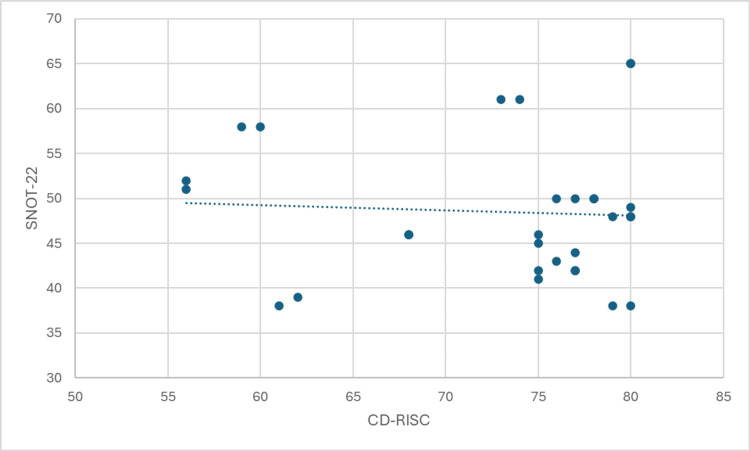
慢性鼻窦炎伴鼻息肉(CRSwNP)显著影响患者的生活质量,影响患者的生理和心理健康。本研究探讨了韧性在应对CRSwNP中的潜在作用及其与疾病严重程度和细胞增殖的关系。在2021年7月1日至2022年6月30日期间,30名诊断为CRSwNP的患者在罗马尼亚克卢日-纳波卡Cardiomed医院参加了一项研究。使用Connor-Davidson恢复能力量表(CD-RISC)评估恢复能力,而通过患者报告的结果(Sino-Nasal Outcome Test (SNOT-22))和客观测量(Lund-Mackay评分)评估疾病严重程度。Ki-67的表达作为鼻息肉细胞增殖的标志。结果弹性与SNOT-22评分和Ki-67表达均无显著相关性。然而,SNOT-22评分与Lund-Mackay评分之间存在很强的正相关,表明症状越严重的患者也表现出更大的客观疾病负担。此外,Ki-67表达与Lund-Mackay评分之间存在中度正相关,表明细胞增殖与疾病严重程度之间存在潜在联系。结论抗压能力可能不直接影响CRSwNP的症状严重程度或细胞增殖。进一步的研究需要更大的样本量和纵向设计来阐明CRSwNP中恢复力、疾病病理生理和患者预后之间的复杂相互作用。这将最终为制定更有针对性和更有效的干预措施提供信息,以改善这种慢性疾病患者的生活质量。
Exploring the Link Between Resilience and Disease Severity in Chronic Rhinosinusitis With Nasal Polyps.
Background Chronic rhinosinusitis with nasal polyps (CRSwNP) significantly affects patients' quality of life, impacting both physical and psychological well-being. This study investigated the potential role of resilience in coping with CRSwNP and its relationship to disease severity and cellular proliferation. Methodology Between July 1, 2021, and June 30, 2022, 30 patients diagnosed with CRSwNP were enrolled in a study at Cardiomed Hospital in Cluj-Napoca, Romania. Resilience was assessed using the Connor-Davidson Resilience Scale (CD-RISC), while disease severity was evaluated through patient-reported outcomes (Sino-Nasal Outcome Test (SNOT-22)) and objective measures (Lund-Mackay score). Ki-67 expression was analyzed as a marker of cellular proliferation within nasal polyps. Results No significant correlation was observed between resilience and either SNOT-22 scores or Ki-67 expression. However, a strong positive correlation was found between SNOT-22 scores and Lund-Mackay scores, indicating that patients with more severe symptoms also exhibited greater objective disease burden. In addition, a moderate positive correlation was identified between Ki-67 expression and Lund-Mackay scores, suggesting a potential link between cellular proliferation and disease severity. Conclusion These findings suggest that resilience may not directly influence symptom severity or cellular proliferation in CRSwNP. Further research with larger sample sizes and longitudinal designs is needed to elucidate the complex interplay between resilience, disease pathophysiology, and patient outcomes in CRSwNP. This will ultimately inform the development of more targeted and effective interventions to improve the quality of life for individuals with this chronic condition.






 京公网安备 11010802042870号
京ICP备2023020795号-1
京公网安备 11010802042870号
京ICP备2023020795号-1

 分享
分享

 求助内容:
求助内容: 应助结果提醒方式:
 扫码关注我们
