Francisca Maria da Silva Freitas, Rita Da Graça Carvalhal Frazão Correia, Camila Biazus-Dalcin, Herla Maria Furtado Jorge, Priscila de Souza Aquino, Bruno Luciano Carneiro Alves de Oliveira
{"title":"巴西产前检查:根据巴西国家健康调查的流行率和相关因素。","authors":"Francisca Maria da Silva Freitas, Rita Da Graça Carvalhal Frazão Correia, Camila Biazus-Dalcin, Herla Maria Furtado Jorge, Priscila de Souza Aquino, Bruno Luciano Carneiro Alves de Oliveira","doi":"10.1590/1980-220X-REEUSP-2024-0154en","DOIUrl":null,"url":null,"abstract":"<p><strong>Objective: </strong>To analyze the prevalence of prenatal tests of pregnant women and factors associated with variation in this prevalence in the years of the Brazilian National Health Survey 2013 and 2019.</p><p><strong>Method: </strong>A cross-sectional study, carried out with women who underwent prenatal care, interviewed in the Brazilian National Health Survey 2013 (n = 1,851) and 2019 (n = 2,729).</p><p><strong>Results: </strong>The most prevalent tests were urine and blood, and the least prevalent were syphilis and HIV. During the period, the number of tests for syphilis (15.2; 95% CI: 11.0; 22.0) and HIV (4.3; 95% CI: 4.3; 8.0) increased, but the number of tests for the others decreased. The prevalence of tests for the four tests increased and reached 69.9% (95% CI: 67.0; 72.8) in 2019 compared to 60% (95% CI: 56.1; 63.9) in 2013.</p><p><strong>Conclusion: </strong>There was a greater number of prenatal tests performed, specifically for syphilis and HIV, rather than a reduction in the number of blood and urine tests. Despite the increase in access to all tests for the most vulnerable groups and locations in the country, prevalence in these groups is still low.</p>","PeriodicalId":94195,"journal":{"name":"Revista da Escola de Enfermagem da U S P","volume":"58 ","pages":"e20240154"},"PeriodicalIF":0.0000,"publicationDate":"2025-01-27","publicationTypes":"Journal Article","fieldsOfStudy":null,"isOpenAccess":false,"openAccessPdf":"https://www.ncbi.nlm.nih.gov/pmc/articles/PMC11773685/pdf/","citationCount":"0","resultStr":"{\"title\":\"Prenatal tests in Brazil: prevalence and associated factors according to the Brazilian National Health Survey.\",\"authors\":\"Francisca Maria da Silva Freitas, Rita Da Graça Carvalhal Frazão Correia, Camila Biazus-Dalcin, Herla Maria Furtado Jorge, Priscila de Souza Aquino, Bruno Luciano Carneiro Alves de Oliveira\",\"doi\":\"10.1590/1980-220X-REEUSP-2024-0154en\",\"DOIUrl\":null,\"url\":null,\"abstract\":\"<p><strong>Objective: </strong>To analyze the prevalence of prenatal tests of pregnant women and factors associated with variation in this prevalence in the years of the Brazilian National Health Survey 2013 and 2019.</p><p><strong>Method: </strong>A cross-sectional study, carried out with women who underwent prenatal care, interviewed in the Brazilian National Health Survey 2013 (n = 1,851) and 2019 (n = 2,729).</p><p><strong>Results: </strong>The most prevalent tests were urine and blood, and the least prevalent were syphilis and HIV. During the period, the number of tests for syphilis (15.2; 95% CI: 11.0; 22.0) and HIV (4.3; 95% CI: 4.3; 8.0) increased, but the number of tests for the others decreased. The prevalence of tests for the four tests increased and reached 69.9% (95% CI: 67.0; 72.8) in 2019 compared to 60% (95% CI: 56.1; 63.9) in 2013.</p><p><strong>Conclusion: </strong>There was a greater number of prenatal tests performed, specifically for syphilis and HIV, rather than a reduction in the number of blood and urine tests. Despite the increase in access to all tests for the most vulnerable groups and locations in the country, prevalence in these groups is still low.</p>\",\"PeriodicalId\":94195,\"journal\":{\"name\":\"Revista da Escola de Enfermagem da U S P\",\"volume\":\"58 \",\"pages\":\"e20240154\"},\"PeriodicalIF\":0.0000,\"publicationDate\":\"2025-01-27\",\"publicationTypes\":\"Journal Article\",\"fieldsOfStudy\":null,\"isOpenAccess\":false,\"openAccessPdf\":\"https://www.ncbi.nlm.nih.gov/pmc/articles/PMC11773685/pdf/\",\"citationCount\":\"0\",\"resultStr\":null,\"platform\":\"Semanticscholar\",\"paperid\":null,\"PeriodicalName\":\"Revista da Escola de Enfermagem da U S P\",\"FirstCategoryId\":\"1085\",\"ListUrlMain\":\"https://doi.org/10.1590/1980-220X-REEUSP-2024-0154en\",\"RegionNum\":0,\"RegionCategory\":null,\"ArticlePicture\":[],\"TitleCN\":null,\"AbstractTextCN\":null,\"PMCID\":null,\"EPubDate\":\"2025/1/1 0:00:00\",\"PubModel\":\"eCollection\",\"JCR\":\"\",\"JCRName\":\"\",\"Score\":null,\"Total\":0}","platform":"Semanticscholar","paperid":null,"PeriodicalName":"Revista da Escola de Enfermagem da U S P","FirstCategoryId":"1085","ListUrlMain":"https://doi.org/10.1590/1980-220X-REEUSP-2024-0154en","RegionNum":0,"RegionCategory":null,"ArticlePicture":[],"TitleCN":null,"AbstractTextCN":null,"PMCID":null,"EPubDate":"2025/1/1 0:00:00","PubModel":"eCollection","JCR":"","JCRName":"","Score":null,"Total":0}
Prenatal tests in Brazil: prevalence and associated factors according to the Brazilian National Health Survey.
Objective: To analyze the prevalence of prenatal tests of pregnant women and factors associated with variation in this prevalence in the years of the Brazilian National Health Survey 2013 and 2019.
Method: A cross-sectional study, carried out with women who underwent prenatal care, interviewed in the Brazilian National Health Survey 2013 (n = 1,851) and 2019 (n = 2,729).
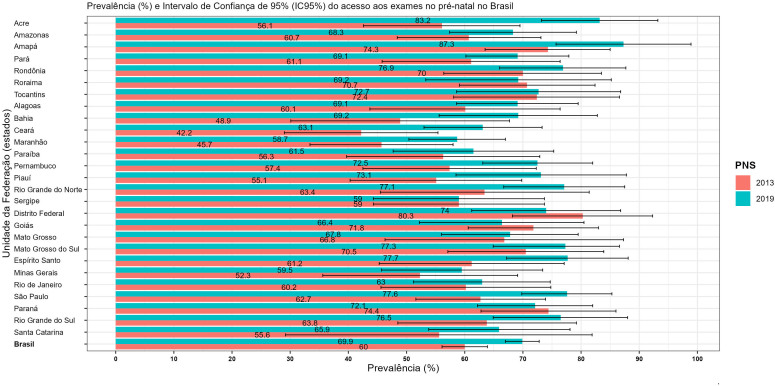
Results: The most prevalent tests were urine and blood, and the least prevalent were syphilis and HIV. During the period, the number of tests for syphilis (15.2; 95% CI: 11.0; 22.0) and HIV (4.3; 95% CI: 4.3; 8.0) increased, but the number of tests for the others decreased. The prevalence of tests for the four tests increased and reached 69.9% (95% CI: 67.0; 72.8) in 2019 compared to 60% (95% CI: 56.1; 63.9) in 2013.
Conclusion: There was a greater number of prenatal tests performed, specifically for syphilis and HIV, rather than a reduction in the number of blood and urine tests. Despite the increase in access to all tests for the most vulnerable groups and locations in the country, prevalence in these groups is still low.






 京公网安备 11010802042870号
京ICP备2023020795号-1
京公网安备 11010802042870号
京ICP备2023020795号-1

 分享
分享

 求助内容:
求助内容: 应助结果提醒方式:
 扫码关注我们
