{"title":"天然铁霉素和铁载体结合的天然产物是新型抗菌剂的灵感来源","authors":"Zhi-Ying Miao, Jing Lin, Wei-Min Chen","doi":"10.1016/j.ejmech.2025.117333","DOIUrl":null,"url":null,"abstract":"<div><div>The widespread emergence of multidrug-resistant (MDR) Gram-negative pathogens has posed a major challenge to clinical anti-infective therapy, and new effective treatments are urgently needed. A promising “Trojan horse” strategy involves conjugating antibiotics to siderophore molecules; the resulting siderophore-antibiotic conjugates (SACs) deliver antibiotics directly into cells by hijacking the sophisticated iron transport systems of Gram-negative bacteria, bypassing the outer membrane permeability barrier to enhance uptake and antibacterial efficacy. The clinical release of the first siderophore-antibiotic conjugate, cefiderocol, has aroused tremendous interest in the field among researchers and pharmaceutical companies. To date, most of the reported SACs have focused on the conjugation of siderophores to traditional antibacterial drugs. However, these antibacterial agents designed on the basis of the traditional antibiotic skeleton theoretically bear the risk of cross-resistance caused by shared molecular scaffolds. In this case, exploring novel natural product antibacterial conjugate scaffolds to circumvent the risk of early cross-resistance represents a presumably more sustainable approach for the development of SACs. In this review, we systematically summarize the research progress on siderophore-natural product conjugates as novel antimicrobial agents reported since 2010. Additionally, we propose challenges to be overcome and prospects for future development in this field.</div></div>","PeriodicalId":314,"journal":{"name":"European Journal of Medicinal Chemistry","volume":"287 ","pages":"Article 117333"},"PeriodicalIF":5.9000,"publicationDate":"2025-04-05","publicationTypes":"Journal Article","fieldsOfStudy":null,"isOpenAccess":false,"openAccessPdf":"","citationCount":"0","resultStr":"{\"title\":\"Natural sideromycins and siderophore-conjugated natural products as inspiration for novel antimicrobial agents\",\"authors\":\"Zhi-Ying Miao, Jing Lin, Wei-Min Chen\",\"doi\":\"10.1016/j.ejmech.2025.117333\",\"DOIUrl\":null,\"url\":null,\"abstract\":\"<div><div>The widespread emergence of multidrug-resistant (MDR) Gram-negative pathogens has posed a major challenge to clinical anti-infective therapy, and new effective treatments are urgently needed. A promising “Trojan horse” strategy involves conjugating antibiotics to siderophore molecules; the resulting siderophore-antibiotic conjugates (SACs) deliver antibiotics directly into cells by hijacking the sophisticated iron transport systems of Gram-negative bacteria, bypassing the outer membrane permeability barrier to enhance uptake and antibacterial efficacy. The clinical release of the first siderophore-antibiotic conjugate, cefiderocol, has aroused tremendous interest in the field among researchers and pharmaceutical companies. To date, most of the reported SACs have focused on the conjugation of siderophores to traditional antibacterial drugs. However, these antibacterial agents designed on the basis of the traditional antibiotic skeleton theoretically bear the risk of cross-resistance caused by shared molecular scaffolds. In this case, exploring novel natural product antibacterial conjugate scaffolds to circumvent the risk of early cross-resistance represents a presumably more sustainable approach for the development of SACs. In this review, we systematically summarize the research progress on siderophore-natural product conjugates as novel antimicrobial agents reported since 2010. Additionally, we propose challenges to be overcome and prospects for future development in this field.</div></div>\",\"PeriodicalId\":314,\"journal\":{\"name\":\"European Journal of Medicinal Chemistry\",\"volume\":\"287 \",\"pages\":\"Article 117333\"},\"PeriodicalIF\":5.9000,\"publicationDate\":\"2025-04-05\",\"publicationTypes\":\"Journal Article\",\"fieldsOfStudy\":null,\"isOpenAccess\":false,\"openAccessPdf\":\"\",\"citationCount\":\"0\",\"resultStr\":null,\"platform\":\"Semanticscholar\",\"paperid\":null,\"PeriodicalName\":\"European Journal of Medicinal Chemistry\",\"FirstCategoryId\":\"3\",\"ListUrlMain\":\"https://www.sciencedirect.com/science/article/pii/S0223523425000984\",\"RegionNum\":2,\"RegionCategory\":\"医学\",\"ArticlePicture\":[],\"TitleCN\":null,\"AbstractTextCN\":null,\"PMCID\":null,\"EPubDate\":\"2025/1/28 0:00:00\",\"PubModel\":\"Epub\",\"JCR\":\"Q1\",\"JCRName\":\"CHEMISTRY, MEDICINAL\",\"Score\":null,\"Total\":0}","platform":"Semanticscholar","paperid":null,"PeriodicalName":"European Journal of Medicinal Chemistry","FirstCategoryId":"3","ListUrlMain":"https://www.sciencedirect.com/science/article/pii/S0223523425000984","RegionNum":2,"RegionCategory":"医学","ArticlePicture":[],"TitleCN":null,"AbstractTextCN":null,"PMCID":null,"EPubDate":"2025/1/28 0:00:00","PubModel":"Epub","JCR":"Q1","JCRName":"CHEMISTRY, MEDICINAL","Score":null,"Total":0}
Natural sideromycins and siderophore-conjugated natural products as inspiration for novel antimicrobial agents
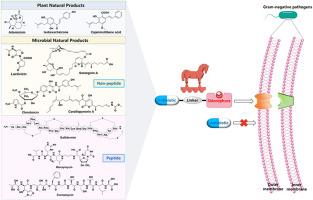
The widespread emergence of multidrug-resistant (MDR) Gram-negative pathogens has posed a major challenge to clinical anti-infective therapy, and new effective treatments are urgently needed. A promising “Trojan horse” strategy involves conjugating antibiotics to siderophore molecules; the resulting siderophore-antibiotic conjugates (SACs) deliver antibiotics directly into cells by hijacking the sophisticated iron transport systems of Gram-negative bacteria, bypassing the outer membrane permeability barrier to enhance uptake and antibacterial efficacy. The clinical release of the first siderophore-antibiotic conjugate, cefiderocol, has aroused tremendous interest in the field among researchers and pharmaceutical companies. To date, most of the reported SACs have focused on the conjugation of siderophores to traditional antibacterial drugs. However, these antibacterial agents designed on the basis of the traditional antibiotic skeleton theoretically bear the risk of cross-resistance caused by shared molecular scaffolds. In this case, exploring novel natural product antibacterial conjugate scaffolds to circumvent the risk of early cross-resistance represents a presumably more sustainable approach for the development of SACs. In this review, we systematically summarize the research progress on siderophore-natural product conjugates as novel antimicrobial agents reported since 2010. Additionally, we propose challenges to be overcome and prospects for future development in this field.
期刊介绍:
The European Journal of Medicinal Chemistry is a global journal that publishes studies on all aspects of medicinal chemistry. It provides a medium for publication of original papers and also welcomes critical review papers.
A typical paper would report on the organic synthesis, characterization and pharmacological evaluation of compounds. Other topics of interest are drug design, QSAR, molecular modeling, drug-receptor interactions, molecular aspects of drug metabolism, prodrug synthesis and drug targeting. The journal expects manuscripts to present the rational for a study, provide insight into the design of compounds or understanding of mechanism, or clarify the targets.





 京公网安备 11010802042870号
京ICP备2023020795号-1
京公网安备 11010802042870号
京ICP备2023020795号-1

 分享
分享
 求助内容:
求助内容: 应助结果提醒方式:
 扫码关注我们
