{"title":"工程酵母从阿魏酸和木质素中生产卵黄蛋白。","authors":"Bo-Tao He, Bing-Zhi Li","doi":"10.1007/s00253-025-13409-1","DOIUrl":null,"url":null,"abstract":"<p>Lignin, the most abundant renewable source of aromatic compounds on earth, remains underexploited in traditional biorefining. Fraxetin, a naturally occurring flavonoid, has garnered considerable attention in the scientific community due to its diverse and potent biological activities such as antimicrobial, anticancer, antioxidant, anti-inflammatory, and neurological protective actions. To enhance the green and value-added utilization of lignin, <i>Saccharomyces cerevisiae</i> was engineered as a cell factory to transform lignin derivatives to produce fraxetin. The expression of scopoletin 8-hydroxylase (S8H) and coumarin synthase (COSY) enabled <i>S. cerevisiae</i> to produce fraxetin from ferulic acid, one of the three principal monomers. The optimized fermentation strategies produced 19.1 mg/L fraxetin from ferulic acid by engineered <i>S. cerevisiae</i>. Additionally, the engineered cell factory achieved a fraxetin titer of 7.7 mg/L in lignin hydrolysate. This study successfully demonstrates the biotransformation of lignin monomers and lignin hydrolysate into fraxetin using a <i>S. cerevisiae</i> cell factory, thereby providing a viable strategy for the valorization of lignin.</p><p><i>• AtS8H showed substance specificity in the hydroxylation of scopoletin.</i></p><p><i>• AtCOSY and AtS8H were key enzymes for converting ferulic acid into fraxetin.</i></p><p><i>• Yeast was engineered to produce fraxetin from lignin hydrolysate.</i></p>","PeriodicalId":8342,"journal":{"name":"Applied Microbiology and Biotechnology","volume":"109 1","pages":""},"PeriodicalIF":4.3000,"publicationDate":"2025-01-27","publicationTypes":"Journal Article","fieldsOfStudy":null,"isOpenAccess":false,"openAccessPdf":"https://www.ncbi.nlm.nih.gov/pmc/articles/PMC11772470/pdf/","citationCount":"0","resultStr":"{\"title\":\"Engineering yeast to produce fraxetin from ferulic acid and lignin\",\"authors\":\"Bo-Tao He, Bing-Zhi Li\",\"doi\":\"10.1007/s00253-025-13409-1\",\"DOIUrl\":null,\"url\":null,\"abstract\":\"<p>Lignin, the most abundant renewable source of aromatic compounds on earth, remains underexploited in traditional biorefining. Fraxetin, a naturally occurring flavonoid, has garnered considerable attention in the scientific community due to its diverse and potent biological activities such as antimicrobial, anticancer, antioxidant, anti-inflammatory, and neurological protective actions. To enhance the green and value-added utilization of lignin, <i>Saccharomyces cerevisiae</i> was engineered as a cell factory to transform lignin derivatives to produce fraxetin. The expression of scopoletin 8-hydroxylase (S8H) and coumarin synthase (COSY) enabled <i>S. cerevisiae</i> to produce fraxetin from ferulic acid, one of the three principal monomers. The optimized fermentation strategies produced 19.1 mg/L fraxetin from ferulic acid by engineered <i>S. cerevisiae</i>. Additionally, the engineered cell factory achieved a fraxetin titer of 7.7 mg/L in lignin hydrolysate. This study successfully demonstrates the biotransformation of lignin monomers and lignin hydrolysate into fraxetin using a <i>S. cerevisiae</i> cell factory, thereby providing a viable strategy for the valorization of lignin.</p><p><i>• AtS8H showed substance specificity in the hydroxylation of scopoletin.</i></p><p><i>• AtCOSY and AtS8H were key enzymes for converting ferulic acid into fraxetin.</i></p><p><i>• Yeast was engineered to produce fraxetin from lignin hydrolysate.</i></p>\",\"PeriodicalId\":8342,\"journal\":{\"name\":\"Applied Microbiology and Biotechnology\",\"volume\":\"109 1\",\"pages\":\"\"},\"PeriodicalIF\":4.3000,\"publicationDate\":\"2025-01-27\",\"publicationTypes\":\"Journal Article\",\"fieldsOfStudy\":null,\"isOpenAccess\":false,\"openAccessPdf\":\"https://www.ncbi.nlm.nih.gov/pmc/articles/PMC11772470/pdf/\",\"citationCount\":\"0\",\"resultStr\":null,\"platform\":\"Semanticscholar\",\"paperid\":null,\"PeriodicalName\":\"Applied Microbiology and Biotechnology\",\"FirstCategoryId\":\"5\",\"ListUrlMain\":\"https://link.springer.com/article/10.1007/s00253-025-13409-1\",\"RegionNum\":3,\"RegionCategory\":\"生物学\",\"ArticlePicture\":[],\"TitleCN\":null,\"AbstractTextCN\":null,\"PMCID\":null,\"EPubDate\":\"\",\"PubModel\":\"\",\"JCR\":\"Q2\",\"JCRName\":\"BIOTECHNOLOGY & APPLIED MICROBIOLOGY\",\"Score\":null,\"Total\":0}","platform":"Semanticscholar","paperid":null,"PeriodicalName":"Applied Microbiology and Biotechnology","FirstCategoryId":"5","ListUrlMain":"https://link.springer.com/article/10.1007/s00253-025-13409-1","RegionNum":3,"RegionCategory":"生物学","ArticlePicture":[],"TitleCN":null,"AbstractTextCN":null,"PMCID":null,"EPubDate":"","PubModel":"","JCR":"Q2","JCRName":"BIOTECHNOLOGY & APPLIED MICROBIOLOGY","Score":null,"Total":0}
Engineering yeast to produce fraxetin from ferulic acid and lignin
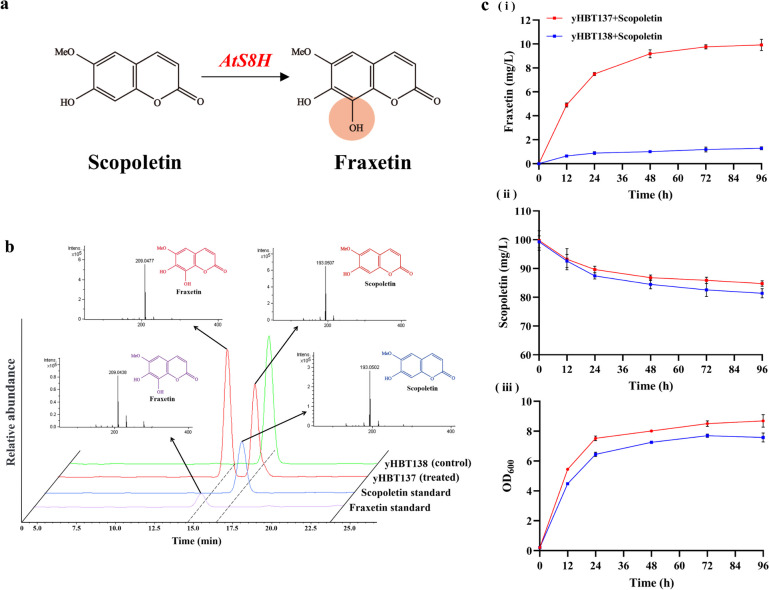
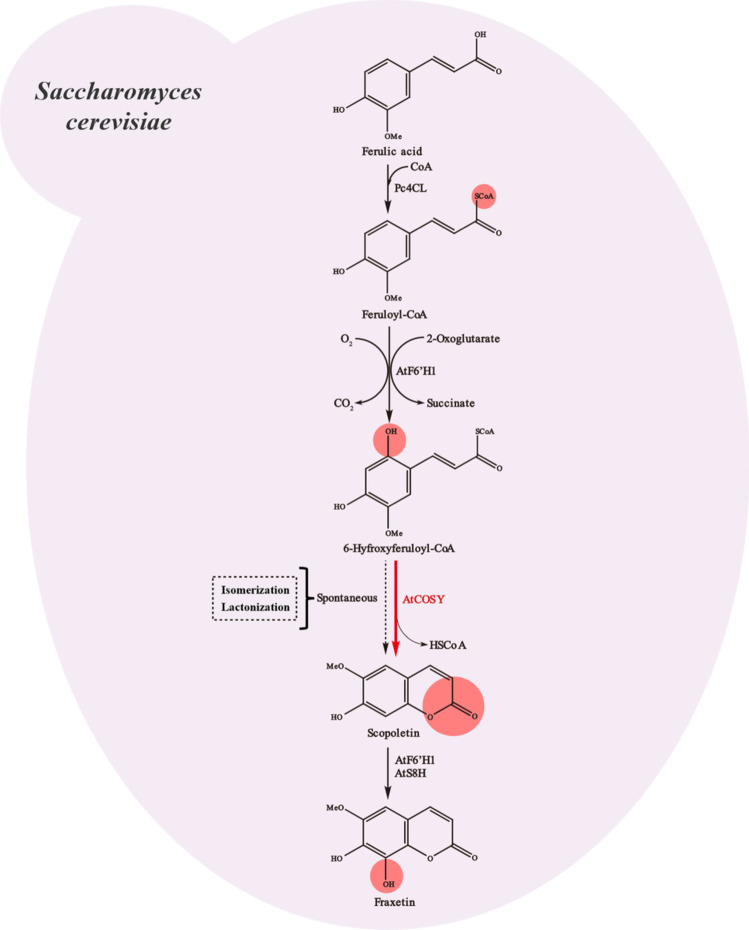
Lignin, the most abundant renewable source of aromatic compounds on earth, remains underexploited in traditional biorefining. Fraxetin, a naturally occurring flavonoid, has garnered considerable attention in the scientific community due to its diverse and potent biological activities such as antimicrobial, anticancer, antioxidant, anti-inflammatory, and neurological protective actions. To enhance the green and value-added utilization of lignin, Saccharomyces cerevisiae was engineered as a cell factory to transform lignin derivatives to produce fraxetin. The expression of scopoletin 8-hydroxylase (S8H) and coumarin synthase (COSY) enabled S. cerevisiae to produce fraxetin from ferulic acid, one of the three principal monomers. The optimized fermentation strategies produced 19.1 mg/L fraxetin from ferulic acid by engineered S. cerevisiae. Additionally, the engineered cell factory achieved a fraxetin titer of 7.7 mg/L in lignin hydrolysate. This study successfully demonstrates the biotransformation of lignin monomers and lignin hydrolysate into fraxetin using a S. cerevisiae cell factory, thereby providing a viable strategy for the valorization of lignin.
• AtS8H showed substance specificity in the hydroxylation of scopoletin.
• AtCOSY and AtS8H were key enzymes for converting ferulic acid into fraxetin.
• Yeast was engineered to produce fraxetin from lignin hydrolysate.
期刊介绍:
Applied Microbiology and Biotechnology focusses on prokaryotic or eukaryotic cells, relevant enzymes and proteins; applied genetics and molecular biotechnology; genomics and proteomics; applied microbial and cell physiology; environmental biotechnology; process and products and more. The journal welcomes full-length papers and mini-reviews of new and emerging products, processes and technologies.





 京公网安备 11010802042870号
京ICP备2023020795号-1
京公网安备 11010802042870号
京ICP备2023020795号-1

 分享
分享
 求助内容:
求助内容: 应助结果提醒方式:
 扫码关注我们
