{"title":"使用高水平平衡任务确定社区居住老年人的楼梯下降表型。","authors":"Takahiro Tanaka, Kimitaka Hase, Kimihiko Mori, Masanori Wakida, Yasuaki Arima, Takanari Kubo, Meguru Taguchi","doi":"10.1007/s40520-025-02929-5","DOIUrl":null,"url":null,"abstract":"<div><h3>Background</h3><p>Falls on stairs are a major cause of severe injuries among older adults, with stair descent posing significantly greater risks than ascent. Variations in stair descent phenotypes may reflect differences in physical function and biomechanical stability, and their identification may prevent falls.</p><h3>Aims</h3><p>This study aims to classify stair descent phenotypes in older adults and investigate the biomechanical and physical functional differences between these phenotypes using hierarchical cluster analysis.</p><h3>Methods</h3><p>Eighty-two older adults participated in this study. Stair descent was measured using a three-dimensional motion analysis system. Physical function was assessed using measures of muscle strength, walking speed, the Timed Up and Go Test (TUG), and the Community Balance and Mobility Scale (CB&M).</p><h3>Results</h3><p>Hierarchical cluster analysis was performed on kinematic data obtained during stair descent. Three phenotypes were identified: neutral (N-type; 24%), extension (E-type; 52%), and rotation (R-type; 23%). There were no significant differences in lower limb muscle strength or walking speed among the different types, and TUG scores showed no differences in terms of mobility or balance abilities. However, CB&M scores were significantly lower for E-type and R-type compared to N-type. Sub-analyses revealed that while there were no differences in the mobility factor of CB&M between E-type and R-type, the strength factors were significantly lower compared to those for N-type.</p><h3>Discussion</h3><p>These results suggest that E-type and R-type stair-descent patterns may be influenced by declines in standing balance ability and muscle strength.</p><h3>Conclusions</h3><p>These findings may inform fall-prevention training programs related to stair descent among older adults.</p></div>","PeriodicalId":7720,"journal":{"name":"Aging Clinical and Experimental Research","volume":"37 1","pages":""},"PeriodicalIF":3.4000,"publicationDate":"2025-01-29","publicationTypes":"Journal Article","fieldsOfStudy":null,"isOpenAccess":false,"openAccessPdf":"https://www.ncbi.nlm.nih.gov/pmc/articles/PMC11779766/pdf/","citationCount":"0","resultStr":"{\"title\":\"Stair-descent phenotypes in community-dwelling older adults determined using high-level balance tasks\",\"authors\":\"Takahiro Tanaka, Kimitaka Hase, Kimihiko Mori, Masanori Wakida, Yasuaki Arima, Takanari Kubo, Meguru Taguchi\",\"doi\":\"10.1007/s40520-025-02929-5\",\"DOIUrl\":null,\"url\":null,\"abstract\":\"<div><h3>Background</h3><p>Falls on stairs are a major cause of severe injuries among older adults, with stair descent posing significantly greater risks than ascent. Variations in stair descent phenotypes may reflect differences in physical function and biomechanical stability, and their identification may prevent falls.</p><h3>Aims</h3><p>This study aims to classify stair descent phenotypes in older adults and investigate the biomechanical and physical functional differences between these phenotypes using hierarchical cluster analysis.</p><h3>Methods</h3><p>Eighty-two older adults participated in this study. Stair descent was measured using a three-dimensional motion analysis system. Physical function was assessed using measures of muscle strength, walking speed, the Timed Up and Go Test (TUG), and the Community Balance and Mobility Scale (CB&M).</p><h3>Results</h3><p>Hierarchical cluster analysis was performed on kinematic data obtained during stair descent. Three phenotypes were identified: neutral (N-type; 24%), extension (E-type; 52%), and rotation (R-type; 23%). There were no significant differences in lower limb muscle strength or walking speed among the different types, and TUG scores showed no differences in terms of mobility or balance abilities. However, CB&M scores were significantly lower for E-type and R-type compared to N-type. Sub-analyses revealed that while there were no differences in the mobility factor of CB&M between E-type and R-type, the strength factors were significantly lower compared to those for N-type.</p><h3>Discussion</h3><p>These results suggest that E-type and R-type stair-descent patterns may be influenced by declines in standing balance ability and muscle strength.</p><h3>Conclusions</h3><p>These findings may inform fall-prevention training programs related to stair descent among older adults.</p></div>\",\"PeriodicalId\":7720,\"journal\":{\"name\":\"Aging Clinical and Experimental Research\",\"volume\":\"37 1\",\"pages\":\"\"},\"PeriodicalIF\":3.4000,\"publicationDate\":\"2025-01-29\",\"publicationTypes\":\"Journal Article\",\"fieldsOfStudy\":null,\"isOpenAccess\":false,\"openAccessPdf\":\"https://www.ncbi.nlm.nih.gov/pmc/articles/PMC11779766/pdf/\",\"citationCount\":\"0\",\"resultStr\":null,\"platform\":\"Semanticscholar\",\"paperid\":null,\"PeriodicalName\":\"Aging Clinical and Experimental Research\",\"FirstCategoryId\":\"3\",\"ListUrlMain\":\"https://link.springer.com/article/10.1007/s40520-025-02929-5\",\"RegionNum\":3,\"RegionCategory\":\"医学\",\"ArticlePicture\":[],\"TitleCN\":null,\"AbstractTextCN\":null,\"PMCID\":null,\"EPubDate\":\"\",\"PubModel\":\"\",\"JCR\":\"Q2\",\"JCRName\":\"GERIATRICS & GERONTOLOGY\",\"Score\":null,\"Total\":0}","platform":"Semanticscholar","paperid":null,"PeriodicalName":"Aging Clinical and Experimental Research","FirstCategoryId":"3","ListUrlMain":"https://link.springer.com/article/10.1007/s40520-025-02929-5","RegionNum":3,"RegionCategory":"医学","ArticlePicture":[],"TitleCN":null,"AbstractTextCN":null,"PMCID":null,"EPubDate":"","PubModel":"","JCR":"Q2","JCRName":"GERIATRICS & GERONTOLOGY","Score":null,"Total":0}
Stair-descent phenotypes in community-dwelling older adults determined using high-level balance tasks
Background
Falls on stairs are a major cause of severe injuries among older adults, with stair descent posing significantly greater risks than ascent. Variations in stair descent phenotypes may reflect differences in physical function and biomechanical stability, and their identification may prevent falls.
Aims
This study aims to classify stair descent phenotypes in older adults and investigate the biomechanical and physical functional differences between these phenotypes using hierarchical cluster analysis.
Methods
Eighty-two older adults participated in this study. Stair descent was measured using a three-dimensional motion analysis system. Physical function was assessed using measures of muscle strength, walking speed, the Timed Up and Go Test (TUG), and the Community Balance and Mobility Scale (CB&M).
Results
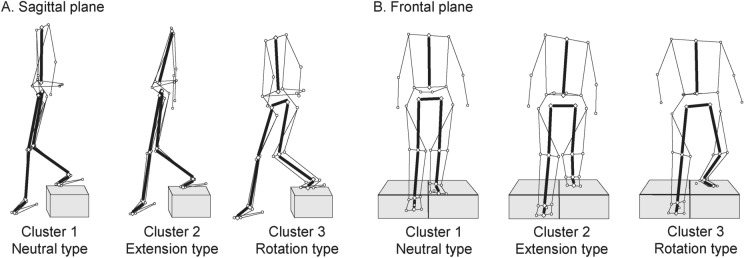
Hierarchical cluster analysis was performed on kinematic data obtained during stair descent. Three phenotypes were identified: neutral (N-type; 24%), extension (E-type; 52%), and rotation (R-type; 23%). There were no significant differences in lower limb muscle strength or walking speed among the different types, and TUG scores showed no differences in terms of mobility or balance abilities. However, CB&M scores were significantly lower for E-type and R-type compared to N-type. Sub-analyses revealed that while there were no differences in the mobility factor of CB&M between E-type and R-type, the strength factors were significantly lower compared to those for N-type.
Discussion
These results suggest that E-type and R-type stair-descent patterns may be influenced by declines in standing balance ability and muscle strength.
Conclusions
These findings may inform fall-prevention training programs related to stair descent among older adults.
期刊介绍:
Aging clinical and experimental research offers a multidisciplinary forum on the progressing field of gerontology and geriatrics. The areas covered by the journal include: biogerontology, neurosciences, epidemiology, clinical gerontology and geriatric assessment, social, economical and behavioral gerontology. “Aging clinical and experimental research” appears bimonthly and publishes review articles, original papers and case reports.




 京公网安备 11010802042870号
京ICP备2023020795号-1
京公网安备 11010802042870号
京ICP备2023020795号-1

 分享
分享
 求助内容:
求助内容: 应助结果提醒方式:
 扫码关注我们
