Maddalena Casale, Saverio Scianguetta, Teresa Palma, Laura Pinfildi, Giampiero Vallefuoco, Maria Chiara Capellupo, Domenico Roberti, Silverio Perrotta
{"title":"意大利通过护理点检测筛查镰状细胞病:对1000名高危儿童的试点研究。","authors":"Maddalena Casale, Saverio Scianguetta, Teresa Palma, Laura Pinfildi, Giampiero Vallefuoco, Maria Chiara Capellupo, Domenico Roberti, Silverio Perrotta","doi":"10.1007/s00431-025-05988-y","DOIUrl":null,"url":null,"abstract":"<p><p>Sickle cell disease (SCD) is a global health problem causing premature deaths and preventable severe chronic complications. A priority goal to improve outcomes both in the short and long term is the screening for early diagnosis and access to specialized care. In Italy, as in other countries, no systematic national screening program is available. A regional pilot project was developed with the aim to screen 1000 children at risk of SCD in Italy. Primary care paediatricians received point-of-care tests (POCTs) to detect abnormal haemoglobin (Hb) to be offered to children regularly followed at their own clinics. Children positive to the POCT were referred to the regional paediatric specialized centre for diagnosis confirmation and follow up. Among 1000 at risk children screened, 85 (8,5%) tested positive for an abnormal Hb. HbS trait was reported in 69 (7%) children, HbC trait in 13 (1,3%) and SCD was diagnosed in 3 (0,3% overall; 0,56% in African background) children. African family background was the most affected by sickle mutations and all children with SCD had African ancestry. Only 56/259 (22%) primary care paediatricians invited but 20/21 (95%) reception centres adhered to the pilot screening project.</p><p><strong>Conclusions: </strong>A screening program for SCD performed by the primary care paediatricians is feasible and relatively easy to organize. SCD affects mainly children with African family background and the scarce adherence of primary care paediatricians, in contrast to the high adhesion of charitable institutions, outlines the need for a mandatory screening for SCD, and improved awareness among health care providers.</p><p><strong>What is known: </strong>• Sickle Cell Disease (SCD) is a serious global health problem that requires management in specialized centres from the first months of life. • In the absence of neonatal screening for SCD, primary health care settings represent a feasible and costeffective approach for early disease detection.</p><p><strong>What is new: </strong>• In Italy, screening for SCD performed by primary care pediatricians detected a hemoglobin variant in 8.5% children, with a disease prevalence of 0.3% in the whole population and 0.56% in children with African family background. • The poor adherence of paediatricians to the voluntary screening for SCD highlights the need for legislative interventions and training activities to ensure early diagnosis and rapid access to care for all children affected by SCD.</p>","PeriodicalId":11997,"journal":{"name":"European Journal of Pediatrics","volume":"184 2","pages":"157"},"PeriodicalIF":2.9000,"publicationDate":"2025-01-28","publicationTypes":"Journal Article","fieldsOfStudy":null,"isOpenAccess":false,"openAccessPdf":"https://www.ncbi.nlm.nih.gov/pmc/articles/PMC11774984/pdf/","citationCount":"0","resultStr":"{\"title\":\"Screening for sickle cell disease by point-of-care tests in Italy: pilot study on 1000 at risk children.\",\"authors\":\"Maddalena Casale, Saverio Scianguetta, Teresa Palma, Laura Pinfildi, Giampiero Vallefuoco, Maria Chiara Capellupo, Domenico Roberti, Silverio Perrotta\",\"doi\":\"10.1007/s00431-025-05988-y\",\"DOIUrl\":null,\"url\":null,\"abstract\":\"<p><p>Sickle cell disease (SCD) is a global health problem causing premature deaths and preventable severe chronic complications. A priority goal to improve outcomes both in the short and long term is the screening for early diagnosis and access to specialized care. In Italy, as in other countries, no systematic national screening program is available. A regional pilot project was developed with the aim to screen 1000 children at risk of SCD in Italy. Primary care paediatricians received point-of-care tests (POCTs) to detect abnormal haemoglobin (Hb) to be offered to children regularly followed at their own clinics. Children positive to the POCT were referred to the regional paediatric specialized centre for diagnosis confirmation and follow up. Among 1000 at risk children screened, 85 (8,5%) tested positive for an abnormal Hb. HbS trait was reported in 69 (7%) children, HbC trait in 13 (1,3%) and SCD was diagnosed in 3 (0,3% overall; 0,56% in African background) children. African family background was the most affected by sickle mutations and all children with SCD had African ancestry. Only 56/259 (22%) primary care paediatricians invited but 20/21 (95%) reception centres adhered to the pilot screening project.</p><p><strong>Conclusions: </strong>A screening program for SCD performed by the primary care paediatricians is feasible and relatively easy to organize. SCD affects mainly children with African family background and the scarce adherence of primary care paediatricians, in contrast to the high adhesion of charitable institutions, outlines the need for a mandatory screening for SCD, and improved awareness among health care providers.</p><p><strong>What is known: </strong>• Sickle Cell Disease (SCD) is a serious global health problem that requires management in specialized centres from the first months of life. • In the absence of neonatal screening for SCD, primary health care settings represent a feasible and costeffective approach for early disease detection.</p><p><strong>What is new: </strong>• In Italy, screening for SCD performed by primary care pediatricians detected a hemoglobin variant in 8.5% children, with a disease prevalence of 0.3% in the whole population and 0.56% in children with African family background. • The poor adherence of paediatricians to the voluntary screening for SCD highlights the need for legislative interventions and training activities to ensure early diagnosis and rapid access to care for all children affected by SCD.</p>\",\"PeriodicalId\":11997,\"journal\":{\"name\":\"European Journal of Pediatrics\",\"volume\":\"184 2\",\"pages\":\"157\"},\"PeriodicalIF\":2.9000,\"publicationDate\":\"2025-01-28\",\"publicationTypes\":\"Journal Article\",\"fieldsOfStudy\":null,\"isOpenAccess\":false,\"openAccessPdf\":\"https://www.ncbi.nlm.nih.gov/pmc/articles/PMC11774984/pdf/\",\"citationCount\":\"0\",\"resultStr\":null,\"platform\":\"Semanticscholar\",\"paperid\":null,\"PeriodicalName\":\"European Journal of Pediatrics\",\"FirstCategoryId\":\"3\",\"ListUrlMain\":\"https://doi.org/10.1007/s00431-025-05988-y\",\"RegionNum\":3,\"RegionCategory\":\"医学\",\"ArticlePicture\":[],\"TitleCN\":null,\"AbstractTextCN\":null,\"PMCID\":null,\"EPubDate\":\"\",\"PubModel\":\"\",\"JCR\":\"Q1\",\"JCRName\":\"PEDIATRICS\",\"Score\":null,\"Total\":0}","platform":"Semanticscholar","paperid":null,"PeriodicalName":"European Journal of Pediatrics","FirstCategoryId":"3","ListUrlMain":"https://doi.org/10.1007/s00431-025-05988-y","RegionNum":3,"RegionCategory":"医学","ArticlePicture":[],"TitleCN":null,"AbstractTextCN":null,"PMCID":null,"EPubDate":"","PubModel":"","JCR":"Q1","JCRName":"PEDIATRICS","Score":null,"Total":0}
Screening for sickle cell disease by point-of-care tests in Italy: pilot study on 1000 at risk children.
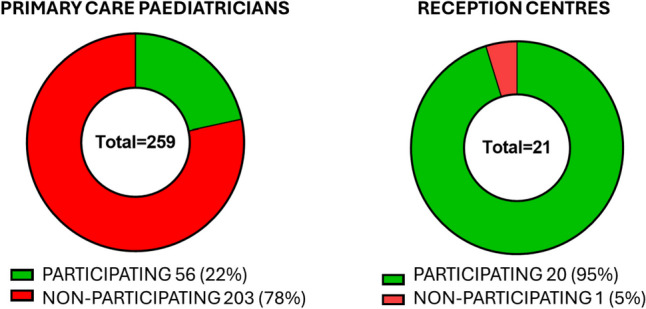
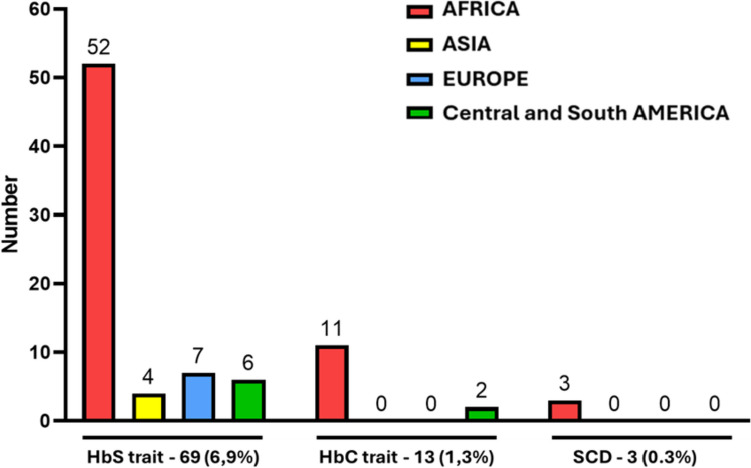
Sickle cell disease (SCD) is a global health problem causing premature deaths and preventable severe chronic complications. A priority goal to improve outcomes both in the short and long term is the screening for early diagnosis and access to specialized care. In Italy, as in other countries, no systematic national screening program is available. A regional pilot project was developed with the aim to screen 1000 children at risk of SCD in Italy. Primary care paediatricians received point-of-care tests (POCTs) to detect abnormal haemoglobin (Hb) to be offered to children regularly followed at their own clinics. Children positive to the POCT were referred to the regional paediatric specialized centre for diagnosis confirmation and follow up. Among 1000 at risk children screened, 85 (8,5%) tested positive for an abnormal Hb. HbS trait was reported in 69 (7%) children, HbC trait in 13 (1,3%) and SCD was diagnosed in 3 (0,3% overall; 0,56% in African background) children. African family background was the most affected by sickle mutations and all children with SCD had African ancestry. Only 56/259 (22%) primary care paediatricians invited but 20/21 (95%) reception centres adhered to the pilot screening project.
Conclusions: A screening program for SCD performed by the primary care paediatricians is feasible and relatively easy to organize. SCD affects mainly children with African family background and the scarce adherence of primary care paediatricians, in contrast to the high adhesion of charitable institutions, outlines the need for a mandatory screening for SCD, and improved awareness among health care providers.
What is known: • Sickle Cell Disease (SCD) is a serious global health problem that requires management in specialized centres from the first months of life. • In the absence of neonatal screening for SCD, primary health care settings represent a feasible and costeffective approach for early disease detection.
What is new: • In Italy, screening for SCD performed by primary care pediatricians detected a hemoglobin variant in 8.5% children, with a disease prevalence of 0.3% in the whole population and 0.56% in children with African family background. • The poor adherence of paediatricians to the voluntary screening for SCD highlights the need for legislative interventions and training activities to ensure early diagnosis and rapid access to care for all children affected by SCD.
期刊介绍:
The European Journal of Pediatrics (EJPE) is a leading peer-reviewed medical journal which covers the entire field of pediatrics. The editors encourage authors to submit original articles, reviews, short communications, and correspondence on all relevant themes and topics.
EJPE is particularly committed to the publication of articles on important new clinical research that will have an immediate impact on clinical pediatric practice. The editorial office very much welcomes ideas for publications, whether individual articles or article series, that fit this goal and is always willing to address inquiries from authors regarding potential submissions. Invited review articles on clinical pediatrics that provide comprehensive coverage of a subject of importance are also regularly commissioned.
The short publication time reflects both the commitment of the editors and publishers and their passion for new developments in the field of pediatrics.
EJPE is active on social media (@EurJPediatrics) and we invite you to participate.
EJPE is the official journal of the European Academy of Paediatrics (EAP) and publishes guidelines and statements in cooperation with the EAP.





 京公网安备 11010802042870号
京ICP备2023020795号-1
京公网安备 11010802042870号
京ICP备2023020795号-1

 分享
分享
 求助内容:
求助内容: 应助结果提醒方式:
 扫码关注我们
