Lauren J. Delaney , Priscilla Machado , Ji-Bin Liu , Rachel Evans , Asia Winslow , Neil Zhao , Christopher K. Kepler , Rajkishen Narayanan , Teeto Ezeonu , Viren Soni , Gagan Kaushal , Rachel Hilliard , Thomas P. Schaer , Noreen J. Hickok , Flemming Forsberg
{"title":"超声触发万古霉素从一种新型脊柱装置释放:体内抗生素释放和疗效。","authors":"Lauren J. Delaney , Priscilla Machado , Ji-Bin Liu , Rachel Evans , Asia Winslow , Neil Zhao , Christopher K. Kepler , Rajkishen Narayanan , Teeto Ezeonu , Viren Soni , Gagan Kaushal , Rachel Hilliard , Thomas P. Schaer , Noreen J. Hickok , Flemming Forsberg","doi":"10.1016/j.ijpharm.2025.125276","DOIUrl":null,"url":null,"abstract":"<div><div>Post-surgical spinal infection occurs in up to 20 % of patients, despite aggressive peri-operative antibiotic treatments. To improve prophylaxis, we have designed and evaluated an ultrasound-activated prophylactic antibiotic release system to combat post-surgical bacterial survival. Polylactic acid (PLA) clips (1 cm<sup>3</sup>) were 3D-printed with an interior reservoir (0.8 cm<sup>3</sup>) for carrying drug payload, specifically vancomycin (VAN). Under IACUC approval, clips were surgically implanted into the spines of sheep (n = 9) and swine (n = 2) by removing the spinous process at several levels of the lumbar spine. In the sheep, clips were insonated and the interstitial wound fluid was collected to quantify the ultrasound-triggered VAN release. Uninsonated control sheep exhibited an average VAN concentration of 6.32 ± 5.99 µg/mL after 72 h, while ultrasound-triggered clips released significantly higher VAN concentrations at 72 h (22.98 ± 11.22 µg/mL, p = 0.033). In the swine, device efficacy against <em>Staphylococcus aureus</em> was evaluated. Insonated sites saw significant reduction in colony forming units (CFU) to 4.3 ± 3.2 CFU in the activated clips, compared to uninsonated controls where bacterial colonization was higher (2898 ± 1214 CFU, p = 0.017). Overall, these results demonstrate the ability to non-invasively release VAN from an implanted reservoir <em>in vivo</em>, and that this VAN release is effective in mitigating invading microbes in the wound site</div></div>","PeriodicalId":14187,"journal":{"name":"International Journal of Pharmaceutics","volume":"671 ","pages":"Article 125276"},"PeriodicalIF":6.0000,"publicationDate":"2025-02-25","publicationTypes":"Journal Article","fieldsOfStudy":null,"isOpenAccess":false,"openAccessPdf":"","citationCount":"0","resultStr":"{\"title\":\"Ultrasound-triggered release of vancomycin from a novel spinal device: Antibiotic release and efficacy in vivo\",\"authors\":\"Lauren J. Delaney , Priscilla Machado , Ji-Bin Liu , Rachel Evans , Asia Winslow , Neil Zhao , Christopher K. Kepler , Rajkishen Narayanan , Teeto Ezeonu , Viren Soni , Gagan Kaushal , Rachel Hilliard , Thomas P. Schaer , Noreen J. Hickok , Flemming Forsberg\",\"doi\":\"10.1016/j.ijpharm.2025.125276\",\"DOIUrl\":null,\"url\":null,\"abstract\":\"<div><div>Post-surgical spinal infection occurs in up to 20 % of patients, despite aggressive peri-operative antibiotic treatments. To improve prophylaxis, we have designed and evaluated an ultrasound-activated prophylactic antibiotic release system to combat post-surgical bacterial survival. Polylactic acid (PLA) clips (1 cm<sup>3</sup>) were 3D-printed with an interior reservoir (0.8 cm<sup>3</sup>) for carrying drug payload, specifically vancomycin (VAN). Under IACUC approval, clips were surgically implanted into the spines of sheep (n = 9) and swine (n = 2) by removing the spinous process at several levels of the lumbar spine. In the sheep, clips were insonated and the interstitial wound fluid was collected to quantify the ultrasound-triggered VAN release. Uninsonated control sheep exhibited an average VAN concentration of 6.32 ± 5.99 µg/mL after 72 h, while ultrasound-triggered clips released significantly higher VAN concentrations at 72 h (22.98 ± 11.22 µg/mL, p = 0.033). In the swine, device efficacy against <em>Staphylococcus aureus</em> was evaluated. Insonated sites saw significant reduction in colony forming units (CFU) to 4.3 ± 3.2 CFU in the activated clips, compared to uninsonated controls where bacterial colonization was higher (2898 ± 1214 CFU, p = 0.017). Overall, these results demonstrate the ability to non-invasively release VAN from an implanted reservoir <em>in vivo</em>, and that this VAN release is effective in mitigating invading microbes in the wound site</div></div>\",\"PeriodicalId\":14187,\"journal\":{\"name\":\"International Journal of Pharmaceutics\",\"volume\":\"671 \",\"pages\":\"Article 125276\"},\"PeriodicalIF\":6.0000,\"publicationDate\":\"2025-02-25\",\"publicationTypes\":\"Journal Article\",\"fieldsOfStudy\":null,\"isOpenAccess\":false,\"openAccessPdf\":\"\",\"citationCount\":\"0\",\"resultStr\":null,\"platform\":\"Semanticscholar\",\"paperid\":null,\"PeriodicalName\":\"International Journal of Pharmaceutics\",\"FirstCategoryId\":\"3\",\"ListUrlMain\":\"https://www.sciencedirect.com/science/article/pii/S0378517325001127\",\"RegionNum\":2,\"RegionCategory\":\"医学\",\"ArticlePicture\":[],\"TitleCN\":null,\"AbstractTextCN\":null,\"PMCID\":null,\"EPubDate\":\"2025/1/26 0:00:00\",\"PubModel\":\"Epub\",\"JCR\":\"Q1\",\"JCRName\":\"PHARMACOLOGY & PHARMACY\",\"Score\":null,\"Total\":0}","platform":"Semanticscholar","paperid":null,"PeriodicalName":"International Journal of Pharmaceutics","FirstCategoryId":"3","ListUrlMain":"https://www.sciencedirect.com/science/article/pii/S0378517325001127","RegionNum":2,"RegionCategory":"医学","ArticlePicture":[],"TitleCN":null,"AbstractTextCN":null,"PMCID":null,"EPubDate":"2025/1/26 0:00:00","PubModel":"Epub","JCR":"Q1","JCRName":"PHARMACOLOGY & PHARMACY","Score":null,"Total":0}
引用次数: 0
摘要
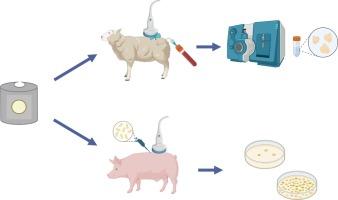
尽管进行了积极的围手术期抗生素治疗,但术后脊髓感染发生率高达20%。为了改善预防,我们设计并评估了一种超声激活的预防性抗生素释放系统,以对抗手术后细菌的存活。聚乳酸(PLA)夹子(1 cm3)被3d打印,内部储存库(0.8 cm3)用于携带药物有效载荷,特别是万古霉素(VAN)。在IACUC的批准下,通过切除腰椎若干节段的棘突,将夹子手术植入羊(n = 9)和猪(n = 2)的脊柱中。在绵羊中,对夹子进行超声波扫描,并收集间质伤口液,以量化超声波触发的VAN释放。未超声触发的对照羊在72 h后的平均VAN浓度为6.32±5.99µg/mL,而超声触发的剪辑在72 h时释放的VAN浓度显著高于对照组(22.98±11.22µg/mL, p = 0.033)。在猪身上,对装置对金黄色葡萄球菌的疗效进行了评价。与未受潮的对照组(2898±1214 CFU, p = 0.017)相比,受潮部位的菌落形成单位(CFU)显著降低至4.3±3.2 CFU。总的来说,这些结果证明了在体内从植入的储存库中无创释放VAN的能力,并且这种VAN释放对减轻伤口部位的入侵微生物是有效的。
Ultrasound-triggered release of vancomycin from a novel spinal device: Antibiotic release and efficacy in vivo
Post-surgical spinal infection occurs in up to 20 % of patients, despite aggressive peri-operative antibiotic treatments. To improve prophylaxis, we have designed and evaluated an ultrasound-activated prophylactic antibiotic release system to combat post-surgical bacterial survival. Polylactic acid (PLA) clips (1 cm3) were 3D-printed with an interior reservoir (0.8 cm3) for carrying drug payload, specifically vancomycin (VAN). Under IACUC approval, clips were surgically implanted into the spines of sheep (n = 9) and swine (n = 2) by removing the spinous process at several levels of the lumbar spine. In the sheep, clips were insonated and the interstitial wound fluid was collected to quantify the ultrasound-triggered VAN release. Uninsonated control sheep exhibited an average VAN concentration of 6.32 ± 5.99 µg/mL after 72 h, while ultrasound-triggered clips released significantly higher VAN concentrations at 72 h (22.98 ± 11.22 µg/mL, p = 0.033). In the swine, device efficacy against Staphylococcus aureus was evaluated. Insonated sites saw significant reduction in colony forming units (CFU) to 4.3 ± 3.2 CFU in the activated clips, compared to uninsonated controls where bacterial colonization was higher (2898 ± 1214 CFU, p = 0.017). Overall, these results demonstrate the ability to non-invasively release VAN from an implanted reservoir in vivo, and that this VAN release is effective in mitigating invading microbes in the wound site
期刊介绍:
The International Journal of Pharmaceutics is the third most cited journal in the "Pharmacy & Pharmacology" category out of 366 journals, being the true home for pharmaceutical scientists concerned with the physical, chemical and biological properties of devices and delivery systems for drugs, vaccines and biologicals, including their design, manufacture and evaluation. This includes evaluation of the properties of drugs, excipients such as surfactants and polymers and novel materials. The journal has special sections on pharmaceutical nanotechnology and personalized medicines, and publishes research papers, reviews, commentaries and letters to the editor as well as special issues.




 京公网安备 11010802042870号
京ICP备2023020795号-1
京公网安备 11010802042870号
京ICP备2023020795号-1

 分享
分享
 求助内容:
求助内容: 应助结果提醒方式:
 扫码关注我们
