{"title":"尼日利亚东南部埃邦伊州Abakaliki高中学生对艾滋病毒/艾滋病的态度和信念及其与性行为的关系","authors":"Maria-Lauretta Chito Orji, Chinwe Ifeoma Joe-Akunne, Ngozi Appolonia Ifebunandu, Ogoma Cynthia Onah, Cecilia Oluchukwu Oyim-Elechi, Miracle Anurika Nwobi, Stephnora Ezinne Agbo, Sunday Austin Otubo","doi":"10.60787/nmj.v65i6.606","DOIUrl":null,"url":null,"abstract":"<p><strong>Background: </strong>Attitudes and beliefs regarding HIV among adolescents and young adults (AYA) may influence practices that increase the risk of HIV transmission. The study aimed to determine the attitudes and beliefs regarding HIV among senior secondary students and their sexual practices.</p><p><strong>Methodology: </strong>It was a cross-sectional descriptive study that involved 1,200 adolescents and young adults (AYA) aged 14-24 years in senior secondary schools in Abakaliki. Information was obtained using a two-part pre-tested questionnaire that tested attitudes and beliefs regarding HIV using a 6-item questionnaire and another part sought information on biodata and sexual practices. The p-value of < 0.05 was statistically significant.</p><p><strong>Results: </strong>The median (IQR) age of participants was 16.0 (9.0) years, and the majority (64.4%, 773/1,200) were females with a male-to-female ratio of 1.0: 1.8. Seven hundred and thirty (60.8%) had positive attitudes and beliefs towards HIV. Although 628 (52.3%) were willing to be tested for HIV, only 25.6% (307/1,200) have ever been tested for HIV. Three hundred and fifty-five (29.6%) of them had engaged in sexual activities, of which 145 (12.1%) had multiple sexual partners. There were significant relationships between attitude, beliefs, and age ((χ<sup>2</sup>= 39.69. p = <0.001), willingness to test for HIV (χ<sup>2</sup> = 10.20. p= 0.002), and having multiple sexual partners (χ<sup>2</sup>= 5.49, p= 0.019).</p><p><strong>Conclusion: </strong>Positive attitudes and beliefs regarding HIV were high but were not reflected in their practices. Sustained efforts toward effective HIV-related health education in schools and improved adolescent-friendly health services where HIV screening is readily accessible are recommended.</p>","PeriodicalId":94346,"journal":{"name":"Nigerian medical journal : journal of the Nigeria Medical Association","volume":"65 6","pages":"1135-1145"},"PeriodicalIF":0.0000,"publicationDate":"2025-01-10","publicationTypes":"Journal Article","fieldsOfStudy":null,"isOpenAccess":false,"openAccessPdf":"https://www.ncbi.nlm.nih.gov/pmc/articles/PMC11770663/pdf/","citationCount":"0","resultStr":"{\"title\":\"Attitudes and Beliefs about HIV/AIDS and their Relationships with Sexual Practices among Senior Secondary School Students in Abakaliki, Ebonyi State, Southeast Nigeria.\",\"authors\":\"Maria-Lauretta Chito Orji, Chinwe Ifeoma Joe-Akunne, Ngozi Appolonia Ifebunandu, Ogoma Cynthia Onah, Cecilia Oluchukwu Oyim-Elechi, Miracle Anurika Nwobi, Stephnora Ezinne Agbo, Sunday Austin Otubo\",\"doi\":\"10.60787/nmj.v65i6.606\",\"DOIUrl\":null,\"url\":null,\"abstract\":\"<p><strong>Background: </strong>Attitudes and beliefs regarding HIV among adolescents and young adults (AYA) may influence practices that increase the risk of HIV transmission. The study aimed to determine the attitudes and beliefs regarding HIV among senior secondary students and their sexual practices.</p><p><strong>Methodology: </strong>It was a cross-sectional descriptive study that involved 1,200 adolescents and young adults (AYA) aged 14-24 years in senior secondary schools in Abakaliki. Information was obtained using a two-part pre-tested questionnaire that tested attitudes and beliefs regarding HIV using a 6-item questionnaire and another part sought information on biodata and sexual practices. The p-value of < 0.05 was statistically significant.</p><p><strong>Results: </strong>The median (IQR) age of participants was 16.0 (9.0) years, and the majority (64.4%, 773/1,200) were females with a male-to-female ratio of 1.0: 1.8. Seven hundred and thirty (60.8%) had positive attitudes and beliefs towards HIV. Although 628 (52.3%) were willing to be tested for HIV, only 25.6% (307/1,200) have ever been tested for HIV. Three hundred and fifty-five (29.6%) of them had engaged in sexual activities, of which 145 (12.1%) had multiple sexual partners. There were significant relationships between attitude, beliefs, and age ((χ<sup>2</sup>= 39.69. p = <0.001), willingness to test for HIV (χ<sup>2</sup> = 10.20. p= 0.002), and having multiple sexual partners (χ<sup>2</sup>= 5.49, p= 0.019).</p><p><strong>Conclusion: </strong>Positive attitudes and beliefs regarding HIV were high but were not reflected in their practices. Sustained efforts toward effective HIV-related health education in schools and improved adolescent-friendly health services where HIV screening is readily accessible are recommended.</p>\",\"PeriodicalId\":94346,\"journal\":{\"name\":\"Nigerian medical journal : journal of the Nigeria Medical Association\",\"volume\":\"65 6\",\"pages\":\"1135-1145\"},\"PeriodicalIF\":0.0000,\"publicationDate\":\"2025-01-10\",\"publicationTypes\":\"Journal Article\",\"fieldsOfStudy\":null,\"isOpenAccess\":false,\"openAccessPdf\":\"https://www.ncbi.nlm.nih.gov/pmc/articles/PMC11770663/pdf/\",\"citationCount\":\"0\",\"resultStr\":null,\"platform\":\"Semanticscholar\",\"paperid\":null,\"PeriodicalName\":\"Nigerian medical journal : journal of the Nigeria Medical Association\",\"FirstCategoryId\":\"1085\",\"ListUrlMain\":\"https://doi.org/10.60787/nmj.v65i6.606\",\"RegionNum\":0,\"RegionCategory\":null,\"ArticlePicture\":[],\"TitleCN\":null,\"AbstractTextCN\":null,\"PMCID\":null,\"EPubDate\":\"2024/11/1 0:00:00\",\"PubModel\":\"eCollection\",\"JCR\":\"\",\"JCRName\":\"\",\"Score\":null,\"Total\":0}","platform":"Semanticscholar","paperid":null,"PeriodicalName":"Nigerian medical journal : journal of the Nigeria Medical Association","FirstCategoryId":"1085","ListUrlMain":"https://doi.org/10.60787/nmj.v65i6.606","RegionNum":0,"RegionCategory":null,"ArticlePicture":[],"TitleCN":null,"AbstractTextCN":null,"PMCID":null,"EPubDate":"2024/11/1 0:00:00","PubModel":"eCollection","JCR":"","JCRName":"","Score":null,"Total":0}
Attitudes and Beliefs about HIV/AIDS and their Relationships with Sexual Practices among Senior Secondary School Students in Abakaliki, Ebonyi State, Southeast Nigeria.
Background: Attitudes and beliefs regarding HIV among adolescents and young adults (AYA) may influence practices that increase the risk of HIV transmission. The study aimed to determine the attitudes and beliefs regarding HIV among senior secondary students and their sexual practices.
Methodology: It was a cross-sectional descriptive study that involved 1,200 adolescents and young adults (AYA) aged 14-24 years in senior secondary schools in Abakaliki. Information was obtained using a two-part pre-tested questionnaire that tested attitudes and beliefs regarding HIV using a 6-item questionnaire and another part sought information on biodata and sexual practices. The p-value of < 0.05 was statistically significant.
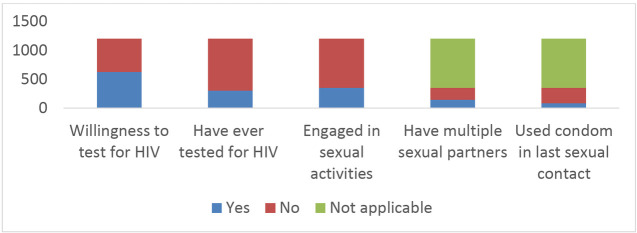
Results: The median (IQR) age of participants was 16.0 (9.0) years, and the majority (64.4%, 773/1,200) were females with a male-to-female ratio of 1.0: 1.8. Seven hundred and thirty (60.8%) had positive attitudes and beliefs towards HIV. Although 628 (52.3%) were willing to be tested for HIV, only 25.6% (307/1,200) have ever been tested for HIV. Three hundred and fifty-five (29.6%) of them had engaged in sexual activities, of which 145 (12.1%) had multiple sexual partners. There were significant relationships between attitude, beliefs, and age ((χ2= 39.69. p = <0.001), willingness to test for HIV (χ2 = 10.20. p= 0.002), and having multiple sexual partners (χ2= 5.49, p= 0.019).
Conclusion: Positive attitudes and beliefs regarding HIV were high but were not reflected in their practices. Sustained efforts toward effective HIV-related health education in schools and improved adolescent-friendly health services where HIV screening is readily accessible are recommended.




 京公网安备 11010802042870号
京ICP备2023020795号-1
京公网安备 11010802042870号
京ICP备2023020795号-1

 分享
分享

 求助内容:
求助内容: 应助结果提醒方式:
 扫码关注我们
