Luyue Zhang, Liqian Su, Lina Wu, Weikai Zhou, Jing Xie, Yi Fan, Xuedong Zhou, Changchun Zhou, Yujia Cui and Jianxun Sun
{"title":"应用于骨组织工程的微流体技术制备的多功能水凝胶。","authors":"Luyue Zhang, Liqian Su, Lina Wu, Weikai Zhou, Jing Xie, Yi Fan, Xuedong Zhou, Changchun Zhou, Yujia Cui and Jianxun Sun","doi":"10.1039/D4TB02314E","DOIUrl":null,"url":null,"abstract":"<p >Bone defects are a prevalent issue resulting from various factors, such as trauma, degenerative diseases, congenital disabilities, and the surgical removal of tumors. Current methods for bone regeneration have limitations. In this context, the fusion of tissue engineering and microfluidics has emerged as a promising strategy in the field of bone regeneration. This study describes the classification of microfluidic devices based on the nature of flow and channel type, as well as the materials and techniques required. An overview of microfluidic methods used to prepare hydrogels and the advantages of using these hydrogels in bone tissue engineering (BTE) combining several basic elements of BTE to highlight its advantages is provided. Furthermore, this work emphasizes the benefits of using hydrogels prepared <em>via</em> microfluidics over conventional hydrogels in BTE because of their controlled release of cargo, they can be used for <em>in situ</em> injection, simplify the steps of single-cell encapsulation and have the advantages of high-throughput and precise preparation. Additionally, organ-on-a-chip models fabricated <em>via</em> microfluidics offer a platform for studying cell and tissue behaviors in an authentic and dynamic environment. Moreover, microfluidic devices can be utilized for noninvasive diagnosis and therapy. Finally, this paper summarizes the preclinical and clinical applications of hydrogels prepared <em>via</em> microfluidics for bone regeneration by focusing on their current developmental status, limitations associated with their application, and future challenges, which underscore their potential impacts on advancing regenerative medicine practices.</p>","PeriodicalId":83,"journal":{"name":"Journal of Materials Chemistry B","volume":" 8","pages":" 2611-2639"},"PeriodicalIF":6.2000,"publicationDate":"2025-01-17","publicationTypes":"Journal Article","fieldsOfStudy":null,"isOpenAccess":false,"openAccessPdf":"","citationCount":"0","resultStr":"{\"title\":\"Versatile hydrogels prepared by microfluidics technology for bone tissue engineering applications\",\"authors\":\"Luyue Zhang, Liqian Su, Lina Wu, Weikai Zhou, Jing Xie, Yi Fan, Xuedong Zhou, Changchun Zhou, Yujia Cui and Jianxun Sun\",\"doi\":\"10.1039/D4TB02314E\",\"DOIUrl\":null,\"url\":null,\"abstract\":\"<p >Bone defects are a prevalent issue resulting from various factors, such as trauma, degenerative diseases, congenital disabilities, and the surgical removal of tumors. Current methods for bone regeneration have limitations. In this context, the fusion of tissue engineering and microfluidics has emerged as a promising strategy in the field of bone regeneration. This study describes the classification of microfluidic devices based on the nature of flow and channel type, as well as the materials and techniques required. An overview of microfluidic methods used to prepare hydrogels and the advantages of using these hydrogels in bone tissue engineering (BTE) combining several basic elements of BTE to highlight its advantages is provided. Furthermore, this work emphasizes the benefits of using hydrogels prepared <em>via</em> microfluidics over conventional hydrogels in BTE because of their controlled release of cargo, they can be used for <em>in situ</em> injection, simplify the steps of single-cell encapsulation and have the advantages of high-throughput and precise preparation. Additionally, organ-on-a-chip models fabricated <em>via</em> microfluidics offer a platform for studying cell and tissue behaviors in an authentic and dynamic environment. Moreover, microfluidic devices can be utilized for noninvasive diagnosis and therapy. Finally, this paper summarizes the preclinical and clinical applications of hydrogels prepared <em>via</em> microfluidics for bone regeneration by focusing on their current developmental status, limitations associated with their application, and future challenges, which underscore their potential impacts on advancing regenerative medicine practices.</p>\",\"PeriodicalId\":83,\"journal\":{\"name\":\"Journal of Materials Chemistry B\",\"volume\":\" 8\",\"pages\":\" 2611-2639\"},\"PeriodicalIF\":6.2000,\"publicationDate\":\"2025-01-17\",\"publicationTypes\":\"Journal Article\",\"fieldsOfStudy\":null,\"isOpenAccess\":false,\"openAccessPdf\":\"\",\"citationCount\":\"0\",\"resultStr\":null,\"platform\":\"Semanticscholar\",\"paperid\":null,\"PeriodicalName\":\"Journal of Materials Chemistry B\",\"FirstCategoryId\":\"1\",\"ListUrlMain\":\"https://pubs.rsc.org/en/content/articlelanding/2025/tb/d4tb02314e\",\"RegionNum\":3,\"RegionCategory\":\"医学\",\"ArticlePicture\":[],\"TitleCN\":null,\"AbstractTextCN\":null,\"PMCID\":null,\"EPubDate\":\"\",\"PubModel\":\"\",\"JCR\":\"Q1\",\"JCRName\":\"MATERIALS SCIENCE, BIOMATERIALS\",\"Score\":null,\"Total\":0}","platform":"Semanticscholar","paperid":null,"PeriodicalName":"Journal of Materials Chemistry B","FirstCategoryId":"1","ListUrlMain":"https://pubs.rsc.org/en/content/articlelanding/2025/tb/d4tb02314e","RegionNum":3,"RegionCategory":"医学","ArticlePicture":[],"TitleCN":null,"AbstractTextCN":null,"PMCID":null,"EPubDate":"","PubModel":"","JCR":"Q1","JCRName":"MATERIALS SCIENCE, BIOMATERIALS","Score":null,"Total":0}
Versatile hydrogels prepared by microfluidics technology for bone tissue engineering applications
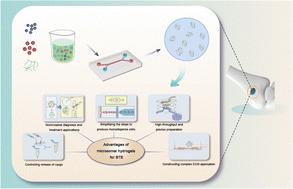
Bone defects are a prevalent issue resulting from various factors, such as trauma, degenerative diseases, congenital disabilities, and the surgical removal of tumors. Current methods for bone regeneration have limitations. In this context, the fusion of tissue engineering and microfluidics has emerged as a promising strategy in the field of bone regeneration. This study describes the classification of microfluidic devices based on the nature of flow and channel type, as well as the materials and techniques required. An overview of microfluidic methods used to prepare hydrogels and the advantages of using these hydrogels in bone tissue engineering (BTE) combining several basic elements of BTE to highlight its advantages is provided. Furthermore, this work emphasizes the benefits of using hydrogels prepared via microfluidics over conventional hydrogels in BTE because of their controlled release of cargo, they can be used for in situ injection, simplify the steps of single-cell encapsulation and have the advantages of high-throughput and precise preparation. Additionally, organ-on-a-chip models fabricated via microfluidics offer a platform for studying cell and tissue behaviors in an authentic and dynamic environment. Moreover, microfluidic devices can be utilized for noninvasive diagnosis and therapy. Finally, this paper summarizes the preclinical and clinical applications of hydrogels prepared via microfluidics for bone regeneration by focusing on their current developmental status, limitations associated with their application, and future challenges, which underscore their potential impacts on advancing regenerative medicine practices.
期刊介绍:
Journal of Materials Chemistry A, B & C cover high quality studies across all fields of materials chemistry. The journals focus on those theoretical or experimental studies that report new understanding, applications, properties and synthesis of materials. Journal of Materials Chemistry A, B & C are separated by the intended application of the material studied. Broadly, applications in energy and sustainability are of interest to Journal of Materials Chemistry A, applications in biology and medicine are of interest to Journal of Materials Chemistry B, and applications in optical, magnetic and electronic devices are of interest to Journal of Materials Chemistry C.Journal of Materials Chemistry B is a Transformative Journal and Plan S compliant. Example topic areas within the scope of Journal of Materials Chemistry B are listed below. This list is neither exhaustive nor exclusive:
Antifouling coatings
Biocompatible materials
Bioelectronics
Bioimaging
Biomimetics
Biomineralisation
Bionics
Biosensors
Diagnostics
Drug delivery
Gene delivery
Immunobiology
Nanomedicine
Regenerative medicine & Tissue engineering
Scaffolds
Soft robotics
Stem cells
Therapeutic devices





 京公网安备 11010802042870号
京ICP备2023020795号-1
京公网安备 11010802042870号
京ICP备2023020795号-1

 分享
分享
 求助内容:
求助内容: 应助结果提醒方式:
 扫码关注我们
