Seyed Mohammad Sajjadi, Alisa Mohebbi, Amirhossein Ehsani, Amir Marashi, Aida Azhdarimoghaddam, Shaghayegh Karami, Mohammad Amin Karimi, Mahsa Sadeghi, Kiana Firoozi, Amir Mohammad Zamani, Amirhossein Rigi, Melika Nayebagha, Mahsa Asadi Anar, Pooya Eini, Sadaf Salehi, Mahsa Rostami Ghezeljeh
{"title":"使用放射学报告的自然语言处理识别腹主动脉瘤的大小和存在:一项系统回顾和荟萃分析。","authors":"Seyed Mohammad Sajjadi, Alisa Mohebbi, Amirhossein Ehsani, Amir Marashi, Aida Azhdarimoghaddam, Shaghayegh Karami, Mohammad Amin Karimi, Mahsa Sadeghi, Kiana Firoozi, Amir Mohammad Zamani, Amirhossein Rigi, Melika Nayebagha, Mahsa Asadi Anar, Pooya Eini, Sadaf Salehi, Mahsa Rostami Ghezeljeh","doi":"10.1007/s00261-025-04810-5","DOIUrl":null,"url":null,"abstract":"<div><h3>Background and aim</h3><p>Prior investigations of the natural history of abdominal aortic aneurysms (AAAs) have been constrained by small sample sizes or uneven assessments of aggregated data. Natural language processing (NLP) can significantly enhance the investigation and treatment of patients with AAAs by swiftly and effectively collecting imaging data from health records. This meta-analysis aimed to evaluate the efficacy of NLP techniques in reliably identifying the existence or absence of AAAs and measuring the maximal abdominal aortic diameter in extensive datasets of radiology study reports.</p><h3>Method</h3><p>The PubMed, Scopus, Web of Science, Embase, and Science Direct databases were searched until March 2024 to obtain pertinent papers. The RAYYAN intelligent tool for systematic reviews was utilized to screen the studies. The meta-analysis was conducted using STATA v18 software. Egger’s test was employed to evaluate publication bias. The Newcastle Ottawa Scale was employed to assess the quality of the listed studies. A plot digitizer was employed to extract digital data.</p><h3>Result</h3><p>A total of 39,094 individuals with AAA were included in this analysis. Twenty-seven thousand three hundred twenty-six patients were male, and 11,383 were female. The mean age of the total participants was 73.1 ± 1.25 years. Analysis results for pooled estimation of performance variables such as: The sensitivity, specificity, precision, and accuracy of the implemented NLP model were analyzed as follows: 0.89(0.88–0.91), 0.88 (0.87–0.89), 0.92 (0.89–0.95), and 0.91 (0.89–0.93) respectively. The aneurysm diameter size difference reported in follow-up before and after NLP implementation in the included studies showed a 0.05 cm reduction in size, which was statistically significant.</p><h3>Conclusion</h3><p>NLP holds great potential for automating the detection of AAA size and presence in radiology reports, enhancing efficiency and scalability over manual review. However, challenges persist. Variability in report formats, terminology, and unstructured data can compromise accuracy. Additionally, NLP models rely on high-quality, annotated training datasets, which may be incomplete or unrepresentative. While NLP aids in identifying AAA-related data, human oversight is essential to ensure decisions are informed by the patient’s broader clinical context. Ongoing algorithm refinement and seamless integration into clinical workflows are key to improving NLP’s utility and reliability in this field.</p></div>","PeriodicalId":7126,"journal":{"name":"Abdominal Radiology","volume":"50 8","pages":"3885 - 3899"},"PeriodicalIF":2.2000,"publicationDate":"2025-01-30","publicationTypes":"Journal Article","fieldsOfStudy":null,"isOpenAccess":false,"openAccessPdf":"","citationCount":"0","resultStr":"{\"title\":\"Identifying abdominal aortic aneurysm size and presence using Natural Language Processing of radiology reports: a systematic review and meta-analysis\",\"authors\":\"Seyed Mohammad Sajjadi, Alisa Mohebbi, Amirhossein Ehsani, Amir Marashi, Aida Azhdarimoghaddam, Shaghayegh Karami, Mohammad Amin Karimi, Mahsa Sadeghi, Kiana Firoozi, Amir Mohammad Zamani, Amirhossein Rigi, Melika Nayebagha, Mahsa Asadi Anar, Pooya Eini, Sadaf Salehi, Mahsa Rostami Ghezeljeh\",\"doi\":\"10.1007/s00261-025-04810-5\",\"DOIUrl\":null,\"url\":null,\"abstract\":\"<div><h3>Background and aim</h3><p>Prior investigations of the natural history of abdominal aortic aneurysms (AAAs) have been constrained by small sample sizes or uneven assessments of aggregated data. Natural language processing (NLP) can significantly enhance the investigation and treatment of patients with AAAs by swiftly and effectively collecting imaging data from health records. This meta-analysis aimed to evaluate the efficacy of NLP techniques in reliably identifying the existence or absence of AAAs and measuring the maximal abdominal aortic diameter in extensive datasets of radiology study reports.</p><h3>Method</h3><p>The PubMed, Scopus, Web of Science, Embase, and Science Direct databases were searched until March 2024 to obtain pertinent papers. The RAYYAN intelligent tool for systematic reviews was utilized to screen the studies. The meta-analysis was conducted using STATA v18 software. Egger’s test was employed to evaluate publication bias. The Newcastle Ottawa Scale was employed to assess the quality of the listed studies. A plot digitizer was employed to extract digital data.</p><h3>Result</h3><p>A total of 39,094 individuals with AAA were included in this analysis. Twenty-seven thousand three hundred twenty-six patients were male, and 11,383 were female. The mean age of the total participants was 73.1 ± 1.25 years. Analysis results for pooled estimation of performance variables such as: The sensitivity, specificity, precision, and accuracy of the implemented NLP model were analyzed as follows: 0.89(0.88–0.91), 0.88 (0.87–0.89), 0.92 (0.89–0.95), and 0.91 (0.89–0.93) respectively. The aneurysm diameter size difference reported in follow-up before and after NLP implementation in the included studies showed a 0.05 cm reduction in size, which was statistically significant.</p><h3>Conclusion</h3><p>NLP holds great potential for automating the detection of AAA size and presence in radiology reports, enhancing efficiency and scalability over manual review. However, challenges persist. Variability in report formats, terminology, and unstructured data can compromise accuracy. Additionally, NLP models rely on high-quality, annotated training datasets, which may be incomplete or unrepresentative. While NLP aids in identifying AAA-related data, human oversight is essential to ensure decisions are informed by the patient’s broader clinical context. Ongoing algorithm refinement and seamless integration into clinical workflows are key to improving NLP’s utility and reliability in this field.</p></div>\",\"PeriodicalId\":7126,\"journal\":{\"name\":\"Abdominal Radiology\",\"volume\":\"50 8\",\"pages\":\"3885 - 3899\"},\"PeriodicalIF\":2.2000,\"publicationDate\":\"2025-01-30\",\"publicationTypes\":\"Journal Article\",\"fieldsOfStudy\":null,\"isOpenAccess\":false,\"openAccessPdf\":\"\",\"citationCount\":\"0\",\"resultStr\":null,\"platform\":\"Semanticscholar\",\"paperid\":null,\"PeriodicalName\":\"Abdominal Radiology\",\"FirstCategoryId\":\"3\",\"ListUrlMain\":\"https://link.springer.com/article/10.1007/s00261-025-04810-5\",\"RegionNum\":3,\"RegionCategory\":\"医学\",\"ArticlePicture\":[],\"TitleCN\":null,\"AbstractTextCN\":null,\"PMCID\":null,\"EPubDate\":\"\",\"PubModel\":\"\",\"JCR\":\"Q2\",\"JCRName\":\"RADIOLOGY, NUCLEAR MEDICINE & MEDICAL IMAGING\",\"Score\":null,\"Total\":0}","platform":"Semanticscholar","paperid":null,"PeriodicalName":"Abdominal Radiology","FirstCategoryId":"3","ListUrlMain":"https://link.springer.com/article/10.1007/s00261-025-04810-5","RegionNum":3,"RegionCategory":"医学","ArticlePicture":[],"TitleCN":null,"AbstractTextCN":null,"PMCID":null,"EPubDate":"","PubModel":"","JCR":"Q2","JCRName":"RADIOLOGY, NUCLEAR MEDICINE & MEDICAL IMAGING","Score":null,"Total":0}
引用次数: 0
摘要
背景和目的:腹主动脉瘤(AAAs)自然史的既往研究受到样本量小或汇总数据评估不均匀的限制。自然语言处理(NLP)可以快速有效地从健康记录中收集影像学数据,从而显著增强对AAAs患者的调查和治疗。本荟萃分析旨在评估NLP技术在可靠地识别AAAs存在或不存在以及测量放射学研究报告中大量数据集的最大腹主动脉直径方面的有效性。方法:截止2024年3月,检索PubMed、Scopus、Web of Science、Embase、Science Direct等数据库,获取相关论文。采用RAYYAN智能系统评价工具对研究进行筛选。meta分析采用STATA v18软件进行。采用Egger检验评价发表偏倚。采用纽卡斯尔渥太华量表评估所列研究的质量。采用图形数字化仪提取数字数据。结果:本分析共纳入39094例AAA患者。男性27,326例,女性11,383例。参与者的平均年龄为73.1±1.25岁。对实现的NLP模型的灵敏度、特异度、精密度和准确度分别为0.89(0.88-0.91)、0.88(0.87-0.89)、0.92(0.89-0.95)和0.91(0.89-0.93)。在纳入的研究中,实施NLP前后随访报告的动脉瘤直径大小差异显示,动脉瘤直径减小0.05 cm,具有统计学意义。结论:NLP在自动化检测放射学报告中的AAA大小和存在方面具有很大的潜力,提高了人工审查的效率和可扩展性。然而,挑战依然存在。报告格式、术语和非结构化数据的可变性会影响准确性。此外,NLP模型依赖于高质量的、带注释的训练数据集,这些数据集可能不完整或不具有代表性。虽然NLP有助于识别aaa相关数据,但人为监督对于确保决策符合患者更广泛的临床背景至关重要。持续的算法改进和与临床工作流程的无缝集成是提高NLP在该领域的实用性和可靠性的关键。
Identifying abdominal aortic aneurysm size and presence using Natural Language Processing of radiology reports: a systematic review and meta-analysis
Background and aim
Prior investigations of the natural history of abdominal aortic aneurysms (AAAs) have been constrained by small sample sizes or uneven assessments of aggregated data. Natural language processing (NLP) can significantly enhance the investigation and treatment of patients with AAAs by swiftly and effectively collecting imaging data from health records. This meta-analysis aimed to evaluate the efficacy of NLP techniques in reliably identifying the existence or absence of AAAs and measuring the maximal abdominal aortic diameter in extensive datasets of radiology study reports.
Method
The PubMed, Scopus, Web of Science, Embase, and Science Direct databases were searched until March 2024 to obtain pertinent papers. The RAYYAN intelligent tool for systematic reviews was utilized to screen the studies. The meta-analysis was conducted using STATA v18 software. Egger’s test was employed to evaluate publication bias. The Newcastle Ottawa Scale was employed to assess the quality of the listed studies. A plot digitizer was employed to extract digital data.
Result
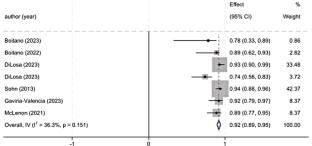
A total of 39,094 individuals with AAA were included in this analysis. Twenty-seven thousand three hundred twenty-six patients were male, and 11,383 were female. The mean age of the total participants was 73.1 ± 1.25 years. Analysis results for pooled estimation of performance variables such as: The sensitivity, specificity, precision, and accuracy of the implemented NLP model were analyzed as follows: 0.89(0.88–0.91), 0.88 (0.87–0.89), 0.92 (0.89–0.95), and 0.91 (0.89–0.93) respectively. The aneurysm diameter size difference reported in follow-up before and after NLP implementation in the included studies showed a 0.05 cm reduction in size, which was statistically significant.
Conclusion
NLP holds great potential for automating the detection of AAA size and presence in radiology reports, enhancing efficiency and scalability over manual review. However, challenges persist. Variability in report formats, terminology, and unstructured data can compromise accuracy. Additionally, NLP models rely on high-quality, annotated training datasets, which may be incomplete or unrepresentative. While NLP aids in identifying AAA-related data, human oversight is essential to ensure decisions are informed by the patient’s broader clinical context. Ongoing algorithm refinement and seamless integration into clinical workflows are key to improving NLP’s utility and reliability in this field.
期刊介绍:
Abdominal Radiology seeks to meet the professional needs of the abdominal radiologist by publishing clinically pertinent original, review and practice related articles on the gastrointestinal and genitourinary tracts and abdominal interventional and radiologic procedures. Case reports are generally not accepted unless they are the first report of a new disease or condition, or part of a special solicited section.
Reasons to Publish Your Article in Abdominal Radiology:
· Official journal of the Society of Abdominal Radiology (SAR)
· Published in Cooperation with:
European Society of Gastrointestinal and Abdominal Radiology (ESGAR)
European Society of Urogenital Radiology (ESUR)
Asian Society of Abdominal Radiology (ASAR)
· Efficient handling and Expeditious review
· Author feedback is provided in a mentoring style
· Global readership
· Readers can earn CME credits




 京公网安备 11010802042870号
京ICP备2023020795号-1
京公网安备 11010802042870号
京ICP备2023020795号-1

 分享
分享
 求助内容:
求助内容: 应助结果提醒方式:
 扫码关注我们
