Mahnaz Nasre Taheri, Sima Sadat Seyedjavadi, Mehdi Goudarzi, Gholamhossein Ebrahimipour, Ali Hashemi
{"title":"从荨麻疹叶片中分离的新型抗菌肽Cliotide U1。","authors":"Mahnaz Nasre Taheri, Sima Sadat Seyedjavadi, Mehdi Goudarzi, Gholamhossein Ebrahimipour, Ali Hashemi","doi":"10.1177/11779322251315291","DOIUrl":null,"url":null,"abstract":"<p><strong>Aims: </strong>Antibiotic resistance is currently a major challenge to scientists. Thus, attempts have been made to develop new compounds with antimicrobial activity. In this research, a new antimicrobial peptide with antibacterial activity was isolated from the plant <i>Urtica dioica</i>.</p><p><strong>Methods: </strong>A new antimicrobial peptide, named cliotide U1, was purified through precipitation with ammonium sulfate and reverse-phase high-performance liquid chromatography. In silico methods analyzed the physicochemical properties of cliotide U1. The properties of the peptide, including antibacterial activity, pH stability, heat stability, cytotoxicity, and hemolytic activity, were also examined.</p><p><strong>Findings: </strong>The purified peptide was composed of 35 amino acids with a hydrophobicity ratio of 63% and a net charge of + 5. The antibacterial activity of cliotide U1 was observed against gram-negative and gram-positive bacteria with a minimum inhibitory concentration (MIC) of 1 to 4 µM. Cliotide U1 had less than 2% cytotoxic activity at the MIC range against the human embryonic kidney cell line 293 with no clear hemolytic activity. The stability of cliotide U1 was preserved at various temperatures (10-60°C) and pH (6-9).</p><p><strong>Conclusion: </strong>Our results demonstrated that cliotide U1 had potent antibacterial potential against gram-negative and gram-positive bacteria. Considering its properties, cliotide U1 can be introduced as a novel antibacterial candidate for expanding new therapeutic drugs.</p>","PeriodicalId":9065,"journal":{"name":"Bioinformatics and Biology Insights","volume":"19 ","pages":"11779322251315291"},"PeriodicalIF":2.4000,"publicationDate":"2025-01-29","publicationTypes":"Journal Article","fieldsOfStudy":null,"isOpenAccess":false,"openAccessPdf":"https://www.ncbi.nlm.nih.gov/pmc/articles/PMC11780632/pdf/","citationCount":"0","resultStr":"{\"title\":\"Cliotide U1, a Novel Antimicrobial Peptide Isolated From <i>Urtica Dioica</i> Leaves.\",\"authors\":\"Mahnaz Nasre Taheri, Sima Sadat Seyedjavadi, Mehdi Goudarzi, Gholamhossein Ebrahimipour, Ali Hashemi\",\"doi\":\"10.1177/11779322251315291\",\"DOIUrl\":null,\"url\":null,\"abstract\":\"<p><strong>Aims: </strong>Antibiotic resistance is currently a major challenge to scientists. Thus, attempts have been made to develop new compounds with antimicrobial activity. In this research, a new antimicrobial peptide with antibacterial activity was isolated from the plant <i>Urtica dioica</i>.</p><p><strong>Methods: </strong>A new antimicrobial peptide, named cliotide U1, was purified through precipitation with ammonium sulfate and reverse-phase high-performance liquid chromatography. In silico methods analyzed the physicochemical properties of cliotide U1. The properties of the peptide, including antibacterial activity, pH stability, heat stability, cytotoxicity, and hemolytic activity, were also examined.</p><p><strong>Findings: </strong>The purified peptide was composed of 35 amino acids with a hydrophobicity ratio of 63% and a net charge of + 5. The antibacterial activity of cliotide U1 was observed against gram-negative and gram-positive bacteria with a minimum inhibitory concentration (MIC) of 1 to 4 µM. Cliotide U1 had less than 2% cytotoxic activity at the MIC range against the human embryonic kidney cell line 293 with no clear hemolytic activity. The stability of cliotide U1 was preserved at various temperatures (10-60°C) and pH (6-9).</p><p><strong>Conclusion: </strong>Our results demonstrated that cliotide U1 had potent antibacterial potential against gram-negative and gram-positive bacteria. Considering its properties, cliotide U1 can be introduced as a novel antibacterial candidate for expanding new therapeutic drugs.</p>\",\"PeriodicalId\":9065,\"journal\":{\"name\":\"Bioinformatics and Biology Insights\",\"volume\":\"19 \",\"pages\":\"11779322251315291\"},\"PeriodicalIF\":2.4000,\"publicationDate\":\"2025-01-29\",\"publicationTypes\":\"Journal Article\",\"fieldsOfStudy\":null,\"isOpenAccess\":false,\"openAccessPdf\":\"https://www.ncbi.nlm.nih.gov/pmc/articles/PMC11780632/pdf/\",\"citationCount\":\"0\",\"resultStr\":null,\"platform\":\"Semanticscholar\",\"paperid\":null,\"PeriodicalName\":\"Bioinformatics and Biology Insights\",\"FirstCategoryId\":\"1085\",\"ListUrlMain\":\"https://doi.org/10.1177/11779322251315291\",\"RegionNum\":0,\"RegionCategory\":null,\"ArticlePicture\":[],\"TitleCN\":null,\"AbstractTextCN\":null,\"PMCID\":null,\"EPubDate\":\"2025/1/1 0:00:00\",\"PubModel\":\"eCollection\",\"JCR\":\"Q3\",\"JCRName\":\"BIOCHEMICAL RESEARCH METHODS\",\"Score\":null,\"Total\":0}","platform":"Semanticscholar","paperid":null,"PeriodicalName":"Bioinformatics and Biology Insights","FirstCategoryId":"1085","ListUrlMain":"https://doi.org/10.1177/11779322251315291","RegionNum":0,"RegionCategory":null,"ArticlePicture":[],"TitleCN":null,"AbstractTextCN":null,"PMCID":null,"EPubDate":"2025/1/1 0:00:00","PubModel":"eCollection","JCR":"Q3","JCRName":"BIOCHEMICAL RESEARCH METHODS","Score":null,"Total":0}
Cliotide U1, a Novel Antimicrobial Peptide Isolated From Urtica Dioica Leaves.
Aims: Antibiotic resistance is currently a major challenge to scientists. Thus, attempts have been made to develop new compounds with antimicrobial activity. In this research, a new antimicrobial peptide with antibacterial activity was isolated from the plant Urtica dioica.
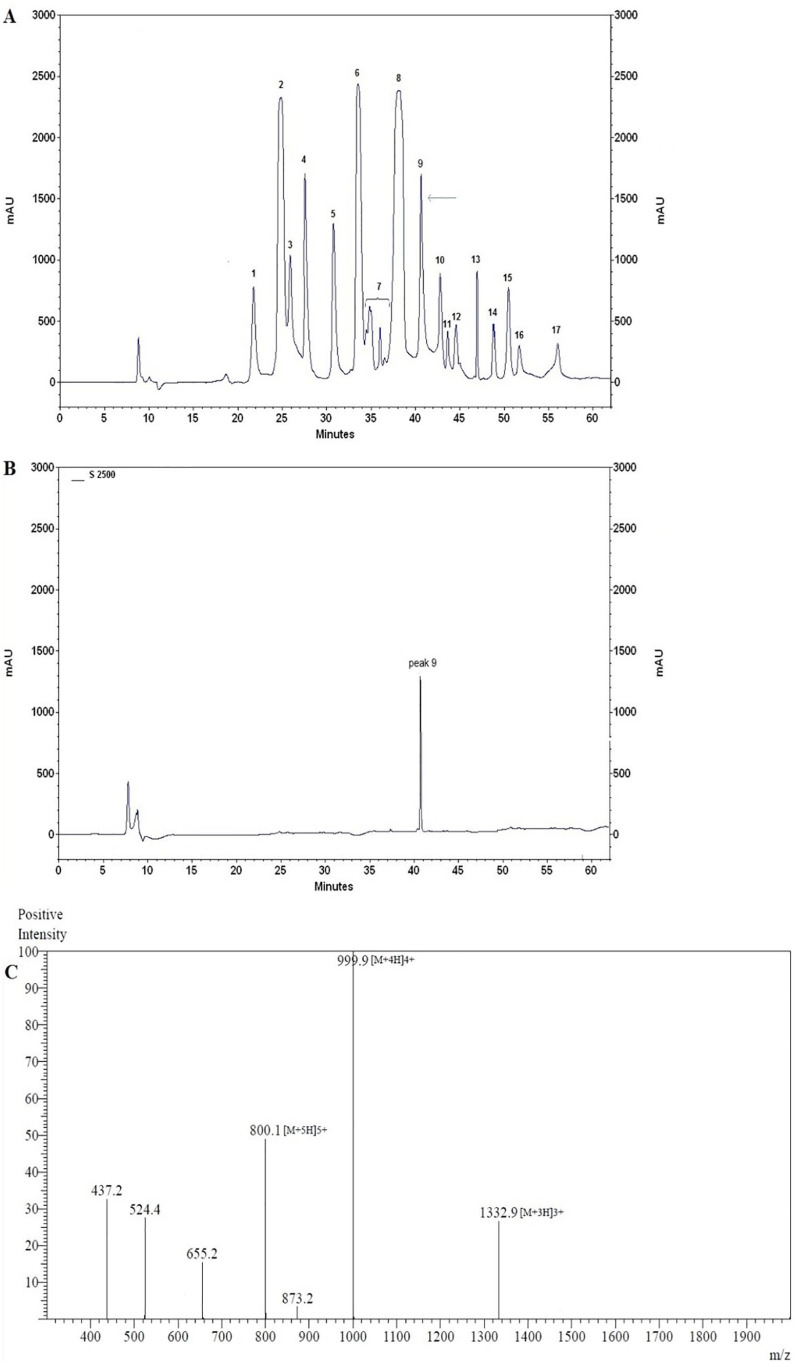
Methods: A new antimicrobial peptide, named cliotide U1, was purified through precipitation with ammonium sulfate and reverse-phase high-performance liquid chromatography. In silico methods analyzed the physicochemical properties of cliotide U1. The properties of the peptide, including antibacterial activity, pH stability, heat stability, cytotoxicity, and hemolytic activity, were also examined.
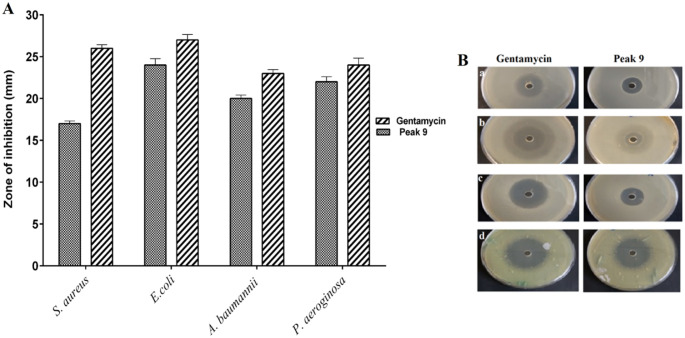
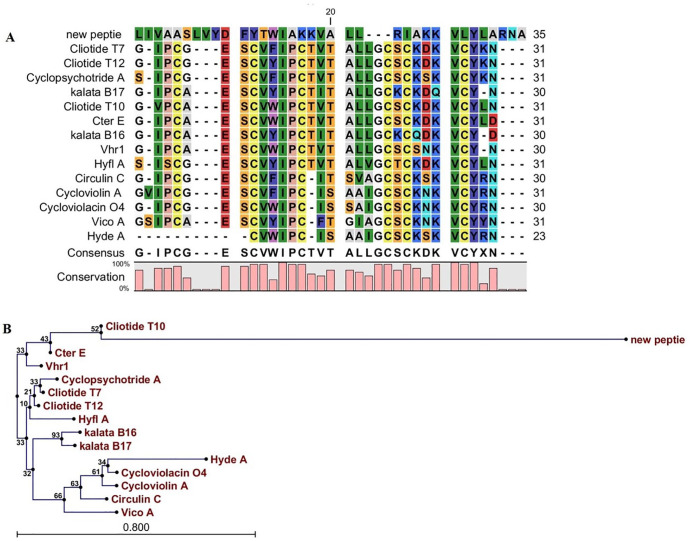
Findings: The purified peptide was composed of 35 amino acids with a hydrophobicity ratio of 63% and a net charge of + 5. The antibacterial activity of cliotide U1 was observed against gram-negative and gram-positive bacteria with a minimum inhibitory concentration (MIC) of 1 to 4 µM. Cliotide U1 had less than 2% cytotoxic activity at the MIC range against the human embryonic kidney cell line 293 with no clear hemolytic activity. The stability of cliotide U1 was preserved at various temperatures (10-60°C) and pH (6-9).
Conclusion: Our results demonstrated that cliotide U1 had potent antibacterial potential against gram-negative and gram-positive bacteria. Considering its properties, cliotide U1 can be introduced as a novel antibacterial candidate for expanding new therapeutic drugs.
期刊介绍:
Bioinformatics and Biology Insights is an open access, peer-reviewed journal that considers articles on bioinformatics methods and their applications which must pertain to biological insights. All papers should be easily amenable to biologists and as such help bridge the gap between theories and applications.




 京公网安备 11010802042870号
京ICP备2023020795号-1
京公网安备 11010802042870号
京ICP备2023020795号-1

 分享
分享
 求助内容:
求助内容: 应助结果提醒方式:
 扫码关注我们
