Mohd Fadhli Razali, Nurul Iffah Amir Shah Ruddin, Noor Afiza Abdul Rani, Fahim Mohamed, Nurul Izzah Ahmad, Yin-Hui Leong
{"title":"马来西亚报告的急性草甘膦中毒的流行病学分析:确定风险因素和高危人群(2006-2023年)。","authors":"Mohd Fadhli Razali, Nurul Iffah Amir Shah Ruddin, Noor Afiza Abdul Rani, Fahim Mohamed, Nurul Izzah Ahmad, Yin-Hui Leong","doi":"10.1136/bmjopen-2024-092681","DOIUrl":null,"url":null,"abstract":"<p><strong>Objective: </strong>Glyphosate is widely used in Malaysian agriculture but poses a significant under-reported public health concern due to poisoning. This paper aims to study the epidemiology of glyphosate poisoning in Malaysia, assessing severity, identifying risk factors, and high-risk groups.</p><p><strong>Setting: </strong>All glyphosate-related data of the Malaysia National Poison Centre from 2006 to 2023.</p><p><strong>Participants: </strong>Telephone inquiries of incidents involving glyphosate made by healthcare professionals across Malaysia. Information received was recorded according to WHO guidelines.</p><p><strong>Outcomes: </strong>The outcome is to provide an overview of national glyphosate poisoning epidemiology, including identifying risk factors and high-risk groups to strategise appropriate measures.</p><p><strong>Results: </strong>A total of 4548 glyphosate poisoning cases were reported, with males comprising 67.3% of cases. The most affected age groups were 21-30 years (25.5%) and 31-40 years (23.5%). Ingestion was the primary exposure route (93.0%). Intentional poisonings, mainly suicides, accounted for 68.4% (n=3078) of cases. Among the 1420 unintentional cases, 78.2% resulted from ingestion exposures. The incidence rate declined from 1.17 per 100 000 in 2011 to 0.61 in 2023. Significant associations were found between intentional ingestion and sociodemographic factors. From 2013 to 2023, 73.7% of cases were minor, 11.5% moderate, 0.8% severe and 0.1% fatal.</p><p><strong>Conclusions: </strong>In Malaysia, the reported intentional glyphosate poisoning most commonly affects young adults, resulting in generally minor to moderate symptoms. The study highlights the need for stricter regulations on glyphosate use and improved mental health support, to mitigate poisoning risks. Continued surveillance and public education are essential to address this public health issue.</p>","PeriodicalId":9158,"journal":{"name":"BMJ Open","volume":"15 1","pages":"e092681"},"PeriodicalIF":2.5000,"publicationDate":"2025-01-28","publicationTypes":"Journal Article","fieldsOfStudy":null,"isOpenAccess":false,"openAccessPdf":"https://www.ncbi.nlm.nih.gov/pmc/articles/PMC11781103/pdf/","citationCount":"0","resultStr":"{\"title\":\"Epidemiological analysis of reported acute glyphosate poisoning in Malaysia: identifying risk factors and high-risk groups (2006-2023).\",\"authors\":\"Mohd Fadhli Razali, Nurul Iffah Amir Shah Ruddin, Noor Afiza Abdul Rani, Fahim Mohamed, Nurul Izzah Ahmad, Yin-Hui Leong\",\"doi\":\"10.1136/bmjopen-2024-092681\",\"DOIUrl\":null,\"url\":null,\"abstract\":\"<p><strong>Objective: </strong>Glyphosate is widely used in Malaysian agriculture but poses a significant under-reported public health concern due to poisoning. This paper aims to study the epidemiology of glyphosate poisoning in Malaysia, assessing severity, identifying risk factors, and high-risk groups.</p><p><strong>Setting: </strong>All glyphosate-related data of the Malaysia National Poison Centre from 2006 to 2023.</p><p><strong>Participants: </strong>Telephone inquiries of incidents involving glyphosate made by healthcare professionals across Malaysia. Information received was recorded according to WHO guidelines.</p><p><strong>Outcomes: </strong>The outcome is to provide an overview of national glyphosate poisoning epidemiology, including identifying risk factors and high-risk groups to strategise appropriate measures.</p><p><strong>Results: </strong>A total of 4548 glyphosate poisoning cases were reported, with males comprising 67.3% of cases. The most affected age groups were 21-30 years (25.5%) and 31-40 years (23.5%). Ingestion was the primary exposure route (93.0%). Intentional poisonings, mainly suicides, accounted for 68.4% (n=3078) of cases. Among the 1420 unintentional cases, 78.2% resulted from ingestion exposures. The incidence rate declined from 1.17 per 100 000 in 2011 to 0.61 in 2023. Significant associations were found between intentional ingestion and sociodemographic factors. From 2013 to 2023, 73.7% of cases were minor, 11.5% moderate, 0.8% severe and 0.1% fatal.</p><p><strong>Conclusions: </strong>In Malaysia, the reported intentional glyphosate poisoning most commonly affects young adults, resulting in generally minor to moderate symptoms. The study highlights the need for stricter regulations on glyphosate use and improved mental health support, to mitigate poisoning risks. Continued surveillance and public education are essential to address this public health issue.</p>\",\"PeriodicalId\":9158,\"journal\":{\"name\":\"BMJ Open\",\"volume\":\"15 1\",\"pages\":\"e092681\"},\"PeriodicalIF\":2.5000,\"publicationDate\":\"2025-01-28\",\"publicationTypes\":\"Journal Article\",\"fieldsOfStudy\":null,\"isOpenAccess\":false,\"openAccessPdf\":\"https://www.ncbi.nlm.nih.gov/pmc/articles/PMC11781103/pdf/\",\"citationCount\":\"0\",\"resultStr\":null,\"platform\":\"Semanticscholar\",\"paperid\":null,\"PeriodicalName\":\"BMJ Open\",\"FirstCategoryId\":\"3\",\"ListUrlMain\":\"https://doi.org/10.1136/bmjopen-2024-092681\",\"RegionNum\":3,\"RegionCategory\":\"医学\",\"ArticlePicture\":[],\"TitleCN\":null,\"AbstractTextCN\":null,\"PMCID\":null,\"EPubDate\":\"\",\"PubModel\":\"\",\"JCR\":\"Q1\",\"JCRName\":\"MEDICINE, GENERAL & INTERNAL\",\"Score\":null,\"Total\":0}","platform":"Semanticscholar","paperid":null,"PeriodicalName":"BMJ Open","FirstCategoryId":"3","ListUrlMain":"https://doi.org/10.1136/bmjopen-2024-092681","RegionNum":3,"RegionCategory":"医学","ArticlePicture":[],"TitleCN":null,"AbstractTextCN":null,"PMCID":null,"EPubDate":"","PubModel":"","JCR":"Q1","JCRName":"MEDICINE, GENERAL & INTERNAL","Score":null,"Total":0}
Epidemiological analysis of reported acute glyphosate poisoning in Malaysia: identifying risk factors and high-risk groups (2006-2023).
Objective: Glyphosate is widely used in Malaysian agriculture but poses a significant under-reported public health concern due to poisoning. This paper aims to study the epidemiology of glyphosate poisoning in Malaysia, assessing severity, identifying risk factors, and high-risk groups.
Setting: All glyphosate-related data of the Malaysia National Poison Centre from 2006 to 2023.
Participants: Telephone inquiries of incidents involving glyphosate made by healthcare professionals across Malaysia. Information received was recorded according to WHO guidelines.
Outcomes: The outcome is to provide an overview of national glyphosate poisoning epidemiology, including identifying risk factors and high-risk groups to strategise appropriate measures.
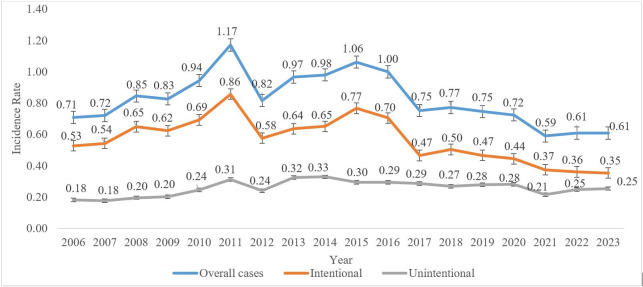
Results: A total of 4548 glyphosate poisoning cases were reported, with males comprising 67.3% of cases. The most affected age groups were 21-30 years (25.5%) and 31-40 years (23.5%). Ingestion was the primary exposure route (93.0%). Intentional poisonings, mainly suicides, accounted for 68.4% (n=3078) of cases. Among the 1420 unintentional cases, 78.2% resulted from ingestion exposures. The incidence rate declined from 1.17 per 100 000 in 2011 to 0.61 in 2023. Significant associations were found between intentional ingestion and sociodemographic factors. From 2013 to 2023, 73.7% of cases were minor, 11.5% moderate, 0.8% severe and 0.1% fatal.
Conclusions: In Malaysia, the reported intentional glyphosate poisoning most commonly affects young adults, resulting in generally minor to moderate symptoms. The study highlights the need for stricter regulations on glyphosate use and improved mental health support, to mitigate poisoning risks. Continued surveillance and public education are essential to address this public health issue.
期刊介绍:
BMJ Open is an online, open access journal, dedicated to publishing medical research from all disciplines and therapeutic areas. The journal publishes all research study types, from study protocols to phase I trials to meta-analyses, including small or specialist studies. Publishing procedures are built around fully open peer review and continuous publication, publishing research online as soon as the article is ready.





 京公网安备 11010802042870号
京ICP备2023020795号-1
京公网安备 11010802042870号
京ICP备2023020795号-1

 分享
分享
 求助内容:
求助内容: 应助结果提醒方式:
 扫码关注我们
