{"title":"了解全髋关节置换术后老年人神经认知恢复-神经认知评估,血液生物标志物和患者经历:一项混合方法研究","authors":"Anahita Amirpour, Lina Bergman, Gabriela Markovic, Karin Liander, Ulrica Nilsson, Jeanette Eckerblad","doi":"10.1136/bmjopen-2024-093872","DOIUrl":null,"url":null,"abstract":"<p><strong>Objective: </strong>Delayed neurocognitive recovery, previously known as postoperative cognitive dysfunction, is a common complication affecting older adults after surgery. This study aims to address the knowledge gap in postoperative neurocognitive recovery by exploring the relationship between subjective experiences, performance-based measurements, and blood biomarkers.</p><p><strong>Design: </strong>Mixed-methods study with a convergent parallel (QUAL+quan) design.</p><p><strong>Setting and participants: </strong>The study reports results from 40 older adult patients (52.5% women; mean age 73, SD 6.7) scheduled for total hip arthroplasty at a hospital in Sweden.</p><p><strong>Outcome measures: </strong>Neurocognitive performance was assessed using a standardised test battery, neuroinflammation through blood biomarker analysis and postoperative neurocognitive recovery via semistructured interviews and the Swedish Quality of Recovery questionnaire.</p><p><strong>Results: </strong>Five patients were classified as having delayed neurocognitive recovery based on performance tests. Qualitative data revealed that most patients reported cognitive symptoms, particularly related to executive functions and fatigue. Psychological factors, including a sense of agency and low mood, significantly influenced cognitive recovery and daily functioning. Elevated inflammatory blood biomarkers were not detected pre- or postoperatively in patients with delayed neurocognitive recovery. The global postoperative recovery score was 40.9, indicating a low quality of recovery.</p><p><strong>Conclusion: </strong>Many patients reported subjective cognitive decline that was not corroborated by delayed neurocognitive recovery in the performance-based tests. Psychological factors were influential for neurocognitive recovery and should be routinely assessed. Future research should incorporate longitudinal follow-ups with performance-based measurements, fatigue assessment, evaluations of instrumental activities of daily living and subjective reporting, supported by a multidisciplinary team approach.</p><p><strong>Trial registration number: </strong>NCT05361460.</p>","PeriodicalId":9158,"journal":{"name":"BMJ Open","volume":"15 1","pages":"e093872"},"PeriodicalIF":2.5000,"publicationDate":"2025-01-28","publicationTypes":"Journal Article","fieldsOfStudy":null,"isOpenAccess":false,"openAccessPdf":"https://www.ncbi.nlm.nih.gov/pmc/articles/PMC11781142/pdf/","citationCount":"0","resultStr":"{\"title\":\"Understanding neurocognitive recovery in older adults after total hip arthroplasty-neurocognitive assessment, blood biomarkers and patient experiences: a mixed-methods study.\",\"authors\":\"Anahita Amirpour, Lina Bergman, Gabriela Markovic, Karin Liander, Ulrica Nilsson, Jeanette Eckerblad\",\"doi\":\"10.1136/bmjopen-2024-093872\",\"DOIUrl\":null,\"url\":null,\"abstract\":\"<p><strong>Objective: </strong>Delayed neurocognitive recovery, previously known as postoperative cognitive dysfunction, is a common complication affecting older adults after surgery. This study aims to address the knowledge gap in postoperative neurocognitive recovery by exploring the relationship between subjective experiences, performance-based measurements, and blood biomarkers.</p><p><strong>Design: </strong>Mixed-methods study with a convergent parallel (QUAL+quan) design.</p><p><strong>Setting and participants: </strong>The study reports results from 40 older adult patients (52.5% women; mean age 73, SD 6.7) scheduled for total hip arthroplasty at a hospital in Sweden.</p><p><strong>Outcome measures: </strong>Neurocognitive performance was assessed using a standardised test battery, neuroinflammation through blood biomarker analysis and postoperative neurocognitive recovery via semistructured interviews and the Swedish Quality of Recovery questionnaire.</p><p><strong>Results: </strong>Five patients were classified as having delayed neurocognitive recovery based on performance tests. Qualitative data revealed that most patients reported cognitive symptoms, particularly related to executive functions and fatigue. Psychological factors, including a sense of agency and low mood, significantly influenced cognitive recovery and daily functioning. Elevated inflammatory blood biomarkers were not detected pre- or postoperatively in patients with delayed neurocognitive recovery. The global postoperative recovery score was 40.9, indicating a low quality of recovery.</p><p><strong>Conclusion: </strong>Many patients reported subjective cognitive decline that was not corroborated by delayed neurocognitive recovery in the performance-based tests. Psychological factors were influential for neurocognitive recovery and should be routinely assessed. Future research should incorporate longitudinal follow-ups with performance-based measurements, fatigue assessment, evaluations of instrumental activities of daily living and subjective reporting, supported by a multidisciplinary team approach.</p><p><strong>Trial registration number: </strong>NCT05361460.</p>\",\"PeriodicalId\":9158,\"journal\":{\"name\":\"BMJ Open\",\"volume\":\"15 1\",\"pages\":\"e093872\"},\"PeriodicalIF\":2.5000,\"publicationDate\":\"2025-01-28\",\"publicationTypes\":\"Journal Article\",\"fieldsOfStudy\":null,\"isOpenAccess\":false,\"openAccessPdf\":\"https://www.ncbi.nlm.nih.gov/pmc/articles/PMC11781142/pdf/\",\"citationCount\":\"0\",\"resultStr\":null,\"platform\":\"Semanticscholar\",\"paperid\":null,\"PeriodicalName\":\"BMJ Open\",\"FirstCategoryId\":\"3\",\"ListUrlMain\":\"https://doi.org/10.1136/bmjopen-2024-093872\",\"RegionNum\":3,\"RegionCategory\":\"医学\",\"ArticlePicture\":[],\"TitleCN\":null,\"AbstractTextCN\":null,\"PMCID\":null,\"EPubDate\":\"\",\"PubModel\":\"\",\"JCR\":\"Q1\",\"JCRName\":\"MEDICINE, GENERAL & INTERNAL\",\"Score\":null,\"Total\":0}","platform":"Semanticscholar","paperid":null,"PeriodicalName":"BMJ Open","FirstCategoryId":"3","ListUrlMain":"https://doi.org/10.1136/bmjopen-2024-093872","RegionNum":3,"RegionCategory":"医学","ArticlePicture":[],"TitleCN":null,"AbstractTextCN":null,"PMCID":null,"EPubDate":"","PubModel":"","JCR":"Q1","JCRName":"MEDICINE, GENERAL & INTERNAL","Score":null,"Total":0}
Understanding neurocognitive recovery in older adults after total hip arthroplasty-neurocognitive assessment, blood biomarkers and patient experiences: a mixed-methods study.
Objective: Delayed neurocognitive recovery, previously known as postoperative cognitive dysfunction, is a common complication affecting older adults after surgery. This study aims to address the knowledge gap in postoperative neurocognitive recovery by exploring the relationship between subjective experiences, performance-based measurements, and blood biomarkers.
Design: Mixed-methods study with a convergent parallel (QUAL+quan) design.
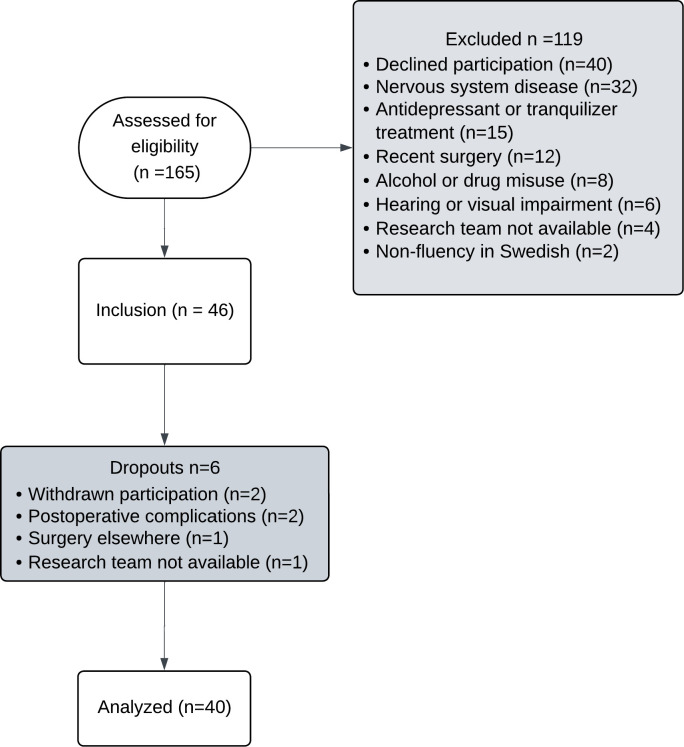
Setting and participants: The study reports results from 40 older adult patients (52.5% women; mean age 73, SD 6.7) scheduled for total hip arthroplasty at a hospital in Sweden.
Outcome measures: Neurocognitive performance was assessed using a standardised test battery, neuroinflammation through blood biomarker analysis and postoperative neurocognitive recovery via semistructured interviews and the Swedish Quality of Recovery questionnaire.
Results: Five patients were classified as having delayed neurocognitive recovery based on performance tests. Qualitative data revealed that most patients reported cognitive symptoms, particularly related to executive functions and fatigue. Psychological factors, including a sense of agency and low mood, significantly influenced cognitive recovery and daily functioning. Elevated inflammatory blood biomarkers were not detected pre- or postoperatively in patients with delayed neurocognitive recovery. The global postoperative recovery score was 40.9, indicating a low quality of recovery.
Conclusion: Many patients reported subjective cognitive decline that was not corroborated by delayed neurocognitive recovery in the performance-based tests. Psychological factors were influential for neurocognitive recovery and should be routinely assessed. Future research should incorporate longitudinal follow-ups with performance-based measurements, fatigue assessment, evaluations of instrumental activities of daily living and subjective reporting, supported by a multidisciplinary team approach.
期刊介绍:
BMJ Open is an online, open access journal, dedicated to publishing medical research from all disciplines and therapeutic areas. The journal publishes all research study types, from study protocols to phase I trials to meta-analyses, including small or specialist studies. Publishing procedures are built around fully open peer review and continuous publication, publishing research online as soon as the article is ready.





 京公网安备 11010802042870号
京ICP备2023020795号-1
京公网安备 11010802042870号
京ICP备2023020795号-1

 分享
分享
 求助内容:
求助内容: 应助结果提醒方式:
 扫码关注我们
