Austin D. Thompson, Kevin A. Hurtado, Jaroslav Janda, Natalie E. Scholpa, Baerbel Rohrer, Rick G. Schnellmann
{"title":"MC16促进线粒体生物发生,改善急性和糖尿病肾病。","authors":"Austin D. Thompson, Kevin A. Hurtado, Jaroslav Janda, Natalie E. Scholpa, Baerbel Rohrer, Rick G. Schnellmann","doi":"10.1111/bph.17440","DOIUrl":null,"url":null,"abstract":"<div>\n \n <section>\n \n <h3> Background and Purpose</h3>\n \n <p>Kidney disease (KD) is a leading cause of mortality worldwide, affecting 〉10% of the global population. Two of the most common causes of KD are diabetes and acute kidney injury (AKI), both of which induce mitochondrial dysfunction resulting in renal proximal tubular damage/necrosis. Thus, pharmacological induction of mitochondrial biogenesis (MB) may provide a therapeutic strategy to block the onset/progression of KD. Here, we evaluated the pharmacological and potential therapeutic effects of a novel MB-inducing oxindole agent, <b>MC16</b>.</p>\n </section>\n \n <section>\n \n <h3> Experimental Approach</h3>\n \n <p>Primary cultures of rabbit renal proximal tubule cells (RPTCs) were used to evaluate the cellular signalling and MB-inducing effects of <b>MC16</b>. Mice were used to determine the MB-inducing effects of <b>MC16</b> in vivo, and the metabolic effects of <b>MC16</b> on the renal cortical metabolome. Mouse models of AKI and diabetic kidney disease (DKD) were used to demonstrate the therapeutic potential of <b>MC16</b> to ameliorate acute and diabetic nephropathy.</p>\n </section>\n \n <section>\n \n <h3> Key Results</h3>\n \n <p><b>MC16</b> activated the PI3K-AKT-eNOS-FOXO1 axis and induced MB in RPTCs. <b>MC16</b> induced MB and altered the renal cortical metabolome of mice. <b>MC16</b> accelerated renal recovery, reduced vascular permeability, and diminished mitochondrial dysfunction following AKI. <b>MC16</b> decreased diabetes-induced renal swelling, improved renal and mitochondrial function, and diminished interstitial fibrosis in DKD mouse models.</p>\n </section>\n \n <section>\n \n <h3> Conclusion and Implications</h3>\n \n <p><b>MC16</b> is a novel compound that induces MB and ameliorates acute and diabetic nephropathy in mice. This study underscores that targeting MB following the onset of renal/metabolic insults may provide a therapeutic strategy to mitigate the onset and/or progression of KD.</p>\n </section>\n </div>","PeriodicalId":9262,"journal":{"name":"British Journal of Pharmacology","volume":"182 9","pages":"1912-1929"},"PeriodicalIF":7.7000,"publicationDate":"2025-01-31","publicationTypes":"Journal Article","fieldsOfStudy":null,"isOpenAccess":false,"openAccessPdf":"","citationCount":"0","resultStr":"{\"title\":\"MC16 promotes mitochondrial biogenesis and ameliorates acute and diabetic nephropathy\",\"authors\":\"Austin D. Thompson, Kevin A. Hurtado, Jaroslav Janda, Natalie E. Scholpa, Baerbel Rohrer, Rick G. Schnellmann\",\"doi\":\"10.1111/bph.17440\",\"DOIUrl\":null,\"url\":null,\"abstract\":\"<div>\\n \\n <section>\\n \\n <h3> Background and Purpose</h3>\\n \\n <p>Kidney disease (KD) is a leading cause of mortality worldwide, affecting 〉10% of the global population. Two of the most common causes of KD are diabetes and acute kidney injury (AKI), both of which induce mitochondrial dysfunction resulting in renal proximal tubular damage/necrosis. Thus, pharmacological induction of mitochondrial biogenesis (MB) may provide a therapeutic strategy to block the onset/progression of KD. Here, we evaluated the pharmacological and potential therapeutic effects of a novel MB-inducing oxindole agent, <b>MC16</b>.</p>\\n </section>\\n \\n <section>\\n \\n <h3> Experimental Approach</h3>\\n \\n <p>Primary cultures of rabbit renal proximal tubule cells (RPTCs) were used to evaluate the cellular signalling and MB-inducing effects of <b>MC16</b>. Mice were used to determine the MB-inducing effects of <b>MC16</b> in vivo, and the metabolic effects of <b>MC16</b> on the renal cortical metabolome. Mouse models of AKI and diabetic kidney disease (DKD) were used to demonstrate the therapeutic potential of <b>MC16</b> to ameliorate acute and diabetic nephropathy.</p>\\n </section>\\n \\n <section>\\n \\n <h3> Key Results</h3>\\n \\n <p><b>MC16</b> activated the PI3K-AKT-eNOS-FOXO1 axis and induced MB in RPTCs. <b>MC16</b> induced MB and altered the renal cortical metabolome of mice. <b>MC16</b> accelerated renal recovery, reduced vascular permeability, and diminished mitochondrial dysfunction following AKI. <b>MC16</b> decreased diabetes-induced renal swelling, improved renal and mitochondrial function, and diminished interstitial fibrosis in DKD mouse models.</p>\\n </section>\\n \\n <section>\\n \\n <h3> Conclusion and Implications</h3>\\n \\n <p><b>MC16</b> is a novel compound that induces MB and ameliorates acute and diabetic nephropathy in mice. This study underscores that targeting MB following the onset of renal/metabolic insults may provide a therapeutic strategy to mitigate the onset and/or progression of KD.</p>\\n </section>\\n </div>\",\"PeriodicalId\":9262,\"journal\":{\"name\":\"British Journal of Pharmacology\",\"volume\":\"182 9\",\"pages\":\"1912-1929\"},\"PeriodicalIF\":7.7000,\"publicationDate\":\"2025-01-31\",\"publicationTypes\":\"Journal Article\",\"fieldsOfStudy\":null,\"isOpenAccess\":false,\"openAccessPdf\":\"\",\"citationCount\":\"0\",\"resultStr\":null,\"platform\":\"Semanticscholar\",\"paperid\":null,\"PeriodicalName\":\"British Journal of Pharmacology\",\"FirstCategoryId\":\"3\",\"ListUrlMain\":\"https://bpspubs.onlinelibrary.wiley.com/doi/10.1111/bph.17440\",\"RegionNum\":2,\"RegionCategory\":\"医学\",\"ArticlePicture\":[],\"TitleCN\":null,\"AbstractTextCN\":null,\"PMCID\":null,\"EPubDate\":\"\",\"PubModel\":\"\",\"JCR\":\"Q1\",\"JCRName\":\"PHARMACOLOGY & PHARMACY\",\"Score\":null,\"Total\":0}","platform":"Semanticscholar","paperid":null,"PeriodicalName":"British Journal of Pharmacology","FirstCategoryId":"3","ListUrlMain":"https://bpspubs.onlinelibrary.wiley.com/doi/10.1111/bph.17440","RegionNum":2,"RegionCategory":"医学","ArticlePicture":[],"TitleCN":null,"AbstractTextCN":null,"PMCID":null,"EPubDate":"","PubModel":"","JCR":"Q1","JCRName":"PHARMACOLOGY & PHARMACY","Score":null,"Total":0}
MC16 promotes mitochondrial biogenesis and ameliorates acute and diabetic nephropathy
Background and Purpose
Kidney disease (KD) is a leading cause of mortality worldwide, affecting 〉10% of the global population. Two of the most common causes of KD are diabetes and acute kidney injury (AKI), both of which induce mitochondrial dysfunction resulting in renal proximal tubular damage/necrosis. Thus, pharmacological induction of mitochondrial biogenesis (MB) may provide a therapeutic strategy to block the onset/progression of KD. Here, we evaluated the pharmacological and potential therapeutic effects of a novel MB-inducing oxindole agent, MC16.
Experimental Approach
Primary cultures of rabbit renal proximal tubule cells (RPTCs) were used to evaluate the cellular signalling and MB-inducing effects of MC16. Mice were used to determine the MB-inducing effects of MC16 in vivo, and the metabolic effects of MC16 on the renal cortical metabolome. Mouse models of AKI and diabetic kidney disease (DKD) were used to demonstrate the therapeutic potential of MC16 to ameliorate acute and diabetic nephropathy.
Key Results
MC16 activated the PI3K-AKT-eNOS-FOXO1 axis and induced MB in RPTCs. MC16 induced MB and altered the renal cortical metabolome of mice. MC16 accelerated renal recovery, reduced vascular permeability, and diminished mitochondrial dysfunction following AKI. MC16 decreased diabetes-induced renal swelling, improved renal and mitochondrial function, and diminished interstitial fibrosis in DKD mouse models.
Conclusion and Implications
MC16 is a novel compound that induces MB and ameliorates acute and diabetic nephropathy in mice. This study underscores that targeting MB following the onset of renal/metabolic insults may provide a therapeutic strategy to mitigate the onset and/or progression of KD.
期刊介绍:
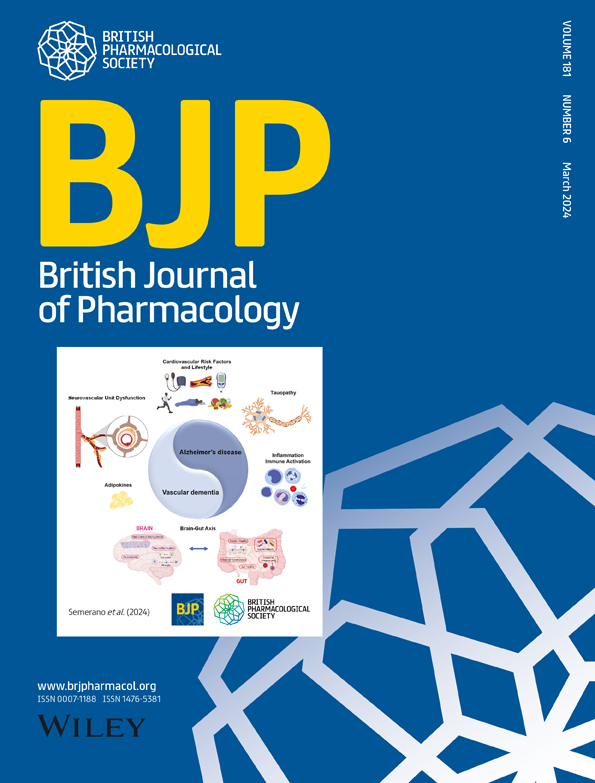
The British Journal of Pharmacology (BJP) is a biomedical science journal offering comprehensive international coverage of experimental and translational pharmacology. It publishes original research, authoritative reviews, mini reviews, systematic reviews, meta-analyses, databases, letters to the Editor, and commentaries.
Review articles, databases, systematic reviews, and meta-analyses are typically commissioned, but unsolicited contributions are also considered, either as standalone papers or part of themed issues.
In addition to basic science research, BJP features translational pharmacology research, including proof-of-concept and early mechanistic studies in humans. While it generally does not publish first-in-man phase I studies or phase IIb, III, or IV studies, exceptions may be made under certain circumstances, particularly if results are combined with preclinical studies.






 京公网安备 11010802042870号
京ICP备2023020795号-1
京公网安备 11010802042870号
京ICP备2023020795号-1

 分享
分享
 求助内容:
求助内容: 应助结果提醒方式:
 扫码关注我们
