Akram N. Salah, Amr H. Hashem, Mohamed Bakr Zaki, Ahmed I. Abulsoud, Asmaa M. Atta, Wagiha S. Elkalla, Hebatallah Ahmed Mohamed Moustafa, Walaa A. El-Dakroury, Fatma Sa'eed El-Tokhy, Jasmine A. ElBoghdady, Nehal I. Rizk, Sherif S. Abdel Mageed, Osama A. Mohammed, Mustafa Ahmed Abdel-Reheim, Huda O. Alghamdi, Ahmed S. Doghish
{"title":"靶向治疗:单克隆抗体在疾病管理中的作用。","authors":"Akram N. Salah, Amr H. Hashem, Mohamed Bakr Zaki, Ahmed I. Abulsoud, Asmaa M. Atta, Wagiha S. Elkalla, Hebatallah Ahmed Mohamed Moustafa, Walaa A. El-Dakroury, Fatma Sa'eed El-Tokhy, Jasmine A. ElBoghdady, Nehal I. Rizk, Sherif S. Abdel Mageed, Osama A. Mohammed, Mustafa Ahmed Abdel-Reheim, Huda O. Alghamdi, Ahmed S. Doghish","doi":"10.1002/jbt.70163","DOIUrl":null,"url":null,"abstract":"<div>\n \n <p>Monoclonal antibodies (mAbs) are a key class of biotherapeutic medicines used to treat a wide range of diseases, such as cancer, infectious diseases, autoimmune disorders, cardiovascular diseases, and hemophilia. They can be engineered for greater effectiveness and specific applications while maintaining their structural elements for immune targeting. Traditional immunoglobulin treatments have limited therapeutic uses and various adverse effects. That makes mAbs show rapid growth in the pharmaceutical market, with over 250 mAbs in clinical studies. Although mAbs offer higher specificity, they are less effective against complex antigens. They have become essential in treating diseases with limited medical options, providing innovative solutions that improve patients' quality of life through increasing survival rates, shortening the length of stay in hospitals with an improved treatment outcome, and reducing side effects. This review outlines the mechanisms, applications, and advancements of mAbs, highlighting their transformative role in modern medicine and their potential to shape future therapeutic interventions.</p></div>","PeriodicalId":15151,"journal":{"name":"Journal of Biochemical and Molecular Toxicology","volume":"39 2","pages":""},"PeriodicalIF":2.8000,"publicationDate":"2025-01-30","publicationTypes":"Journal Article","fieldsOfStudy":null,"isOpenAccess":false,"openAccessPdf":"","citationCount":"0","resultStr":"{\"title\":\"Targeted Therapies: The Role of Monoclonal Antibodies in Disease Management\",\"authors\":\"Akram N. Salah, Amr H. Hashem, Mohamed Bakr Zaki, Ahmed I. Abulsoud, Asmaa M. Atta, Wagiha S. Elkalla, Hebatallah Ahmed Mohamed Moustafa, Walaa A. El-Dakroury, Fatma Sa'eed El-Tokhy, Jasmine A. ElBoghdady, Nehal I. Rizk, Sherif S. Abdel Mageed, Osama A. Mohammed, Mustafa Ahmed Abdel-Reheim, Huda O. Alghamdi, Ahmed S. Doghish\",\"doi\":\"10.1002/jbt.70163\",\"DOIUrl\":null,\"url\":null,\"abstract\":\"<div>\\n \\n <p>Monoclonal antibodies (mAbs) are a key class of biotherapeutic medicines used to treat a wide range of diseases, such as cancer, infectious diseases, autoimmune disorders, cardiovascular diseases, and hemophilia. They can be engineered for greater effectiveness and specific applications while maintaining their structural elements for immune targeting. Traditional immunoglobulin treatments have limited therapeutic uses and various adverse effects. That makes mAbs show rapid growth in the pharmaceutical market, with over 250 mAbs in clinical studies. Although mAbs offer higher specificity, they are less effective against complex antigens. They have become essential in treating diseases with limited medical options, providing innovative solutions that improve patients' quality of life through increasing survival rates, shortening the length of stay in hospitals with an improved treatment outcome, and reducing side effects. This review outlines the mechanisms, applications, and advancements of mAbs, highlighting their transformative role in modern medicine and their potential to shape future therapeutic interventions.</p></div>\",\"PeriodicalId\":15151,\"journal\":{\"name\":\"Journal of Biochemical and Molecular Toxicology\",\"volume\":\"39 2\",\"pages\":\"\"},\"PeriodicalIF\":2.8000,\"publicationDate\":\"2025-01-30\",\"publicationTypes\":\"Journal Article\",\"fieldsOfStudy\":null,\"isOpenAccess\":false,\"openAccessPdf\":\"\",\"citationCount\":\"0\",\"resultStr\":null,\"platform\":\"Semanticscholar\",\"paperid\":null,\"PeriodicalName\":\"Journal of Biochemical and Molecular Toxicology\",\"FirstCategoryId\":\"3\",\"ListUrlMain\":\"https://onlinelibrary.wiley.com/doi/10.1002/jbt.70163\",\"RegionNum\":3,\"RegionCategory\":\"医学\",\"ArticlePicture\":[],\"TitleCN\":null,\"AbstractTextCN\":null,\"PMCID\":null,\"EPubDate\":\"\",\"PubModel\":\"\",\"JCR\":\"Q2\",\"JCRName\":\"BIOCHEMISTRY & MOLECULAR BIOLOGY\",\"Score\":null,\"Total\":0}","platform":"Semanticscholar","paperid":null,"PeriodicalName":"Journal of Biochemical and Molecular Toxicology","FirstCategoryId":"3","ListUrlMain":"https://onlinelibrary.wiley.com/doi/10.1002/jbt.70163","RegionNum":3,"RegionCategory":"医学","ArticlePicture":[],"TitleCN":null,"AbstractTextCN":null,"PMCID":null,"EPubDate":"","PubModel":"","JCR":"Q2","JCRName":"BIOCHEMISTRY & MOLECULAR BIOLOGY","Score":null,"Total":0}
Targeted Therapies: The Role of Monoclonal Antibodies in Disease Management
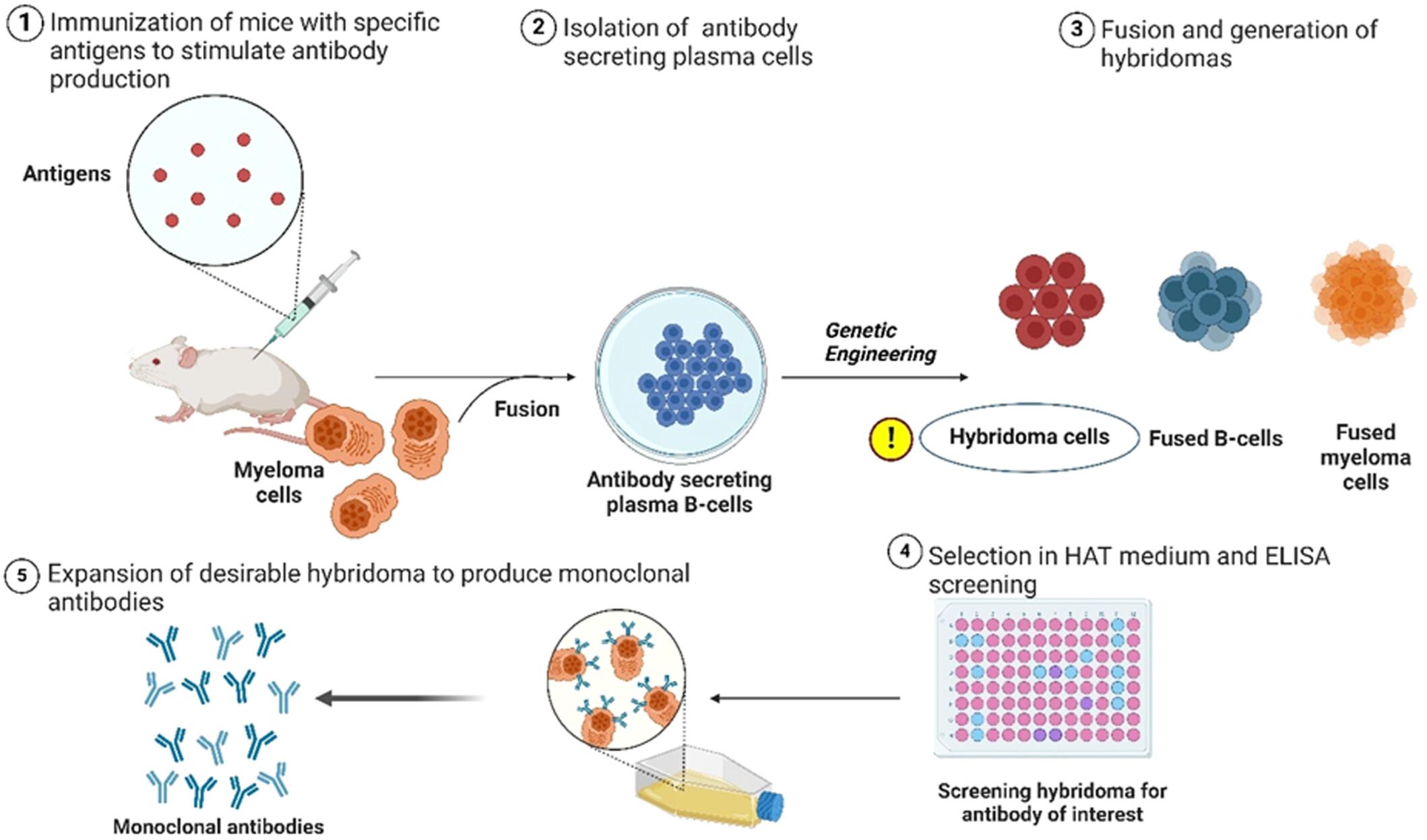
Monoclonal antibodies (mAbs) are a key class of biotherapeutic medicines used to treat a wide range of diseases, such as cancer, infectious diseases, autoimmune disorders, cardiovascular diseases, and hemophilia. They can be engineered for greater effectiveness and specific applications while maintaining their structural elements for immune targeting. Traditional immunoglobulin treatments have limited therapeutic uses and various adverse effects. That makes mAbs show rapid growth in the pharmaceutical market, with over 250 mAbs in clinical studies. Although mAbs offer higher specificity, they are less effective against complex antigens. They have become essential in treating diseases with limited medical options, providing innovative solutions that improve patients' quality of life through increasing survival rates, shortening the length of stay in hospitals with an improved treatment outcome, and reducing side effects. This review outlines the mechanisms, applications, and advancements of mAbs, highlighting their transformative role in modern medicine and their potential to shape future therapeutic interventions.
期刊介绍:
The Journal of Biochemical and Molecular Toxicology is an international journal that contains original research papers, rapid communications, mini-reviews, and book reviews, all focusing on the molecular mechanisms of action and detoxication of exogenous and endogenous chemicals and toxic agents. The scope includes effects on the organism at all stages of development, on organ systems, tissues, and cells as well as on enzymes, receptors, hormones, and genes. The biochemical and molecular aspects of uptake, transport, storage, excretion, lactivation and detoxication of drugs, agricultural, industrial and environmental chemicals, natural products and food additives are all subjects suitable for publication. Of particular interest are aspects of molecular biology related to biochemical toxicology. These include studies of the expression of genes related to detoxication and activation enzymes, toxicants with modes of action involving effects on nucleic acids, gene expression and protein synthesis, and the toxicity of products derived from biotechnology.




 京公网安备 11010802042870号
京ICP备2023020795号-1
京公网安备 11010802042870号
京ICP备2023020795号-1

 分享
分享
 求助内容:
求助内容: 应助结果提醒方式:
 扫码关注我们
