Junjie Hao, Peizhao Liu, Ziming Zhou, Haochen Liu, Wei Chen, Peter Müller-Buschbaum, Jiaji Cheng, Kai Wang, Xiao Wei Sun, Jean-Pierre Delville and Marie-Helene Delville
{"title":"形状定制的半导体点状棒:优化cd -壳生长,通过合理化温度和时间的作用来增强热学性能。","authors":"Junjie Hao, Peizhao Liu, Ziming Zhou, Haochen Liu, Wei Chen, Peter Müller-Buschbaum, Jiaji Cheng, Kai Wang, Xiao Wei Sun, Jean-Pierre Delville and Marie-Helene Delville","doi":"10.1039/D4NA01003E","DOIUrl":null,"url":null,"abstract":"<p >Colloidal chemistry provides an assortment of synthetic tools for tuning the shape of semiconductor nanocrystals. To fully exploit the shape- and structure-dependent properties of semiconductor nanorods, high-precision control on growth and design is essential. However, achieving this precision is highly challenging due to the high temperatures (>350 °C) and short reaction times (<8 minutes) often required for these reactions. In this study, we performed the first investigation on the impact of temperature and time on the CdS-shell growth of CdSe/CdS quantum rods. Our findings demonstrate that temperature plays a pivotal role in achieving ultra-thin shell dot-in-rods, which are crucial for enhancing chiroptical properties. The two-step process proposed here explains the shell growth of CdSe/CdS dot-in-rods (DRs). It involves finely-tuned isotropic shell growth in the first stage, followed by anisotropic length growth along the [0001] rod axis in the second step. This approach has two advantages: a systematic control of the shell thickness for different aspect ratios (ARs) and batch monodispersity. These DRs, with an ultra-thin CdS shell and a high AR, after modification with <small>L</small>/<small>D</small> cysteine molecules, exhibit significant enhancement of their ligand-induced chirality, with circular dichroism (CD) <em>g</em>-factor values as high as 10<small><sup>−3</sup></small>.</p>","PeriodicalId":18806,"journal":{"name":"Nanoscale Advances","volume":" 6","pages":" 1650-1662"},"PeriodicalIF":4.6000,"publicationDate":"2025-01-29","publicationTypes":"Journal Article","fieldsOfStudy":null,"isOpenAccess":false,"openAccessPdf":"https://www.ncbi.nlm.nih.gov/pmc/articles/PMC11777706/pdf/","citationCount":"0","resultStr":"{\"title\":\"Shape-tailored semiconductor dot-in-rods: optimizing CdS-shell growth for enhanced chiroptical properties via the rationalization of the role of temperature and time†\",\"authors\":\"Junjie Hao, Peizhao Liu, Ziming Zhou, Haochen Liu, Wei Chen, Peter Müller-Buschbaum, Jiaji Cheng, Kai Wang, Xiao Wei Sun, Jean-Pierre Delville and Marie-Helene Delville\",\"doi\":\"10.1039/D4NA01003E\",\"DOIUrl\":null,\"url\":null,\"abstract\":\"<p >Colloidal chemistry provides an assortment of synthetic tools for tuning the shape of semiconductor nanocrystals. To fully exploit the shape- and structure-dependent properties of semiconductor nanorods, high-precision control on growth and design is essential. However, achieving this precision is highly challenging due to the high temperatures (>350 °C) and short reaction times (<8 minutes) often required for these reactions. In this study, we performed the first investigation on the impact of temperature and time on the CdS-shell growth of CdSe/CdS quantum rods. Our findings demonstrate that temperature plays a pivotal role in achieving ultra-thin shell dot-in-rods, which are crucial for enhancing chiroptical properties. The two-step process proposed here explains the shell growth of CdSe/CdS dot-in-rods (DRs). It involves finely-tuned isotropic shell growth in the first stage, followed by anisotropic length growth along the [0001] rod axis in the second step. This approach has two advantages: a systematic control of the shell thickness for different aspect ratios (ARs) and batch monodispersity. These DRs, with an ultra-thin CdS shell and a high AR, after modification with <small>L</small>/<small>D</small> cysteine molecules, exhibit significant enhancement of their ligand-induced chirality, with circular dichroism (CD) <em>g</em>-factor values as high as 10<small><sup>−3</sup></small>.</p>\",\"PeriodicalId\":18806,\"journal\":{\"name\":\"Nanoscale Advances\",\"volume\":\" 6\",\"pages\":\" 1650-1662\"},\"PeriodicalIF\":4.6000,\"publicationDate\":\"2025-01-29\",\"publicationTypes\":\"Journal Article\",\"fieldsOfStudy\":null,\"isOpenAccess\":false,\"openAccessPdf\":\"https://www.ncbi.nlm.nih.gov/pmc/articles/PMC11777706/pdf/\",\"citationCount\":\"0\",\"resultStr\":null,\"platform\":\"Semanticscholar\",\"paperid\":null,\"PeriodicalName\":\"Nanoscale Advances\",\"FirstCategoryId\":\"88\",\"ListUrlMain\":\"https://pubs.rsc.org/en/content/articlelanding/2025/na/d4na01003e\",\"RegionNum\":3,\"RegionCategory\":\"材料科学\",\"ArticlePicture\":[],\"TitleCN\":null,\"AbstractTextCN\":null,\"PMCID\":null,\"EPubDate\":\"\",\"PubModel\":\"\",\"JCR\":\"Q2\",\"JCRName\":\"CHEMISTRY, MULTIDISCIPLINARY\",\"Score\":null,\"Total\":0}","platform":"Semanticscholar","paperid":null,"PeriodicalName":"Nanoscale Advances","FirstCategoryId":"88","ListUrlMain":"https://pubs.rsc.org/en/content/articlelanding/2025/na/d4na01003e","RegionNum":3,"RegionCategory":"材料科学","ArticlePicture":[],"TitleCN":null,"AbstractTextCN":null,"PMCID":null,"EPubDate":"","PubModel":"","JCR":"Q2","JCRName":"CHEMISTRY, MULTIDISCIPLINARY","Score":null,"Total":0}
Shape-tailored semiconductor dot-in-rods: optimizing CdS-shell growth for enhanced chiroptical properties via the rationalization of the role of temperature and time†
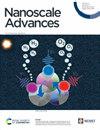
Colloidal chemistry provides an assortment of synthetic tools for tuning the shape of semiconductor nanocrystals. To fully exploit the shape- and structure-dependent properties of semiconductor nanorods, high-precision control on growth and design is essential. However, achieving this precision is highly challenging due to the high temperatures (>350 °C) and short reaction times (<8 minutes) often required for these reactions. In this study, we performed the first investigation on the impact of temperature and time on the CdS-shell growth of CdSe/CdS quantum rods. Our findings demonstrate that temperature plays a pivotal role in achieving ultra-thin shell dot-in-rods, which are crucial for enhancing chiroptical properties. The two-step process proposed here explains the shell growth of CdSe/CdS dot-in-rods (DRs). It involves finely-tuned isotropic shell growth in the first stage, followed by anisotropic length growth along the [0001] rod axis in the second step. This approach has two advantages: a systematic control of the shell thickness for different aspect ratios (ARs) and batch monodispersity. These DRs, with an ultra-thin CdS shell and a high AR, after modification with L/D cysteine molecules, exhibit significant enhancement of their ligand-induced chirality, with circular dichroism (CD) g-factor values as high as 10−3.





 京公网安备 11010802042870号
京ICP备2023020795号-1
京公网安备 11010802042870号
京ICP备2023020795号-1

 分享
分享
 求助内容:
求助内容: 应助结果提醒方式:
 扫码关注我们
