{"title":"智能手机应用测量的常量营养素、膳食成分和客观睡眠变量之间的关系:真实世界的横断面研究。","authors":"Jaehoon Seol, Masao Iwagami, Megane Christiane Tawylum Kayamare, Masashi Yanagisawa","doi":"10.2196/64749","DOIUrl":null,"url":null,"abstract":"<p><strong>Background: </strong>Few studies have explored the relationship between macronutrient intake and sleep outcomes using daily data from mobile apps.</p><p><strong>Objective: </strong>This cross-sectional study aimed to examine the associations between macronutrients, dietary components, and sleep parameters, considering their interdependencies.</p><p><strong>Methods: </strong>We analyzed data from 4825 users of the Pokémon Sleep and Asken smartphone apps, each used for at least 7 days to record objective sleep parameters and dietary components, respectively. Multivariable regression explored the associations between quartiles of macronutrients (protein; carbohydrate; and total fat, including saturated, monounsaturated, and polyunsaturated fats), dietary components (sodium, potassium, dietary fiber, and sodium-to-potassium ratio), and sleep variables (total sleep time [TST], sleep latency [SL], and percentage of wakefulness after sleep onset [%WASO]). The lowest intake group was the reference. Compositional data analysis accounted for macronutrient interdependencies. Models were adjusted for age, sex, and BMI.</p><p><strong>Results: </strong>Greater protein intake was associated with longer TST in the third (+0.17, 95% CI 0.09-0.26 h) and fourth (+0.18, 95% CI 0.09-0.27 h) quartiles. In contrast, greater fat intake was linked to shorter TST in the third (-0.11, 95% CI -0.20 to -0.27 h) and fourth (-0.16, 95% CI -0.25 to -0.07 h) quartiles. Greater carbohydrate intake was associated with shorter %WASO in the third (-0.82%, 95% CI -1.37% to -0.26%) and fourth (-0.57%, 95% CI -1.13% to -0.01%) quartiles, while greater fat intake was linked to longer %WASO in the fourth quartile (+0.62%, 95% CI 0.06%-1.18%). Dietary fiber intake correlated with longer TST and shorter SL. A greater sodium-to-potassium ratio was associated with shorter TST in the third (-0.11, 95% CI -0.20 to -0.02 h) and fourth (-0.19, 95% CI -0.28 to -0.10 h) quartiles; longer SL in the second (+1.03, 95% CI 0.08-1.98 min) and fourth (+1.50, 95% CI 0.53-2.47 min) quartiles; and longer %WASO in the fourth quartile (0.71%, 95% CI 0.15%-1.28%). Compositional data analysis, involving 6% changes in macronutrient proportions, showed that greater protein intake was associated with an elevated TST (+0.27, 95% CI 0.18-0.35 h), while greater monounsaturated fat intake was associated with a longer SL (+4.6, 95% CI 1.93-7.34 min) and a larger %WASO (+2.2%, 95% CI 0.63%-3.78%). In contrast, greater polyunsaturated fat intake was associated with a reduced TST (-0.22, 95% CI -0.39 to -0.05 h), a shorter SL (-4.7, 95% CI to 6.58 to -2.86 min), and a shorter %WASO (+2.0%, 95% CI -3.08% to -0.92%).</p><p><strong>Conclusions: </strong>Greater protein and fiber intake were associated with longer TST, while greater fat intake and sodium-to-potassium ratios were linked to shorter TST and longer WASO. Increasing protein intake in place of other nutrients was associated with longer TST, while higher polyunsaturated fat intake improved SL and reduced WASO.</p>","PeriodicalId":16337,"journal":{"name":"Journal of Medical Internet Research","volume":"27 ","pages":"e64749"},"PeriodicalIF":6.0000,"publicationDate":"2025-01-30","publicationTypes":"Journal Article","fieldsOfStudy":null,"isOpenAccess":false,"openAccessPdf":"https://www.ncbi.nlm.nih.gov/pmc/articles/PMC11826953/pdf/","citationCount":"0","resultStr":"{\"title\":\"Relationship Among Macronutrients, Dietary Components, and Objective Sleep Variables Measured by Smartphone Apps: Real-World Cross-Sectional Study.\",\"authors\":\"Jaehoon Seol, Masao Iwagami, Megane Christiane Tawylum Kayamare, Masashi Yanagisawa\",\"doi\":\"10.2196/64749\",\"DOIUrl\":null,\"url\":null,\"abstract\":\"<p><strong>Background: </strong>Few studies have explored the relationship between macronutrient intake and sleep outcomes using daily data from mobile apps.</p><p><strong>Objective: </strong>This cross-sectional study aimed to examine the associations between macronutrients, dietary components, and sleep parameters, considering their interdependencies.</p><p><strong>Methods: </strong>We analyzed data from 4825 users of the Pokémon Sleep and Asken smartphone apps, each used for at least 7 days to record objective sleep parameters and dietary components, respectively. Multivariable regression explored the associations between quartiles of macronutrients (protein; carbohydrate; and total fat, including saturated, monounsaturated, and polyunsaturated fats), dietary components (sodium, potassium, dietary fiber, and sodium-to-potassium ratio), and sleep variables (total sleep time [TST], sleep latency [SL], and percentage of wakefulness after sleep onset [%WASO]). The lowest intake group was the reference. Compositional data analysis accounted for macronutrient interdependencies. Models were adjusted for age, sex, and BMI.</p><p><strong>Results: </strong>Greater protein intake was associated with longer TST in the third (+0.17, 95% CI 0.09-0.26 h) and fourth (+0.18, 95% CI 0.09-0.27 h) quartiles. In contrast, greater fat intake was linked to shorter TST in the third (-0.11, 95% CI -0.20 to -0.27 h) and fourth (-0.16, 95% CI -0.25 to -0.07 h) quartiles. Greater carbohydrate intake was associated with shorter %WASO in the third (-0.82%, 95% CI -1.37% to -0.26%) and fourth (-0.57%, 95% CI -1.13% to -0.01%) quartiles, while greater fat intake was linked to longer %WASO in the fourth quartile (+0.62%, 95% CI 0.06%-1.18%). Dietary fiber intake correlated with longer TST and shorter SL. A greater sodium-to-potassium ratio was associated with shorter TST in the third (-0.11, 95% CI -0.20 to -0.02 h) and fourth (-0.19, 95% CI -0.28 to -0.10 h) quartiles; longer SL in the second (+1.03, 95% CI 0.08-1.98 min) and fourth (+1.50, 95% CI 0.53-2.47 min) quartiles; and longer %WASO in the fourth quartile (0.71%, 95% CI 0.15%-1.28%). Compositional data analysis, involving 6% changes in macronutrient proportions, showed that greater protein intake was associated with an elevated TST (+0.27, 95% CI 0.18-0.35 h), while greater monounsaturated fat intake was associated with a longer SL (+4.6, 95% CI 1.93-7.34 min) and a larger %WASO (+2.2%, 95% CI 0.63%-3.78%). In contrast, greater polyunsaturated fat intake was associated with a reduced TST (-0.22, 95% CI -0.39 to -0.05 h), a shorter SL (-4.7, 95% CI to 6.58 to -2.86 min), and a shorter %WASO (+2.0%, 95% CI -3.08% to -0.92%).</p><p><strong>Conclusions: </strong>Greater protein and fiber intake were associated with longer TST, while greater fat intake and sodium-to-potassium ratios were linked to shorter TST and longer WASO. Increasing protein intake in place of other nutrients was associated with longer TST, while higher polyunsaturated fat intake improved SL and reduced WASO.</p>\",\"PeriodicalId\":16337,\"journal\":{\"name\":\"Journal of Medical Internet Research\",\"volume\":\"27 \",\"pages\":\"e64749\"},\"PeriodicalIF\":6.0000,\"publicationDate\":\"2025-01-30\",\"publicationTypes\":\"Journal Article\",\"fieldsOfStudy\":null,\"isOpenAccess\":false,\"openAccessPdf\":\"https://www.ncbi.nlm.nih.gov/pmc/articles/PMC11826953/pdf/\",\"citationCount\":\"0\",\"resultStr\":null,\"platform\":\"Semanticscholar\",\"paperid\":null,\"PeriodicalName\":\"Journal of Medical Internet Research\",\"FirstCategoryId\":\"3\",\"ListUrlMain\":\"https://doi.org/10.2196/64749\",\"RegionNum\":2,\"RegionCategory\":\"医学\",\"ArticlePicture\":[],\"TitleCN\":null,\"AbstractTextCN\":null,\"PMCID\":null,\"EPubDate\":\"\",\"PubModel\":\"\",\"JCR\":\"Q1\",\"JCRName\":\"HEALTH CARE SCIENCES & SERVICES\",\"Score\":null,\"Total\":0}","platform":"Semanticscholar","paperid":null,"PeriodicalName":"Journal of Medical Internet Research","FirstCategoryId":"3","ListUrlMain":"https://doi.org/10.2196/64749","RegionNum":2,"RegionCategory":"医学","ArticlePicture":[],"TitleCN":null,"AbstractTextCN":null,"PMCID":null,"EPubDate":"","PubModel":"","JCR":"Q1","JCRName":"HEALTH CARE SCIENCES & SERVICES","Score":null,"Total":0}
引用次数: 0
摘要
背景:很少有研究利用移动应用程序的日常数据来探索宏量营养素摄入量与睡眠结果之间的关系。目的:本横断面研究旨在研究宏量营养素、膳食成分和睡眠参数之间的关系,并考虑它们之间的相互依赖性。方法:我们分析了4825名poksammon Sleep和Asken智能手机应用程序用户的数据,每个用户使用至少7天,分别记录客观睡眠参数和饮食成分。多变量回归探讨了常量营养素(蛋白质;碳水化合物;总脂肪,包括饱和脂肪、单不饱和脂肪和多不饱和脂肪)、膳食成分(钠、钾、膳食纤维和钠钾比)和睡眠变量(总睡眠时间[TST]、睡眠潜伏期[SL]和睡眠后清醒百分比[%WASO])。摄入量最低的一组是参照组。成分数据分析解释了宏量营养素的相互依赖性。模型根据年龄、性别和BMI进行了调整。结果:更多的蛋白质摄入与第三(+0.17,95% CI 0.09-0.26 h)和第四(+0.18,95% CI 0.09-0.27 h)较长的TST相关。相比之下,在第三个四分位数(-0.11,95% CI -0.20至-0.27小时)和第四个四分位数(-0.16,95% CI -0.25至-0.07小时)中,更多的脂肪摄入与较短的TST有关。更多的碳水化合物摄入与第三和第四四分位数较短的%WASO相关(-0.82%,95% CI -1.37%至-0.26%),而更多的脂肪摄入与第四四分位数较长的%WASO相关(+0.62%,95% CI 0.06%至1.18%)。膳食纤维摄入量与较长的TST和较短的SL相关。较高的钠钾比与较短的TST在第三(-0.11,95% CI -0.20至-0.02 h)和第四(-0.19,95% CI -0.28至-0.10 h)四分位数相关;第二分位数(+1.03,95% CI 0.08-1.98 min)和第四分位数(+1.50,95% CI 0.53-2.47 min)的SL较长;第四个四分位数的WASO %更长(0.71%,95% CI 0.15%-1.28%)。组成数据分析,涉及6%的常量营养素比例变化,显示更多的蛋白质摄入与TST升高相关(+0.27,95% CI 0.18-0.35 h),而更多的单不饱和脂肪摄入与更长的SL (+4.6, 95% CI 1.93-7.34 min)和更大的%WASO (+2.2%, 95% CI 0.63%-3.78%)相关。相反,更多的多不饱和脂肪摄入与TST降低(-0.22,95% CI -0.39至-0.05 h)、SL缩短(-4.7,95% CI至6.58至-2.86 min)和%WASO缩短(+2.0%,95% CI -3.08%至-0.92%)相关。结论:较高的蛋白质和纤维摄入量与较长的TST有关,而较高的脂肪摄入量和钠钾比与较短的TST和较长的WASO有关。增加蛋白质摄入量代替其他营养物质与延长TST相关,而增加多不饱和脂肪摄入量可改善SL并减少WASO。
Relationship Among Macronutrients, Dietary Components, and Objective Sleep Variables Measured by Smartphone Apps: Real-World Cross-Sectional Study.
Background: Few studies have explored the relationship between macronutrient intake and sleep outcomes using daily data from mobile apps.
Objective: This cross-sectional study aimed to examine the associations between macronutrients, dietary components, and sleep parameters, considering their interdependencies.
Methods: We analyzed data from 4825 users of the Pokémon Sleep and Asken smartphone apps, each used for at least 7 days to record objective sleep parameters and dietary components, respectively. Multivariable regression explored the associations between quartiles of macronutrients (protein; carbohydrate; and total fat, including saturated, monounsaturated, and polyunsaturated fats), dietary components (sodium, potassium, dietary fiber, and sodium-to-potassium ratio), and sleep variables (total sleep time [TST], sleep latency [SL], and percentage of wakefulness after sleep onset [%WASO]). The lowest intake group was the reference. Compositional data analysis accounted for macronutrient interdependencies. Models were adjusted for age, sex, and BMI.
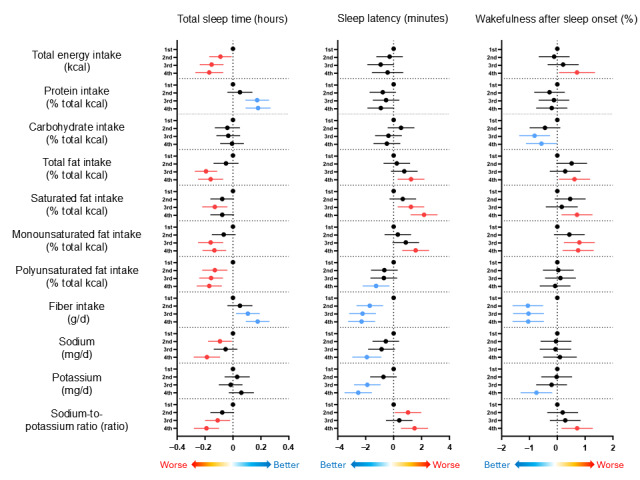
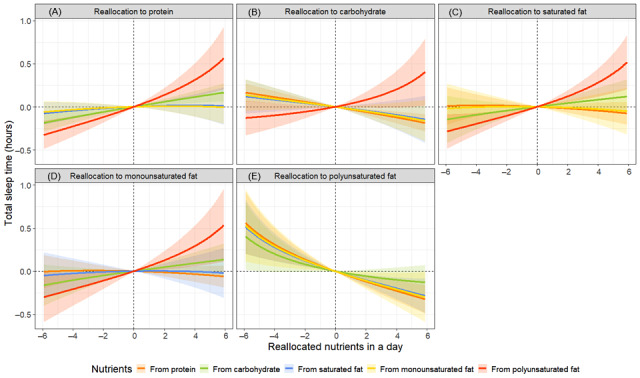
Results: Greater protein intake was associated with longer TST in the third (+0.17, 95% CI 0.09-0.26 h) and fourth (+0.18, 95% CI 0.09-0.27 h) quartiles. In contrast, greater fat intake was linked to shorter TST in the third (-0.11, 95% CI -0.20 to -0.27 h) and fourth (-0.16, 95% CI -0.25 to -0.07 h) quartiles. Greater carbohydrate intake was associated with shorter %WASO in the third (-0.82%, 95% CI -1.37% to -0.26%) and fourth (-0.57%, 95% CI -1.13% to -0.01%) quartiles, while greater fat intake was linked to longer %WASO in the fourth quartile (+0.62%, 95% CI 0.06%-1.18%). Dietary fiber intake correlated with longer TST and shorter SL. A greater sodium-to-potassium ratio was associated with shorter TST in the third (-0.11, 95% CI -0.20 to -0.02 h) and fourth (-0.19, 95% CI -0.28 to -0.10 h) quartiles; longer SL in the second (+1.03, 95% CI 0.08-1.98 min) and fourth (+1.50, 95% CI 0.53-2.47 min) quartiles; and longer %WASO in the fourth quartile (0.71%, 95% CI 0.15%-1.28%). Compositional data analysis, involving 6% changes in macronutrient proportions, showed that greater protein intake was associated with an elevated TST (+0.27, 95% CI 0.18-0.35 h), while greater monounsaturated fat intake was associated with a longer SL (+4.6, 95% CI 1.93-7.34 min) and a larger %WASO (+2.2%, 95% CI 0.63%-3.78%). In contrast, greater polyunsaturated fat intake was associated with a reduced TST (-0.22, 95% CI -0.39 to -0.05 h), a shorter SL (-4.7, 95% CI to 6.58 to -2.86 min), and a shorter %WASO (+2.0%, 95% CI -3.08% to -0.92%).
Conclusions: Greater protein and fiber intake were associated with longer TST, while greater fat intake and sodium-to-potassium ratios were linked to shorter TST and longer WASO. Increasing protein intake in place of other nutrients was associated with longer TST, while higher polyunsaturated fat intake improved SL and reduced WASO.
期刊介绍:
The Journal of Medical Internet Research (JMIR) is a highly respected publication in the field of health informatics and health services. With a founding date in 1999, JMIR has been a pioneer in the field for over two decades.
As a leader in the industry, the journal focuses on digital health, data science, health informatics, and emerging technologies for health, medicine, and biomedical research. It is recognized as a top publication in these disciplines, ranking in the first quartile (Q1) by Impact Factor.
Notably, JMIR holds the prestigious position of being ranked #1 on Google Scholar within the "Medical Informatics" discipline.





 京公网安备 11010802042870号
京ICP备2023020795号-1
京公网安备 11010802042870号
京ICP备2023020795号-1

 分享
分享
 求助内容:
求助内容: 应助结果提醒方式:
 扫码关注我们
