Yachen Wang, Xin Chai, Yueqing Wang, Xuejun Yin, Xinying Huang, Qiuhong Gong, Juan Zhang, Ruitai Shao, Guangwei Li
{"title":"不同生活方式干预预防成人糖尿病前期2型糖尿病及恢复正常血糖的有效性:随机对照试验的系统评价和荟萃分析","authors":"Yachen Wang, Xin Chai, Yueqing Wang, Xuejun Yin, Xinying Huang, Qiuhong Gong, Juan Zhang, Ruitai Shao, Guangwei Li","doi":"10.2196/63975","DOIUrl":null,"url":null,"abstract":"<p><strong>Background: </strong>Lifestyle interventions have been acknowledged as effective strategies for preventing type 2 diabetes mellitus (T2DM). However, the accessibility of conventional face-to-face interventions is often limited. Digital health intervention has been suggested as a potential solution to overcome the limitation. Despite this, there remains a significant gap in understanding the effectiveness of digital health for individuals with prediabetes, particularly in reducing T2DM incidence and reverting to normoglycemia.</p><p><strong>Objective: </strong>This study aimed to assess the effectiveness of different intervention modes of digital health, face-to-face, and blended interventions, particularly the benefits of digital health intervention, in reducing T2DM incidence and facilitating the reversion to normoglycemia in adults with prediabetes compared to the usual care.</p><p><strong>Methods: </strong>We conducted a comprehensive search in 9 electronic databases, namely MEDLINE, Embase, ACP Journal Club, Cochrane Central Register of Controlled Trials, Cochrane Database of Systematic Reviews, Cochrane Clinical Answers, Cochrane Methodology Register, Health Technology Assessment, and NHS Economic Evaluation Database through Ovid, from the inception to October 2024. This review included randomized controlled trials (RCTs) that studied the effectiveness of lifestyle interventions in adults with prediabetes. The overall intervention effect was synthesized using a random-effects model. The I² statistic was used to assess heterogeneity across the RCTs. We performed a subgroup analysis to explore the effectiveness of digital health, face-to-face, and blended interventions compared with the control group, which received usual care.</p><p><strong>Results: </strong>From an initial 7868 records retrieved from 9 databases, we identified 54 articles from 31 RCTs. Our analysis showed that face-to-face interventions demonstrated a significant 46% risk reduction in T2DM incidence (risk ratio [RR] 0.54, 95% CI 0.47-0.63; I²=43%; P<.001), and a 46% increase in the reversion to normoglycemia (RR 1.46, 95% CI 1.11-1.91; I²=82%; P=.006), when compared with the control group. On the other hand, digital health interventions, compared with the control group, were associated with a 12% risk reduction in T2DM incidence (RR 0.88, 95% CI 0.77-1.01; I²=0.6%; P=.06). Moreover, the blended interventions combining digital and face-to-face interventions suggested a 37% risk reduction in T2DM incidence (RR 0.63, 95% CI 0.49-0.81;I²<0.01%; P<.001) and an 87% increase in the reversion to normoglycemia (RR 1.87, 95% CI 1.30-2.69; I²=23%; P=.001). However, no significant effect on the reversal of prediabetes to normoglycemia was observed from the digital health interventions.</p><p><strong>Conclusions: </strong>Face-to-face interventions have consistently demonstrated promising effectiveness in both reductions in T2DM incidence and reversion to normoglycemia in adults with prediabetes. However, the effectiveness of digital health interventions in these areas has not been sufficiently proven. Given these results, further research is required to provide more definitive evidence of digital health and blended interventions in T2DM prevention in the future.</p><p><strong>Trial registration: </strong>PROSPERO CRD42023414313; https://tinyurl.com/55ac4j4n.</p>","PeriodicalId":16337,"journal":{"name":"Journal of Medical Internet Research","volume":"27 ","pages":"e63975"},"PeriodicalIF":6.0000,"publicationDate":"2025-01-29","publicationTypes":"Journal Article","fieldsOfStudy":null,"isOpenAccess":false,"openAccessPdf":"https://www.ncbi.nlm.nih.gov/pmc/articles/PMC11822313/pdf/","citationCount":"0","resultStr":"{\"title\":\"Effectiveness of Different Intervention Modes in Lifestyle Intervention for the Prevention of Type 2 Diabetes and the Reversion to Normoglycemia in Adults With Prediabetes: Systematic Review and Meta-Analysis of Randomized Controlled Trials.\",\"authors\":\"Yachen Wang, Xin Chai, Yueqing Wang, Xuejun Yin, Xinying Huang, Qiuhong Gong, Juan Zhang, Ruitai Shao, Guangwei Li\",\"doi\":\"10.2196/63975\",\"DOIUrl\":null,\"url\":null,\"abstract\":\"<p><strong>Background: </strong>Lifestyle interventions have been acknowledged as effective strategies for preventing type 2 diabetes mellitus (T2DM). However, the accessibility of conventional face-to-face interventions is often limited. Digital health intervention has been suggested as a potential solution to overcome the limitation. Despite this, there remains a significant gap in understanding the effectiveness of digital health for individuals with prediabetes, particularly in reducing T2DM incidence and reverting to normoglycemia.</p><p><strong>Objective: </strong>This study aimed to assess the effectiveness of different intervention modes of digital health, face-to-face, and blended interventions, particularly the benefits of digital health intervention, in reducing T2DM incidence and facilitating the reversion to normoglycemia in adults with prediabetes compared to the usual care.</p><p><strong>Methods: </strong>We conducted a comprehensive search in 9 electronic databases, namely MEDLINE, Embase, ACP Journal Club, Cochrane Central Register of Controlled Trials, Cochrane Database of Systematic Reviews, Cochrane Clinical Answers, Cochrane Methodology Register, Health Technology Assessment, and NHS Economic Evaluation Database through Ovid, from the inception to October 2024. This review included randomized controlled trials (RCTs) that studied the effectiveness of lifestyle interventions in adults with prediabetes. The overall intervention effect was synthesized using a random-effects model. The I² statistic was used to assess heterogeneity across the RCTs. We performed a subgroup analysis to explore the effectiveness of digital health, face-to-face, and blended interventions compared with the control group, which received usual care.</p><p><strong>Results: </strong>From an initial 7868 records retrieved from 9 databases, we identified 54 articles from 31 RCTs. Our analysis showed that face-to-face interventions demonstrated a significant 46% risk reduction in T2DM incidence (risk ratio [RR] 0.54, 95% CI 0.47-0.63; I²=43%; P<.001), and a 46% increase in the reversion to normoglycemia (RR 1.46, 95% CI 1.11-1.91; I²=82%; P=.006), when compared with the control group. On the other hand, digital health interventions, compared with the control group, were associated with a 12% risk reduction in T2DM incidence (RR 0.88, 95% CI 0.77-1.01; I²=0.6%; P=.06). Moreover, the blended interventions combining digital and face-to-face interventions suggested a 37% risk reduction in T2DM incidence (RR 0.63, 95% CI 0.49-0.81;I²<0.01%; P<.001) and an 87% increase in the reversion to normoglycemia (RR 1.87, 95% CI 1.30-2.69; I²=23%; P=.001). However, no significant effect on the reversal of prediabetes to normoglycemia was observed from the digital health interventions.</p><p><strong>Conclusions: </strong>Face-to-face interventions have consistently demonstrated promising effectiveness in both reductions in T2DM incidence and reversion to normoglycemia in adults with prediabetes. However, the effectiveness of digital health interventions in these areas has not been sufficiently proven. Given these results, further research is required to provide more definitive evidence of digital health and blended interventions in T2DM prevention in the future.</p><p><strong>Trial registration: </strong>PROSPERO CRD42023414313; https://tinyurl.com/55ac4j4n.</p>\",\"PeriodicalId\":16337,\"journal\":{\"name\":\"Journal of Medical Internet Research\",\"volume\":\"27 \",\"pages\":\"e63975\"},\"PeriodicalIF\":6.0000,\"publicationDate\":\"2025-01-29\",\"publicationTypes\":\"Journal Article\",\"fieldsOfStudy\":null,\"isOpenAccess\":false,\"openAccessPdf\":\"https://www.ncbi.nlm.nih.gov/pmc/articles/PMC11822313/pdf/\",\"citationCount\":\"0\",\"resultStr\":null,\"platform\":\"Semanticscholar\",\"paperid\":null,\"PeriodicalName\":\"Journal of Medical Internet Research\",\"FirstCategoryId\":\"3\",\"ListUrlMain\":\"https://doi.org/10.2196/63975\",\"RegionNum\":2,\"RegionCategory\":\"医学\",\"ArticlePicture\":[],\"TitleCN\":null,\"AbstractTextCN\":null,\"PMCID\":null,\"EPubDate\":\"\",\"PubModel\":\"\",\"JCR\":\"Q1\",\"JCRName\":\"HEALTH CARE SCIENCES & SERVICES\",\"Score\":null,\"Total\":0}","platform":"Semanticscholar","paperid":null,"PeriodicalName":"Journal of Medical Internet Research","FirstCategoryId":"3","ListUrlMain":"https://doi.org/10.2196/63975","RegionNum":2,"RegionCategory":"医学","ArticlePicture":[],"TitleCN":null,"AbstractTextCN":null,"PMCID":null,"EPubDate":"","PubModel":"","JCR":"Q1","JCRName":"HEALTH CARE SCIENCES & SERVICES","Score":null,"Total":0}
引用次数: 0
摘要
背景:生活方式干预已被认为是预防2型糖尿病(T2DM)的有效策略。然而,传统面对面干预的可及性往往有限。数字健康干预被认为是克服这一限制的潜在解决方案。尽管如此,在了解数字健康对糖尿病前期患者的有效性方面,特别是在降低2型糖尿病发病率和恢复正常血糖方面,仍然存在很大的差距。目的:本研究旨在评估数字健康、面对面和混合干预的不同干预模式的有效性,特别是数字健康干预与常规护理相比,在降低2型糖尿病发病率和促进糖尿病前期成人恢复正常血糖方面的益处。方法:通过Ovid对MEDLINE、Embase、ACP Journal Club、Cochrane中央对照试验库、Cochrane系统评价库、Cochrane临床答案库、Cochrane方学库、Cochrane卫生技术评估库、NHS经济评价库等9个电子数据库进行综合检索,检索时间为数据库成立至2024年10月。本综述纳入了随机对照试验(rct),这些试验研究了生活方式干预对成年糖尿病前期患者的有效性。采用随机效应模型综合总体干预效果。I²统计量用于评估随机对照试验的异质性。我们进行了亚组分析,以探索与接受常规护理的对照组相比,数字健康、面对面和混合干预措施的有效性。结果:从9个数据库中检索到的7868条记录中,我们从31项随机对照试验中鉴定出54篇文章。我们的分析显示,面对面干预可显著降低46%的T2DM发病率(风险比[RR] 0.54, 95% CI 0.47-0.63;²= 43%;结论:面对面干预在降低糖尿病前期成人T2DM发病率和恢复正常血糖方面一直显示出有希望的有效性。然而,数字卫生干预措施在这些领域的有效性尚未得到充分证明。鉴于这些结果,未来需要进一步的研究来提供更明确的数字健康和混合干预预防2型糖尿病的证据。试验注册:PROSPERO CRD42023414313;https://tinyurl.com/55ac4j4n。
Effectiveness of Different Intervention Modes in Lifestyle Intervention for the Prevention of Type 2 Diabetes and the Reversion to Normoglycemia in Adults With Prediabetes: Systematic Review and Meta-Analysis of Randomized Controlled Trials.
Background: Lifestyle interventions have been acknowledged as effective strategies for preventing type 2 diabetes mellitus (T2DM). However, the accessibility of conventional face-to-face interventions is often limited. Digital health intervention has been suggested as a potential solution to overcome the limitation. Despite this, there remains a significant gap in understanding the effectiveness of digital health for individuals with prediabetes, particularly in reducing T2DM incidence and reverting to normoglycemia.
Objective: This study aimed to assess the effectiveness of different intervention modes of digital health, face-to-face, and blended interventions, particularly the benefits of digital health intervention, in reducing T2DM incidence and facilitating the reversion to normoglycemia in adults with prediabetes compared to the usual care.
Methods: We conducted a comprehensive search in 9 electronic databases, namely MEDLINE, Embase, ACP Journal Club, Cochrane Central Register of Controlled Trials, Cochrane Database of Systematic Reviews, Cochrane Clinical Answers, Cochrane Methodology Register, Health Technology Assessment, and NHS Economic Evaluation Database through Ovid, from the inception to October 2024. This review included randomized controlled trials (RCTs) that studied the effectiveness of lifestyle interventions in adults with prediabetes. The overall intervention effect was synthesized using a random-effects model. The I² statistic was used to assess heterogeneity across the RCTs. We performed a subgroup analysis to explore the effectiveness of digital health, face-to-face, and blended interventions compared with the control group, which received usual care.
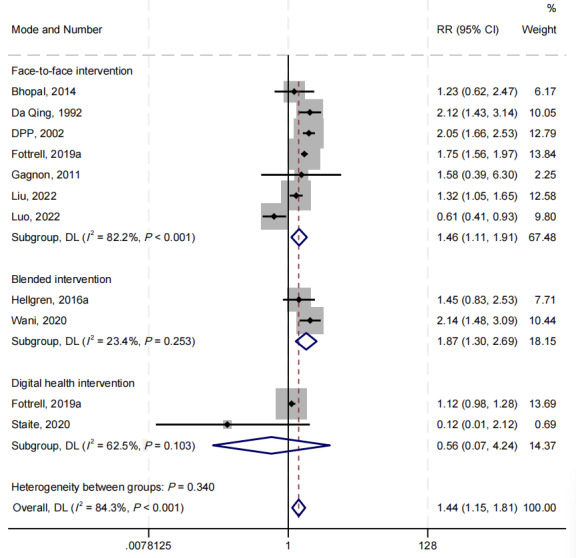
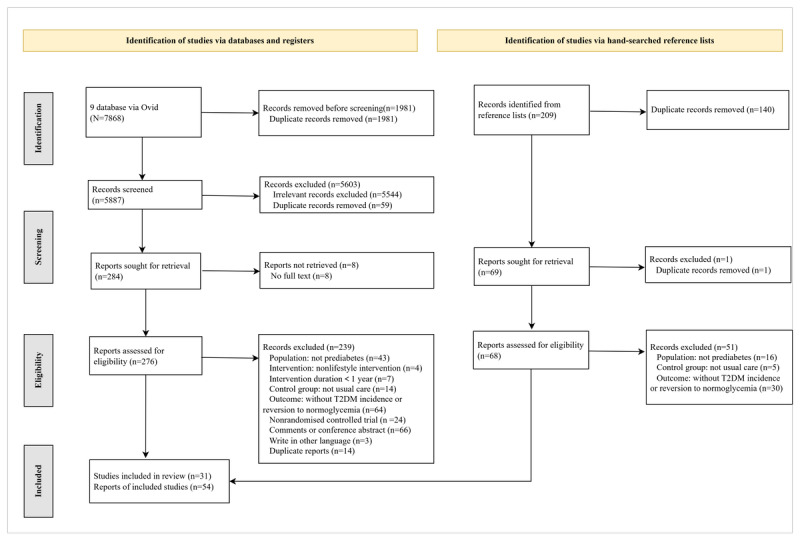
Results: From an initial 7868 records retrieved from 9 databases, we identified 54 articles from 31 RCTs. Our analysis showed that face-to-face interventions demonstrated a significant 46% risk reduction in T2DM incidence (risk ratio [RR] 0.54, 95% CI 0.47-0.63; I²=43%; P<.001), and a 46% increase in the reversion to normoglycemia (RR 1.46, 95% CI 1.11-1.91; I²=82%; P=.006), when compared with the control group. On the other hand, digital health interventions, compared with the control group, were associated with a 12% risk reduction in T2DM incidence (RR 0.88, 95% CI 0.77-1.01; I²=0.6%; P=.06). Moreover, the blended interventions combining digital and face-to-face interventions suggested a 37% risk reduction in T2DM incidence (RR 0.63, 95% CI 0.49-0.81;I²<0.01%; P<.001) and an 87% increase in the reversion to normoglycemia (RR 1.87, 95% CI 1.30-2.69; I²=23%; P=.001). However, no significant effect on the reversal of prediabetes to normoglycemia was observed from the digital health interventions.
Conclusions: Face-to-face interventions have consistently demonstrated promising effectiveness in both reductions in T2DM incidence and reversion to normoglycemia in adults with prediabetes. However, the effectiveness of digital health interventions in these areas has not been sufficiently proven. Given these results, further research is required to provide more definitive evidence of digital health and blended interventions in T2DM prevention in the future.
期刊介绍:
The Journal of Medical Internet Research (JMIR) is a highly respected publication in the field of health informatics and health services. With a founding date in 1999, JMIR has been a pioneer in the field for over two decades.
As a leader in the industry, the journal focuses on digital health, data science, health informatics, and emerging technologies for health, medicine, and biomedical research. It is recognized as a top publication in these disciplines, ranking in the first quartile (Q1) by Impact Factor.
Notably, JMIR holds the prestigious position of being ranked #1 on Google Scholar within the "Medical Informatics" discipline.





 京公网安备 11010802042870号
京ICP备2023020795号-1
京公网安备 11010802042870号
京ICP备2023020795号-1

 分享
分享

 求助内容:
求助内容: 应助结果提醒方式:
 扫码关注我们
