Rapid screening and identification of novel dipeptidyl peptidase IV inhibitory peptides from buffalo milk
BACKGROUND
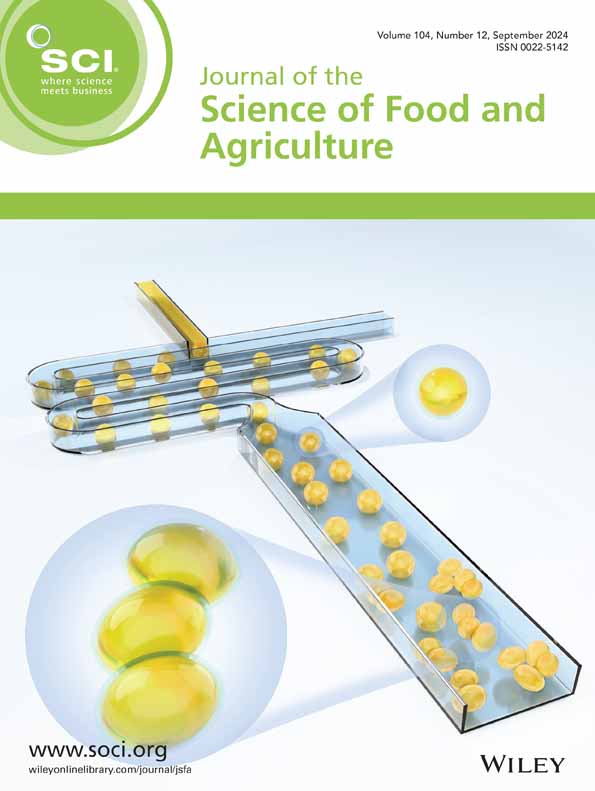
Peptidomics combined with molecular docking is an effective alternative method for rapid screening of novel bioactive peptides in food. Buffalo milk as a potential source of dipeptidyl peptidase-IV (DPP-IV) inhibitory peptides has been less studied. Peptidomics and molecular docking methods were employed to rapidly screen new DPP-IV inhibitory peptides from buffalo milk. The screened DPP-IV inhibitory peptides were further verified using an in vitro inhibition assay and a Caco-2 cell assay.
RESULTS
The DPP-IV inhibition rate of buffalo milk was increased from 73.40 ± 6.01% to 97.23 ± 3.18% in an in vitro digestion assay, suggesting that buffalo milk could be a promising source of DPP-IV inhibitory peptides. Subsequently, two novel peptides (GPFPIIV and FPQYL) with potential DPP-IV inhibitory activity were screened using peptidomics, molecular docking and an in vitro inhibitory assay. The IC50 values for GPFPIIV and FPQYL were 0.2998 ± 0.03 and 0.1407 ± 0.01 mg mL−1, respectively. During simulated gastrointestinal digestion in vitro, FPQYL had an excellent digestive stability of 92.13 ± 1.03%, whereas that of GPFPIIV was 59.52 ± 2.56%. In addition, GPFPIIV and FPQYL (1.00 mg mL−1) showed significant DPP-IV inhibitory effects in a Caco-2 cell assay, with the inhibition rate increasing to 32% and 36%, respectively.
期刊介绍:
The Journal of the Science of Food and Agriculture publishes peer-reviewed original research, reviews, mini-reviews, perspectives and spotlights in these areas, with particular emphasis on interdisciplinary studies at the agriculture/ food interface.
Published for SCI by John Wiley & Sons Ltd.
SCI (Society of Chemical Industry) is a unique international forum where science meets business on independent, impartial ground. Anyone can join and current Members include consumers, business people, environmentalists, industrialists, farmers, and researchers. The Society offers a chance to share information between sectors as diverse as food and agriculture, pharmaceuticals, biotechnology, materials, chemicals, environmental science and safety. As well as organising educational events, SCI awards a number of prestigious honours and scholarships each year, publishes peer-reviewed journals, and provides Members with news from their sectors in the respected magazine, Chemistry & Industry .
Originally established in London in 1881 and in New York in 1894, SCI is a registered charity with Members in over 70 countries.




 京公网安备 11010802042870号
京ICP备2023020795号-1
京公网安备 11010802042870号
京ICP备2023020795号-1

 分享
分享
 求助内容:
求助内容: 应助结果提醒方式:
 扫码关注我们
