Nastaran Darjani , Jalaledin Noroozi , Mohammad-Reza A. Dehaqani
{"title":"揭示挑战性目标识别中正面反馈的内容。","authors":"Nastaran Darjani , Jalaledin Noroozi , Mohammad-Reza A. Dehaqani","doi":"10.1016/j.neuroimage.2025.121058","DOIUrl":null,"url":null,"abstract":"<div><div>Object recognition under challenging real-world conditions, including partial occlusion, remains an enduring focus of investigation in cognitive visual neuroscience. This study addresses the insufficiently elucidated neural mechanisms and temporal dynamics involved in this complex process, concentrating on the persistent challenge of recognizing objects obscured by occlusion. Through the analysis of human EEG data, we decode feedback characteristics within frontotemporal networks, uncovering intricate neural mechanisms during occlusion coding, with a specific emphasis on processing complex stimuli such as occluded faces. Our findings elucidate the critical role of frontal feedback in the late processing stage of occluded face recognition, contributing to enhanced accuracy in identification. Temporal dynamics reveal distinct characteristics in both early and late processing stages, allowing the discernment of two unique types of occlusion processing that go beyond visual features, incorporating higher-order associations. The increased synchronized activity between frontal and temporal areas during the processing of occluded stimuli underscores the importance of frontotemporal coordination in challenging real-world conditions. A comparative analysis with macaque IT cortex recordings validates the contribution of the frontal cortex in the late stage of occluded face processing. Notably, the observed disparity between human EEG and two deep computational models, both with and without the consideration of feedback connection, emphasize the necessity for expanding models to accurately simulate frontal feedback.</div></div>","PeriodicalId":19299,"journal":{"name":"NeuroImage","volume":"308 ","pages":"Article 121058"},"PeriodicalIF":4.5000,"publicationDate":"2025-03-01","publicationTypes":"Journal Article","fieldsOfStudy":null,"isOpenAccess":false,"openAccessPdf":"","citationCount":"0","resultStr":"{\"title\":\"Unveiling the content of frontal feedback in challenging object recognition\",\"authors\":\"Nastaran Darjani , Jalaledin Noroozi , Mohammad-Reza A. Dehaqani\",\"doi\":\"10.1016/j.neuroimage.2025.121058\",\"DOIUrl\":null,\"url\":null,\"abstract\":\"<div><div>Object recognition under challenging real-world conditions, including partial occlusion, remains an enduring focus of investigation in cognitive visual neuroscience. This study addresses the insufficiently elucidated neural mechanisms and temporal dynamics involved in this complex process, concentrating on the persistent challenge of recognizing objects obscured by occlusion. Through the analysis of human EEG data, we decode feedback characteristics within frontotemporal networks, uncovering intricate neural mechanisms during occlusion coding, with a specific emphasis on processing complex stimuli such as occluded faces. Our findings elucidate the critical role of frontal feedback in the late processing stage of occluded face recognition, contributing to enhanced accuracy in identification. Temporal dynamics reveal distinct characteristics in both early and late processing stages, allowing the discernment of two unique types of occlusion processing that go beyond visual features, incorporating higher-order associations. The increased synchronized activity between frontal and temporal areas during the processing of occluded stimuli underscores the importance of frontotemporal coordination in challenging real-world conditions. A comparative analysis with macaque IT cortex recordings validates the contribution of the frontal cortex in the late stage of occluded face processing. Notably, the observed disparity between human EEG and two deep computational models, both with and without the consideration of feedback connection, emphasize the necessity for expanding models to accurately simulate frontal feedback.</div></div>\",\"PeriodicalId\":19299,\"journal\":{\"name\":\"NeuroImage\",\"volume\":\"308 \",\"pages\":\"Article 121058\"},\"PeriodicalIF\":4.5000,\"publicationDate\":\"2025-03-01\",\"publicationTypes\":\"Journal Article\",\"fieldsOfStudy\":null,\"isOpenAccess\":false,\"openAccessPdf\":\"\",\"citationCount\":\"0\",\"resultStr\":null,\"platform\":\"Semanticscholar\",\"paperid\":null,\"PeriodicalName\":\"NeuroImage\",\"FirstCategoryId\":\"3\",\"ListUrlMain\":\"https://www.sciencedirect.com/science/article/pii/S1053811925000606\",\"RegionNum\":2,\"RegionCategory\":\"医学\",\"ArticlePicture\":[],\"TitleCN\":null,\"AbstractTextCN\":null,\"PMCID\":null,\"EPubDate\":\"2025/1/28 0:00:00\",\"PubModel\":\"Epub\",\"JCR\":\"Q1\",\"JCRName\":\"NEUROIMAGING\",\"Score\":null,\"Total\":0}","platform":"Semanticscholar","paperid":null,"PeriodicalName":"NeuroImage","FirstCategoryId":"3","ListUrlMain":"https://www.sciencedirect.com/science/article/pii/S1053811925000606","RegionNum":2,"RegionCategory":"医学","ArticlePicture":[],"TitleCN":null,"AbstractTextCN":null,"PMCID":null,"EPubDate":"2025/1/28 0:00:00","PubModel":"Epub","JCR":"Q1","JCRName":"NEUROIMAGING","Score":null,"Total":0}
Unveiling the content of frontal feedback in challenging object recognition
Object recognition under challenging real-world conditions, including partial occlusion, remains an enduring focus of investigation in cognitive visual neuroscience. This study addresses the insufficiently elucidated neural mechanisms and temporal dynamics involved in this complex process, concentrating on the persistent challenge of recognizing objects obscured by occlusion. Through the analysis of human EEG data, we decode feedback characteristics within frontotemporal networks, uncovering intricate neural mechanisms during occlusion coding, with a specific emphasis on processing complex stimuli such as occluded faces. Our findings elucidate the critical role of frontal feedback in the late processing stage of occluded face recognition, contributing to enhanced accuracy in identification. Temporal dynamics reveal distinct characteristics in both early and late processing stages, allowing the discernment of two unique types of occlusion processing that go beyond visual features, incorporating higher-order associations. The increased synchronized activity between frontal and temporal areas during the processing of occluded stimuli underscores the importance of frontotemporal coordination in challenging real-world conditions. A comparative analysis with macaque IT cortex recordings validates the contribution of the frontal cortex in the late stage of occluded face processing. Notably, the observed disparity between human EEG and two deep computational models, both with and without the consideration of feedback connection, emphasize the necessity for expanding models to accurately simulate frontal feedback.
期刊介绍:
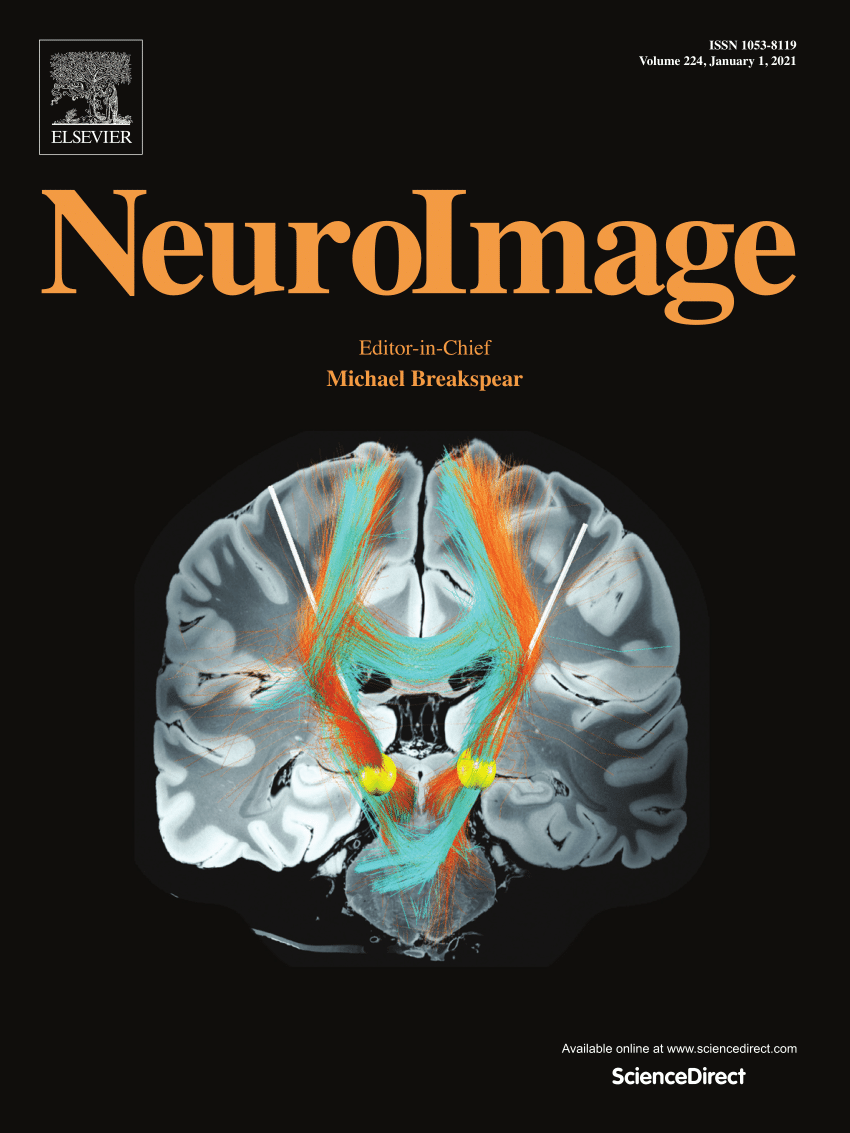
NeuroImage, a Journal of Brain Function provides a vehicle for communicating important advances in acquiring, analyzing, and modelling neuroimaging data and in applying these techniques to the study of structure-function and brain-behavior relationships. Though the emphasis is on the macroscopic level of human brain organization, meso-and microscopic neuroimaging across all species will be considered if informative for understanding the aforementioned relationships.




 京公网安备 11010802042870号
京ICP备2023020795号-1
京公网安备 11010802042870号
京ICP备2023020795号-1

 分享
分享
 求助内容:
求助内容: 应助结果提醒方式:
 扫码关注我们
