{"title":"评估剖宫产率根据罗布森分类使用新开发的智能手机应用程序在斯里兰卡三级中心:一个比较研究。","authors":"Chandana Jayasundara, Indunil Piyadigama, Asanka Jayawardane, Ananda Perera","doi":"10.1186/s12884-025-07165-3","DOIUrl":null,"url":null,"abstract":"<p><strong>Objective: </strong>Caesarean section (CS) rates in Sri Lanka have escalated significantly, with projections indicating that over half of all births may involve CS by 2025. To address this rise and mitigate maternal morbidity, it is essential that CS procedures are medically justified. This study evaluates RobsApp®, a novel smartphone application designed to collect high-quality prospective data on CS rates based on the Robson classification.</p><p><strong>Methods: </strong>The study utilized RobsApp® for data collection in the Professorial Unit of De Soysa Hospital for Women (DSHW), Sri Lanka. Data were collected prospectively from 1,712 deliveries between April and October 2019. The analysis focused on CS rates across different Robson categories and the quality of the collected data, comparing them with previous data obtained using traditional methods.</p><p><strong>Results: </strong>The overall CS rate was 33.0%, with Robson category 5a accounting for most cases. Emergency CS constituted 49.6% of all procedures, with cardiotocograph (CTG) abnormalities being the leading indication. The quality of the data collected through RobsApp® met the standards recommended by the Robson guidance, as evidenced by the study's ability to accurately categorize deliveries and assess CS rates.</p><p><strong>Conclusions: </strong>RobsApp® has proven to be an effective tool for prospective data collection, aligning well with Robson guidelines and facilitating high-quality data gathering. The study reveals a rising trend in CS rates at DSHW, particularly for reasons beyond previous CS. The inclusion of demographic data and birth weight analysis in future studies will enhance comparisons and insights into reducing CS rates.</p><p><strong>Ethics: </strong>Ethical approval was obtained from the Ethical Review Committee, Faculty of Medicine, University of Colombo (Ref - EC-19-024) which waived the need for individual consent. Study adhered to the Helsinki Declaration.</p>","PeriodicalId":9033,"journal":{"name":"BMC Pregnancy and Childbirth","volume":"25 1","pages":"104"},"PeriodicalIF":2.7000,"publicationDate":"2025-01-31","publicationTypes":"Journal Article","fieldsOfStudy":null,"isOpenAccess":false,"openAccessPdf":"https://www.ncbi.nlm.nih.gov/pmc/articles/PMC11786396/pdf/","citationCount":"0","resultStr":"{\"title\":\"Evaluation of caesarean rates according to Robson classification using a newly developed smart phone application in a tertiary center in Sri Lanka: a comparative study.\",\"authors\":\"Chandana Jayasundara, Indunil Piyadigama, Asanka Jayawardane, Ananda Perera\",\"doi\":\"10.1186/s12884-025-07165-3\",\"DOIUrl\":null,\"url\":null,\"abstract\":\"<p><strong>Objective: </strong>Caesarean section (CS) rates in Sri Lanka have escalated significantly, with projections indicating that over half of all births may involve CS by 2025. To address this rise and mitigate maternal morbidity, it is essential that CS procedures are medically justified. This study evaluates RobsApp®, a novel smartphone application designed to collect high-quality prospective data on CS rates based on the Robson classification.</p><p><strong>Methods: </strong>The study utilized RobsApp® for data collection in the Professorial Unit of De Soysa Hospital for Women (DSHW), Sri Lanka. Data were collected prospectively from 1,712 deliveries between April and October 2019. The analysis focused on CS rates across different Robson categories and the quality of the collected data, comparing them with previous data obtained using traditional methods.</p><p><strong>Results: </strong>The overall CS rate was 33.0%, with Robson category 5a accounting for most cases. Emergency CS constituted 49.6% of all procedures, with cardiotocograph (CTG) abnormalities being the leading indication. The quality of the data collected through RobsApp® met the standards recommended by the Robson guidance, as evidenced by the study's ability to accurately categorize deliveries and assess CS rates.</p><p><strong>Conclusions: </strong>RobsApp® has proven to be an effective tool for prospective data collection, aligning well with Robson guidelines and facilitating high-quality data gathering. The study reveals a rising trend in CS rates at DSHW, particularly for reasons beyond previous CS. The inclusion of demographic data and birth weight analysis in future studies will enhance comparisons and insights into reducing CS rates.</p><p><strong>Ethics: </strong>Ethical approval was obtained from the Ethical Review Committee, Faculty of Medicine, University of Colombo (Ref - EC-19-024) which waived the need for individual consent. Study adhered to the Helsinki Declaration.</p>\",\"PeriodicalId\":9033,\"journal\":{\"name\":\"BMC Pregnancy and Childbirth\",\"volume\":\"25 1\",\"pages\":\"104\"},\"PeriodicalIF\":2.7000,\"publicationDate\":\"2025-01-31\",\"publicationTypes\":\"Journal Article\",\"fieldsOfStudy\":null,\"isOpenAccess\":false,\"openAccessPdf\":\"https://www.ncbi.nlm.nih.gov/pmc/articles/PMC11786396/pdf/\",\"citationCount\":\"0\",\"resultStr\":null,\"platform\":\"Semanticscholar\",\"paperid\":null,\"PeriodicalName\":\"BMC Pregnancy and Childbirth\",\"FirstCategoryId\":\"3\",\"ListUrlMain\":\"https://doi.org/10.1186/s12884-025-07165-3\",\"RegionNum\":2,\"RegionCategory\":\"医学\",\"ArticlePicture\":[],\"TitleCN\":null,\"AbstractTextCN\":null,\"PMCID\":null,\"EPubDate\":\"\",\"PubModel\":\"\",\"JCR\":\"Q1\",\"JCRName\":\"OBSTETRICS & GYNECOLOGY\",\"Score\":null,\"Total\":0}","platform":"Semanticscholar","paperid":null,"PeriodicalName":"BMC Pregnancy and Childbirth","FirstCategoryId":"3","ListUrlMain":"https://doi.org/10.1186/s12884-025-07165-3","RegionNum":2,"RegionCategory":"医学","ArticlePicture":[],"TitleCN":null,"AbstractTextCN":null,"PMCID":null,"EPubDate":"","PubModel":"","JCR":"Q1","JCRName":"OBSTETRICS & GYNECOLOGY","Score":null,"Total":0}
Evaluation of caesarean rates according to Robson classification using a newly developed smart phone application in a tertiary center in Sri Lanka: a comparative study.
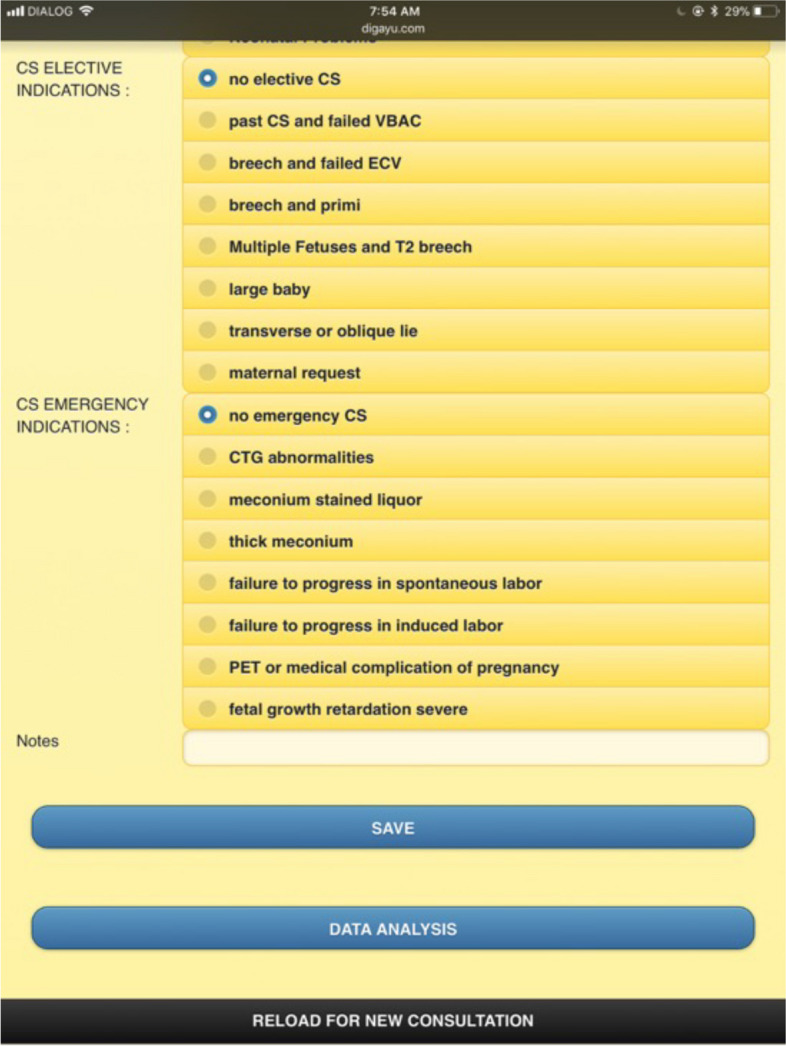
Objective: Caesarean section (CS) rates in Sri Lanka have escalated significantly, with projections indicating that over half of all births may involve CS by 2025. To address this rise and mitigate maternal morbidity, it is essential that CS procedures are medically justified. This study evaluates RobsApp®, a novel smartphone application designed to collect high-quality prospective data on CS rates based on the Robson classification.
Methods: The study utilized RobsApp® for data collection in the Professorial Unit of De Soysa Hospital for Women (DSHW), Sri Lanka. Data were collected prospectively from 1,712 deliveries between April and October 2019. The analysis focused on CS rates across different Robson categories and the quality of the collected data, comparing them with previous data obtained using traditional methods.
Results: The overall CS rate was 33.0%, with Robson category 5a accounting for most cases. Emergency CS constituted 49.6% of all procedures, with cardiotocograph (CTG) abnormalities being the leading indication. The quality of the data collected through RobsApp® met the standards recommended by the Robson guidance, as evidenced by the study's ability to accurately categorize deliveries and assess CS rates.
Conclusions: RobsApp® has proven to be an effective tool for prospective data collection, aligning well with Robson guidelines and facilitating high-quality data gathering. The study reveals a rising trend in CS rates at DSHW, particularly for reasons beyond previous CS. The inclusion of demographic data and birth weight analysis in future studies will enhance comparisons and insights into reducing CS rates.
Ethics: Ethical approval was obtained from the Ethical Review Committee, Faculty of Medicine, University of Colombo (Ref - EC-19-024) which waived the need for individual consent. Study adhered to the Helsinki Declaration.
期刊介绍:
BMC Pregnancy & Childbirth is an open access, peer-reviewed journal that considers articles on all aspects of pregnancy and childbirth. The journal welcomes submissions on the biomedical aspects of pregnancy, breastfeeding, labor, maternal health, maternity care, trends and sociological aspects of pregnancy and childbirth.






 京公网安备 11010802042870号
京ICP备2023020795号-1
京公网安备 11010802042870号
京ICP备2023020795号-1

 分享
分享
 求助内容:
求助内容: 应助结果提醒方式:
 扫码关注我们
