Tamer Samir Abdelsalam Abdelaziz, Hatem Elsayed Mohammed Elsayed, Doaa Mohammed Kamal Eldin, Ismail Mohammed Ibrahim
{"title":"肌注右美托咪定与预用药加巴喷丁对隆鼻术后出现躁动的影响。一项前瞻性、随机、双盲对照试验。","authors":"Tamer Samir Abdelsalam Abdelaziz, Hatem Elsayed Mohammed Elsayed, Doaa Mohammed Kamal Eldin, Ismail Mohammed Ibrahim","doi":"10.1186/s12871-025-02914-5","DOIUrl":null,"url":null,"abstract":"<p><strong>Background: </strong>Emergence agitation EA is a state of confusion and harmful aggressiveness during recovery. It is a common complication after rhinoplasty, with risk of trauma, bleeding, and hemodynamic instability. Dexmedetomidine and gabapentin premedication could improve the quality of recovery after rhinoplasty.</p><p><strong>Methods: </strong>One hundred fifty-three participants (ASA I-II, both sexes and age 18-40 years) scheduled for rhinoplasty were randomized into three groups. Group C didn't receive premedication, Group D received intramuscular (IM) dexmedetomidine, and Group G received oral gabapentin. The degree of EA by Riker sedation-agitation scale (RSAS) during recovery, pain severity, and adverse events recorded.</p><p><strong>Results: </strong>The results showed statistically significant differences in EA scores with the lowest values in group D (p-value 0.002). Moreover, the incidence of EA was 17.6% (9/51) in Group D, 41.2% (21/51) in Group G, and 56.9% (29/51) in Group C with P value < 0.001 and significant differences in VAS score at 4, 8, and 12 h with the highest median (range) values in group C 4(3-6) in comparison to group D 2(1-3) and group G 2(1-3) and p-value < 0.001; no significant differences in adverse events.</p><p><strong>Conclusions: </strong>IM dexmedetomidine premedication was more efficient than gabapentin in the reduction of the emergence agitation incidence, severity, and postoperative pain scores after rhinoplasty in adults.</p><p><strong>Clinical trial registration number id: </strong>NCT05626998 on 25/11/2022.</p>","PeriodicalId":9190,"journal":{"name":"BMC Anesthesiology","volume":"25 1","pages":"50"},"PeriodicalIF":2.6000,"publicationDate":"2025-01-31","publicationTypes":"Journal Article","fieldsOfStudy":null,"isOpenAccess":false,"openAccessPdf":"https://www.ncbi.nlm.nih.gov/pmc/articles/PMC11783837/pdf/","citationCount":"0","resultStr":"{\"title\":\"\\\"The effect of intramuscular dexmedetomidine versus oral gabapentin premedication on the emergence agitation after rhinoplasty\\\". A prospective, randomized, double-blind controlled trial.\",\"authors\":\"Tamer Samir Abdelsalam Abdelaziz, Hatem Elsayed Mohammed Elsayed, Doaa Mohammed Kamal Eldin, Ismail Mohammed Ibrahim\",\"doi\":\"10.1186/s12871-025-02914-5\",\"DOIUrl\":null,\"url\":null,\"abstract\":\"<p><strong>Background: </strong>Emergence agitation EA is a state of confusion and harmful aggressiveness during recovery. It is a common complication after rhinoplasty, with risk of trauma, bleeding, and hemodynamic instability. Dexmedetomidine and gabapentin premedication could improve the quality of recovery after rhinoplasty.</p><p><strong>Methods: </strong>One hundred fifty-three participants (ASA I-II, both sexes and age 18-40 years) scheduled for rhinoplasty were randomized into three groups. Group C didn't receive premedication, Group D received intramuscular (IM) dexmedetomidine, and Group G received oral gabapentin. The degree of EA by Riker sedation-agitation scale (RSAS) during recovery, pain severity, and adverse events recorded.</p><p><strong>Results: </strong>The results showed statistically significant differences in EA scores with the lowest values in group D (p-value 0.002). Moreover, the incidence of EA was 17.6% (9/51) in Group D, 41.2% (21/51) in Group G, and 56.9% (29/51) in Group C with P value < 0.001 and significant differences in VAS score at 4, 8, and 12 h with the highest median (range) values in group C 4(3-6) in comparison to group D 2(1-3) and group G 2(1-3) and p-value < 0.001; no significant differences in adverse events.</p><p><strong>Conclusions: </strong>IM dexmedetomidine premedication was more efficient than gabapentin in the reduction of the emergence agitation incidence, severity, and postoperative pain scores after rhinoplasty in adults.</p><p><strong>Clinical trial registration number id: </strong>NCT05626998 on 25/11/2022.</p>\",\"PeriodicalId\":9190,\"journal\":{\"name\":\"BMC Anesthesiology\",\"volume\":\"25 1\",\"pages\":\"50\"},\"PeriodicalIF\":2.6000,\"publicationDate\":\"2025-01-31\",\"publicationTypes\":\"Journal Article\",\"fieldsOfStudy\":null,\"isOpenAccess\":false,\"openAccessPdf\":\"https://www.ncbi.nlm.nih.gov/pmc/articles/PMC11783837/pdf/\",\"citationCount\":\"0\",\"resultStr\":null,\"platform\":\"Semanticscholar\",\"paperid\":null,\"PeriodicalName\":\"BMC Anesthesiology\",\"FirstCategoryId\":\"3\",\"ListUrlMain\":\"https://doi.org/10.1186/s12871-025-02914-5\",\"RegionNum\":3,\"RegionCategory\":\"医学\",\"ArticlePicture\":[],\"TitleCN\":null,\"AbstractTextCN\":null,\"PMCID\":null,\"EPubDate\":\"\",\"PubModel\":\"\",\"JCR\":\"Q2\",\"JCRName\":\"ANESTHESIOLOGY\",\"Score\":null,\"Total\":0}","platform":"Semanticscholar","paperid":null,"PeriodicalName":"BMC Anesthesiology","FirstCategoryId":"3","ListUrlMain":"https://doi.org/10.1186/s12871-025-02914-5","RegionNum":3,"RegionCategory":"医学","ArticlePicture":[],"TitleCN":null,"AbstractTextCN":null,"PMCID":null,"EPubDate":"","PubModel":"","JCR":"Q2","JCRName":"ANESTHESIOLOGY","Score":null,"Total":0}
"The effect of intramuscular dexmedetomidine versus oral gabapentin premedication on the emergence agitation after rhinoplasty". A prospective, randomized, double-blind controlled trial.
Background: Emergence agitation EA is a state of confusion and harmful aggressiveness during recovery. It is a common complication after rhinoplasty, with risk of trauma, bleeding, and hemodynamic instability. Dexmedetomidine and gabapentin premedication could improve the quality of recovery after rhinoplasty.
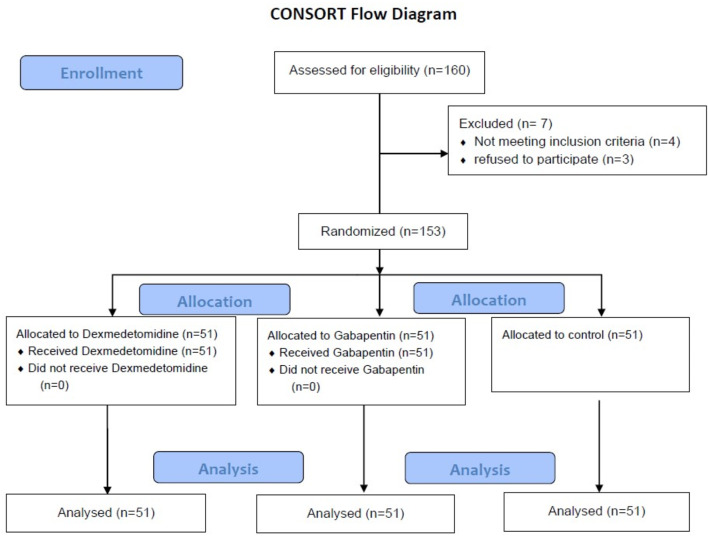
Methods: One hundred fifty-three participants (ASA I-II, both sexes and age 18-40 years) scheduled for rhinoplasty were randomized into three groups. Group C didn't receive premedication, Group D received intramuscular (IM) dexmedetomidine, and Group G received oral gabapentin. The degree of EA by Riker sedation-agitation scale (RSAS) during recovery, pain severity, and adverse events recorded.
Results: The results showed statistically significant differences in EA scores with the lowest values in group D (p-value 0.002). Moreover, the incidence of EA was 17.6% (9/51) in Group D, 41.2% (21/51) in Group G, and 56.9% (29/51) in Group C with P value < 0.001 and significant differences in VAS score at 4, 8, and 12 h with the highest median (range) values in group C 4(3-6) in comparison to group D 2(1-3) and group G 2(1-3) and p-value < 0.001; no significant differences in adverse events.
Conclusions: IM dexmedetomidine premedication was more efficient than gabapentin in the reduction of the emergence agitation incidence, severity, and postoperative pain scores after rhinoplasty in adults.
Clinical trial registration number id: NCT05626998 on 25/11/2022.
期刊介绍:
BMC Anesthesiology is an open access, peer-reviewed journal that considers articles on all aspects of anesthesiology, critical care, perioperative care and pain management, including clinical and experimental research into anesthetic mechanisms, administration and efficacy, technology and monitoring, and associated economic issues.




 京公网安备 11010802042870号
京ICP备2023020795号-1
京公网安备 11010802042870号
京ICP备2023020795号-1

 分享
分享
 求助内容:
求助内容: 应助结果提醒方式:
 扫码关注我们
