{"title":"大麻二酚在视网膜兴奋性毒性体内模型中的视网膜药效学和药代动力学特征。","authors":"Federica Conti , Francesca Lazzara , Kyriaki Thermos , Elide Zingale , Dimitris Spyridakos , Giovanni Luca Romano , Serena Di Martino , Vincenzo Micale , Martin Kuchar , Angelo Spadaro , Rosario Pignatello , Settimio Rossi , Michele D'Amico , Chiara Bianca Maria Platania , Filippo Drago , Claudio Bucolo","doi":"10.1016/j.ejphar.2025.177323","DOIUrl":null,"url":null,"abstract":"<div><div>Cannabidiol (CBD) is one of the principal constituents of <em>Cannabis Sativa</em> with no psychoactive properties. CBD is a promising neuroprotective compound bearing anti-inflammatory and antioxidant properties. However, considering its low solubility, CBD delivery to the retina represents an unresolved issue. The first aim was to investigate the potential neuroprotective effects of CBD in an <em>in vivo</em> model of retinal excitotoxicity induced by α-amino-3-hydroxy-5-methyl-4-isoxazolepropionic acid (AMPA). Rats underwent intravitreal co-injection of AMPA (42 nmol) and CBD (10<sup>−4</sup> M). The neuroprotective effect of CBD was investigated with histology and immunohistochemical evaluation of inflammatory and oxidative stress biomarkers. CBD reversed the AMPA-induced total retinal, inner nuclear layer and inner plexiform layer shrinkage and loss of amacrine cells. Moreover, CBD decreased the AMPA induced number of cleaved caspase-3, Iba-1 and nitrotyrosine (NT) positive cells. Based on this evidence, we developed a nanotechnological formulation of CBD to overcome critical issues related to its eye delivery. Particularly, nanostructured lipid carriers (NLC) loaded with CBD were prepared, optimized and characterized. Due to the optimal physicochemical characteristics, CBD-NLC3 has been selected and the <em>in vitro</em> release profile has been investigated. Additionally, CBD-NLC3 was topically administered to rats, and retinal CBD levels were determined. CBD-NLC3 formulation, after a single topical administration, efficiently delivered CBD in the retina (C<sub>max</sub> = 98 ± 25.9 ng/mg; T<sub>max</sub> = 60 min), showing a high translational value. In conclusion, these findings showed a good PD/PK profile of CBD warranting further pre-clinical and clinical evaluation of the new formulation for the treatment of retinal degenerative diseases.</div></div>","PeriodicalId":12004,"journal":{"name":"European journal of pharmacology","volume":"991 ","pages":"Article 177323"},"PeriodicalIF":4.7000,"publicationDate":"2025-03-15","publicationTypes":"Journal Article","fieldsOfStudy":null,"isOpenAccess":false,"openAccessPdf":"","citationCount":"0","resultStr":"{\"title\":\"Retinal pharmacodynamic and pharmacokinetic profile of cannabidiol in an in vivo model of retinal excitotoxicity\",\"authors\":\"Federica Conti , Francesca Lazzara , Kyriaki Thermos , Elide Zingale , Dimitris Spyridakos , Giovanni Luca Romano , Serena Di Martino , Vincenzo Micale , Martin Kuchar , Angelo Spadaro , Rosario Pignatello , Settimio Rossi , Michele D'Amico , Chiara Bianca Maria Platania , Filippo Drago , Claudio Bucolo\",\"doi\":\"10.1016/j.ejphar.2025.177323\",\"DOIUrl\":null,\"url\":null,\"abstract\":\"<div><div>Cannabidiol (CBD) is one of the principal constituents of <em>Cannabis Sativa</em> with no psychoactive properties. CBD is a promising neuroprotective compound bearing anti-inflammatory and antioxidant properties. However, considering its low solubility, CBD delivery to the retina represents an unresolved issue. The first aim was to investigate the potential neuroprotective effects of CBD in an <em>in vivo</em> model of retinal excitotoxicity induced by α-amino-3-hydroxy-5-methyl-4-isoxazolepropionic acid (AMPA). Rats underwent intravitreal co-injection of AMPA (42 nmol) and CBD (10<sup>−4</sup> M). The neuroprotective effect of CBD was investigated with histology and immunohistochemical evaluation of inflammatory and oxidative stress biomarkers. CBD reversed the AMPA-induced total retinal, inner nuclear layer and inner plexiform layer shrinkage and loss of amacrine cells. Moreover, CBD decreased the AMPA induced number of cleaved caspase-3, Iba-1 and nitrotyrosine (NT) positive cells. Based on this evidence, we developed a nanotechnological formulation of CBD to overcome critical issues related to its eye delivery. Particularly, nanostructured lipid carriers (NLC) loaded with CBD were prepared, optimized and characterized. Due to the optimal physicochemical characteristics, CBD-NLC3 has been selected and the <em>in vitro</em> release profile has been investigated. Additionally, CBD-NLC3 was topically administered to rats, and retinal CBD levels were determined. CBD-NLC3 formulation, after a single topical administration, efficiently delivered CBD in the retina (C<sub>max</sub> = 98 ± 25.9 ng/mg; T<sub>max</sub> = 60 min), showing a high translational value. In conclusion, these findings showed a good PD/PK profile of CBD warranting further pre-clinical and clinical evaluation of the new formulation for the treatment of retinal degenerative diseases.</div></div>\",\"PeriodicalId\":12004,\"journal\":{\"name\":\"European journal of pharmacology\",\"volume\":\"991 \",\"pages\":\"Article 177323\"},\"PeriodicalIF\":4.7000,\"publicationDate\":\"2025-03-15\",\"publicationTypes\":\"Journal Article\",\"fieldsOfStudy\":null,\"isOpenAccess\":false,\"openAccessPdf\":\"\",\"citationCount\":\"0\",\"resultStr\":null,\"platform\":\"Semanticscholar\",\"paperid\":null,\"PeriodicalName\":\"European journal of pharmacology\",\"FirstCategoryId\":\"3\",\"ListUrlMain\":\"https://www.sciencedirect.com/science/article/pii/S0014299925000767\",\"RegionNum\":3,\"RegionCategory\":\"医学\",\"ArticlePicture\":[],\"TitleCN\":null,\"AbstractTextCN\":null,\"PMCID\":null,\"EPubDate\":\"2025/1/30 0:00:00\",\"PubModel\":\"Epub\",\"JCR\":\"Q1\",\"JCRName\":\"PHARMACOLOGY & PHARMACY\",\"Score\":null,\"Total\":0}","platform":"Semanticscholar","paperid":null,"PeriodicalName":"European journal of pharmacology","FirstCategoryId":"3","ListUrlMain":"https://www.sciencedirect.com/science/article/pii/S0014299925000767","RegionNum":3,"RegionCategory":"医学","ArticlePicture":[],"TitleCN":null,"AbstractTextCN":null,"PMCID":null,"EPubDate":"2025/1/30 0:00:00","PubModel":"Epub","JCR":"Q1","JCRName":"PHARMACOLOGY & PHARMACY","Score":null,"Total":0}
Retinal pharmacodynamic and pharmacokinetic profile of cannabidiol in an in vivo model of retinal excitotoxicity
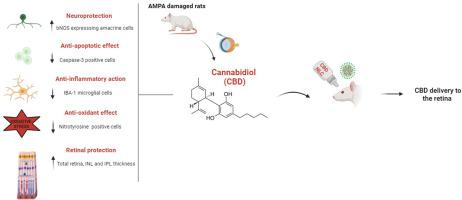
Cannabidiol (CBD) is one of the principal constituents of Cannabis Sativa with no psychoactive properties. CBD is a promising neuroprotective compound bearing anti-inflammatory and antioxidant properties. However, considering its low solubility, CBD delivery to the retina represents an unresolved issue. The first aim was to investigate the potential neuroprotective effects of CBD in an in vivo model of retinal excitotoxicity induced by α-amino-3-hydroxy-5-methyl-4-isoxazolepropionic acid (AMPA). Rats underwent intravitreal co-injection of AMPA (42 nmol) and CBD (10−4 M). The neuroprotective effect of CBD was investigated with histology and immunohistochemical evaluation of inflammatory and oxidative stress biomarkers. CBD reversed the AMPA-induced total retinal, inner nuclear layer and inner plexiform layer shrinkage and loss of amacrine cells. Moreover, CBD decreased the AMPA induced number of cleaved caspase-3, Iba-1 and nitrotyrosine (NT) positive cells. Based on this evidence, we developed a nanotechnological formulation of CBD to overcome critical issues related to its eye delivery. Particularly, nanostructured lipid carriers (NLC) loaded with CBD were prepared, optimized and characterized. Due to the optimal physicochemical characteristics, CBD-NLC3 has been selected and the in vitro release profile has been investigated. Additionally, CBD-NLC3 was topically administered to rats, and retinal CBD levels were determined. CBD-NLC3 formulation, after a single topical administration, efficiently delivered CBD in the retina (Cmax = 98 ± 25.9 ng/mg; Tmax = 60 min), showing a high translational value. In conclusion, these findings showed a good PD/PK profile of CBD warranting further pre-clinical and clinical evaluation of the new formulation for the treatment of retinal degenerative diseases.
期刊介绍:
The European Journal of Pharmacology publishes research papers covering all aspects of experimental pharmacology with focus on the mechanism of action of structurally identified compounds affecting biological systems.
The scope includes:
Behavioural pharmacology
Neuropharmacology and analgesia
Cardiovascular pharmacology
Pulmonary, gastrointestinal and urogenital pharmacology
Endocrine pharmacology
Immunopharmacology and inflammation
Molecular and cellular pharmacology
Regenerative pharmacology
Biologicals and biotherapeutics
Translational pharmacology
Nutriceutical pharmacology.




 京公网安备 11010802042870号
京ICP备2023020795号-1
京公网安备 11010802042870号
京ICP备2023020795号-1

 分享
分享
 求助内容:
求助内容: 应助结果提醒方式:
 扫码关注我们
