Anna Ingielewicz, Zuzanna Brunka, Mateusz Szczupak, Robert K Szymczak
{"title":"缓解病人可能受益于鼻内给药:一项两中心观察性研究评估了吗啡和地塞米松在波兰临终关怀医院的给药。","authors":"Anna Ingielewicz, Zuzanna Brunka, Mateusz Szczupak, Robert K Szymczak","doi":"10.1007/s00520-025-09189-z","DOIUrl":null,"url":null,"abstract":"<p><strong>Introduction: </strong>Patients receiving hospice care at the end of life often suffer from a variety of ailments. They may need medication to alleviate symptoms for the rest of their lives. The most common and recommended way to take opioids and steroids is orally. Less frequently, the subcutaneous or intravenous routes are used. The intranasal route is a relatively uncommon but interesting alternative for administering drugs.</p><p><strong>Aim: </strong>The study aims to identify hospice patients who may benefit from changing the standard opioid and steroid administration route to intranasal delivery.</p><p><strong>Material and methods: </strong>The electronic medical records of all home and inpatient hospice patients (both rural and urban) were analyzed between February and April 2024. The study focused on the magnitude and type of problems associated with taking medications via standard routes and assessed the potential for changing to an intranasal route of administration.</p><p><strong>Results: </strong>Patients who were prescribed morphine, dexamethasone, or both during co-administration were included in the analysis. Of the 282 patients receiving hospice care over the study period, 95 met the inclusion criteria (33.7%). According to the researcher's original survey 87% of patients experienced issues with taking medications through the standard route. Among the problems related to oral medicines, consciousness disorders were the most significant at 66%. For subcutaneous administration, the main issues were reluctance to inject at 19% and lack of cooperation from caregivers at 20%.</p><p><strong>Conclusion: </strong>The profile of a hospice patient who may benefit from intranasal administration of symptomatic drugs includes patients with impaired consciousness, aversion to subcutaneous injections, and reluctance to administer injections by caregivers.</p>","PeriodicalId":22046,"journal":{"name":"Supportive Care in Cancer","volume":"33 2","pages":"140"},"PeriodicalIF":3.4000,"publicationDate":"2025-02-01","publicationTypes":"Journal Article","fieldsOfStudy":null,"isOpenAccess":false,"openAccessPdf":"https://www.ncbi.nlm.nih.gov/pmc/articles/PMC11787208/pdf/","citationCount":"0","resultStr":"{\"title\":\"Palliative patients who may benefit from intranasal delivery of symptomatic drugs: a two-center observational study evaluated the administration of morphine and dexamethasone in Polish hospices.\",\"authors\":\"Anna Ingielewicz, Zuzanna Brunka, Mateusz Szczupak, Robert K Szymczak\",\"doi\":\"10.1007/s00520-025-09189-z\",\"DOIUrl\":null,\"url\":null,\"abstract\":\"<p><strong>Introduction: </strong>Patients receiving hospice care at the end of life often suffer from a variety of ailments. They may need medication to alleviate symptoms for the rest of their lives. The most common and recommended way to take opioids and steroids is orally. Less frequently, the subcutaneous or intravenous routes are used. The intranasal route is a relatively uncommon but interesting alternative for administering drugs.</p><p><strong>Aim: </strong>The study aims to identify hospice patients who may benefit from changing the standard opioid and steroid administration route to intranasal delivery.</p><p><strong>Material and methods: </strong>The electronic medical records of all home and inpatient hospice patients (both rural and urban) were analyzed between February and April 2024. The study focused on the magnitude and type of problems associated with taking medications via standard routes and assessed the potential for changing to an intranasal route of administration.</p><p><strong>Results: </strong>Patients who were prescribed morphine, dexamethasone, or both during co-administration were included in the analysis. Of the 282 patients receiving hospice care over the study period, 95 met the inclusion criteria (33.7%). According to the researcher's original survey 87% of patients experienced issues with taking medications through the standard route. Among the problems related to oral medicines, consciousness disorders were the most significant at 66%. For subcutaneous administration, the main issues were reluctance to inject at 19% and lack of cooperation from caregivers at 20%.</p><p><strong>Conclusion: </strong>The profile of a hospice patient who may benefit from intranasal administration of symptomatic drugs includes patients with impaired consciousness, aversion to subcutaneous injections, and reluctance to administer injections by caregivers.</p>\",\"PeriodicalId\":22046,\"journal\":{\"name\":\"Supportive Care in Cancer\",\"volume\":\"33 2\",\"pages\":\"140\"},\"PeriodicalIF\":3.4000,\"publicationDate\":\"2025-02-01\",\"publicationTypes\":\"Journal Article\",\"fieldsOfStudy\":null,\"isOpenAccess\":false,\"openAccessPdf\":\"https://www.ncbi.nlm.nih.gov/pmc/articles/PMC11787208/pdf/\",\"citationCount\":\"0\",\"resultStr\":null,\"platform\":\"Semanticscholar\",\"paperid\":null,\"PeriodicalName\":\"Supportive Care in Cancer\",\"FirstCategoryId\":\"3\",\"ListUrlMain\":\"https://doi.org/10.1007/s00520-025-09189-z\",\"RegionNum\":3,\"RegionCategory\":\"医学\",\"ArticlePicture\":[],\"TitleCN\":null,\"AbstractTextCN\":null,\"PMCID\":null,\"EPubDate\":\"\",\"PubModel\":\"\",\"JCR\":\"Q2\",\"JCRName\":\"HEALTH CARE SCIENCES & SERVICES\",\"Score\":null,\"Total\":0}","platform":"Semanticscholar","paperid":null,"PeriodicalName":"Supportive Care in Cancer","FirstCategoryId":"3","ListUrlMain":"https://doi.org/10.1007/s00520-025-09189-z","RegionNum":3,"RegionCategory":"医学","ArticlePicture":[],"TitleCN":null,"AbstractTextCN":null,"PMCID":null,"EPubDate":"","PubModel":"","JCR":"Q2","JCRName":"HEALTH CARE SCIENCES & SERVICES","Score":null,"Total":0}
Palliative patients who may benefit from intranasal delivery of symptomatic drugs: a two-center observational study evaluated the administration of morphine and dexamethasone in Polish hospices.
Introduction: Patients receiving hospice care at the end of life often suffer from a variety of ailments. They may need medication to alleviate symptoms for the rest of their lives. The most common and recommended way to take opioids and steroids is orally. Less frequently, the subcutaneous or intravenous routes are used. The intranasal route is a relatively uncommon but interesting alternative for administering drugs.
Aim: The study aims to identify hospice patients who may benefit from changing the standard opioid and steroid administration route to intranasal delivery.
Material and methods: The electronic medical records of all home and inpatient hospice patients (both rural and urban) were analyzed between February and April 2024. The study focused on the magnitude and type of problems associated with taking medications via standard routes and assessed the potential for changing to an intranasal route of administration.
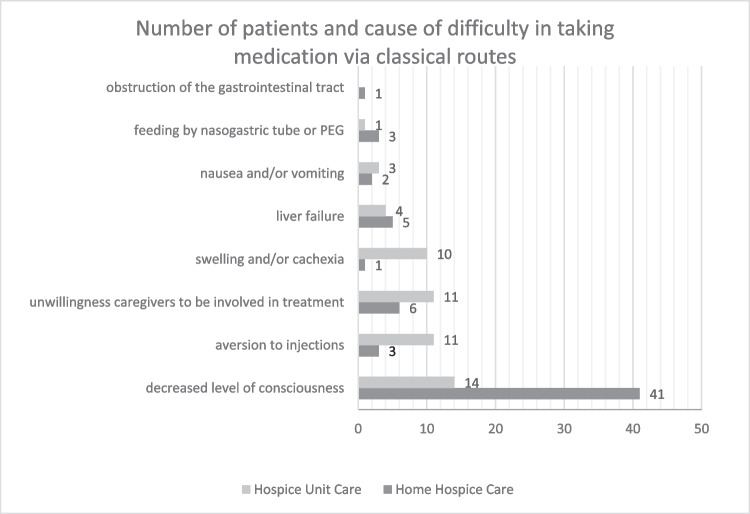
Results: Patients who were prescribed morphine, dexamethasone, or both during co-administration were included in the analysis. Of the 282 patients receiving hospice care over the study period, 95 met the inclusion criteria (33.7%). According to the researcher's original survey 87% of patients experienced issues with taking medications through the standard route. Among the problems related to oral medicines, consciousness disorders were the most significant at 66%. For subcutaneous administration, the main issues were reluctance to inject at 19% and lack of cooperation from caregivers at 20%.
Conclusion: The profile of a hospice patient who may benefit from intranasal administration of symptomatic drugs includes patients with impaired consciousness, aversion to subcutaneous injections, and reluctance to administer injections by caregivers.
期刊介绍:
Supportive Care in Cancer provides members of the Multinational Association of Supportive Care in Cancer (MASCC) and all other interested individuals, groups and institutions with the most recent scientific and social information on all aspects of supportive care in cancer patients. It covers primarily medical, technical and surgical topics concerning supportive therapy and care which may supplement or substitute basic cancer treatment at all stages of the disease.
Nursing, rehabilitative, psychosocial and spiritual issues of support are also included.





 京公网安备 11010802042870号
京ICP备2023020795号-1
京公网安备 11010802042870号
京ICP备2023020795号-1

 分享
分享
 求助内容:
求助内容: 应助结果提醒方式:
 扫码关注我们
