Viktoryia A Kalesnikava, Eskira Kahsay, Chuwen Zhong, Emma Spring, Courtney Bagge, Sarah Burgard, Briana Mezuk, Philippa J Clarke
{"title":"地区社会经济不平等和自杀死亡率:使用国家暴力死亡报告系统和相关行政数据对比常用措施。","authors":"Viktoryia A Kalesnikava, Eskira Kahsay, Chuwen Zhong, Emma Spring, Courtney Bagge, Sarah Burgard, Briana Mezuk, Philippa J Clarke","doi":"10.1093/aje/kwaf021","DOIUrl":null,"url":null,"abstract":"<p><p>Area economic inequality may underlie social disparities in suicide mortality (SM). Differences in measuring inequality contribute to variability across empirical evidence. We contrasted common income measures-absolute poverty, Gini inequality index, Index of Concentration at the Extremes (ICE)-and examined their associations with age- and sex-standardized SM across 1381 US counties. We used the 2006-2019 National Violent Death Reporting System linked to 2006-2010 administrative data on socioeconomic factors and a Bayesian spatial multilevel approach. Compared to affluent areas, poorer areas had the highest relative risk (RR) of SM (ICE RR, 1.24; 95% credible interval [CI], 1.17-1.31; absolute poverty RR, 1.33; 95% CI, 1.25-1.41). Gini inequality was not linearly associated with SM. Cross-classifying Gini × ICE showed that the highest-risk areas had concentrated poverty (ICE) but varying Gini inequality. These high-risk, poverty-segregated areas were more often medically underserved, had lower population density, and high unemployment. African American or Indigenous suicide decedents frequently resided in high inequality areas, while older, White decedents with military backgrounds more often resided in lower Gini areas. The choice of inequality measure can lead to varied conclusions about social disparities in SM. A comparative approach offers more nuanced understanding of underlying socioeconomic marginalization.</p>","PeriodicalId":7472,"journal":{"name":"American journal of epidemiology","volume":" ","pages":"3472-3482"},"PeriodicalIF":4.1000,"publicationDate":"2025-12-02","publicationTypes":"Journal Article","fieldsOfStudy":null,"isOpenAccess":false,"openAccessPdf":"https://www.ncbi.nlm.nih.gov/pmc/articles/PMC13135120/pdf/","citationCount":"0","resultStr":"{\"title\":\"Area socioeconomic inequality and suicide mortality: contrasting common measures using National Violent Death Reporting System and linked administrative data.\",\"authors\":\"Viktoryia A Kalesnikava, Eskira Kahsay, Chuwen Zhong, Emma Spring, Courtney Bagge, Sarah Burgard, Briana Mezuk, Philippa J Clarke\",\"doi\":\"10.1093/aje/kwaf021\",\"DOIUrl\":null,\"url\":null,\"abstract\":\"<p><p>Area economic inequality may underlie social disparities in suicide mortality (SM). Differences in measuring inequality contribute to variability across empirical evidence. We contrasted common income measures-absolute poverty, Gini inequality index, Index of Concentration at the Extremes (ICE)-and examined their associations with age- and sex-standardized SM across 1381 US counties. We used the 2006-2019 National Violent Death Reporting System linked to 2006-2010 administrative data on socioeconomic factors and a Bayesian spatial multilevel approach. Compared to affluent areas, poorer areas had the highest relative risk (RR) of SM (ICE RR, 1.24; 95% credible interval [CI], 1.17-1.31; absolute poverty RR, 1.33; 95% CI, 1.25-1.41). Gini inequality was not linearly associated with SM. Cross-classifying Gini × ICE showed that the highest-risk areas had concentrated poverty (ICE) but varying Gini inequality. These high-risk, poverty-segregated areas were more often medically underserved, had lower population density, and high unemployment. African American or Indigenous suicide decedents frequently resided in high inequality areas, while older, White decedents with military backgrounds more often resided in lower Gini areas. The choice of inequality measure can lead to varied conclusions about social disparities in SM. A comparative approach offers more nuanced understanding of underlying socioeconomic marginalization.</p>\",\"PeriodicalId\":7472,\"journal\":{\"name\":\"American journal of epidemiology\",\"volume\":\" \",\"pages\":\"3472-3482\"},\"PeriodicalIF\":4.1000,\"publicationDate\":\"2025-12-02\",\"publicationTypes\":\"Journal Article\",\"fieldsOfStudy\":null,\"isOpenAccess\":false,\"openAccessPdf\":\"https://www.ncbi.nlm.nih.gov/pmc/articles/PMC13135120/pdf/\",\"citationCount\":\"0\",\"resultStr\":null,\"platform\":\"Semanticscholar\",\"paperid\":null,\"PeriodicalName\":\"American journal of epidemiology\",\"FirstCategoryId\":\"3\",\"ListUrlMain\":\"https://doi.org/10.1093/aje/kwaf021\",\"RegionNum\":2,\"RegionCategory\":\"医学\",\"ArticlePicture\":[],\"TitleCN\":null,\"AbstractTextCN\":null,\"PMCID\":null,\"EPubDate\":\"\",\"PubModel\":\"\",\"JCR\":\"Q1\",\"JCRName\":\"PUBLIC, ENVIRONMENTAL & OCCUPATIONAL HEALTH\",\"Score\":null,\"Total\":0}","platform":"Semanticscholar","paperid":null,"PeriodicalName":"American journal of epidemiology","FirstCategoryId":"3","ListUrlMain":"https://doi.org/10.1093/aje/kwaf021","RegionNum":2,"RegionCategory":"医学","ArticlePicture":[],"TitleCN":null,"AbstractTextCN":null,"PMCID":null,"EPubDate":"","PubModel":"","JCR":"Q1","JCRName":"PUBLIC, ENVIRONMENTAL & OCCUPATIONAL HEALTH","Score":null,"Total":0}
Area socioeconomic inequality and suicide mortality: contrasting common measures using National Violent Death Reporting System and linked administrative data.
Area economic inequality may underlie social disparities in suicide mortality (SM). Differences in measuring inequality contribute to variability across empirical evidence. We contrasted common income measures-absolute poverty, Gini inequality index, Index of Concentration at the Extremes (ICE)-and examined their associations with age- and sex-standardized SM across 1381 US counties. We used the 2006-2019 National Violent Death Reporting System linked to 2006-2010 administrative data on socioeconomic factors and a Bayesian spatial multilevel approach. Compared to affluent areas, poorer areas had the highest relative risk (RR) of SM (ICE RR, 1.24; 95% credible interval [CI], 1.17-1.31; absolute poverty RR, 1.33; 95% CI, 1.25-1.41). Gini inequality was not linearly associated with SM. Cross-classifying Gini × ICE showed that the highest-risk areas had concentrated poverty (ICE) but varying Gini inequality. These high-risk, poverty-segregated areas were more often medically underserved, had lower population density, and high unemployment. African American or Indigenous suicide decedents frequently resided in high inequality areas, while older, White decedents with military backgrounds more often resided in lower Gini areas. The choice of inequality measure can lead to varied conclusions about social disparities in SM. A comparative approach offers more nuanced understanding of underlying socioeconomic marginalization.
期刊介绍:
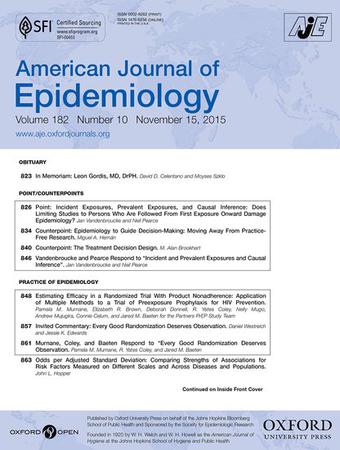
The American Journal of Epidemiology is the oldest and one of the premier epidemiologic journals devoted to the publication of empirical research findings, opinion pieces, and methodological developments in the field of epidemiologic research.
It is a peer-reviewed journal aimed at both fellow epidemiologists and those who use epidemiologic data, including public health workers and clinicians.




 京公网安备 11010802042870号
京ICP备2023020795号-1
京公网安备 11010802042870号
京ICP备2023020795号-1

 分享
分享
 求助内容:
求助内容: 应助结果提醒方式:
 扫码关注我们
