{"title":"计算机认知再训练(ReadON.ai)在诊断为注意缺陷多动障碍儿童中的应用。","authors":"Jagriti Grover, Sampurna Chakraborty, Rushi, Sonia Puar","doi":"10.4103/ipj.ipj_259_24","DOIUrl":null,"url":null,"abstract":"<p><strong>Background: </strong>ADHD affects 8% of children and adolescents globally, marked by significant deficits in cognitive abilities, which leads to various emotional, behavioral, and adjustment issues. Traditional methods like medication and behavior therapy fall short in managing ADHD's cognitive domains, urging the adoption of innovative approaches like cognitive training programs specifically adopting the emerging technology such as ReadON.ai. However, the precise influence of computerized cognitive retraining on ADHD remains understudied.</p><p><strong>Aim: </strong>To study the feasibility of computerized cognitive retraining (ReadON.ai) in enhancing cognitive abilities in children diagnosed with attention deficit hyperactivity disorder.</p><p><strong>Materials and methods: </strong>The study employs a pre- and post-intervention design including six participants (7-11 years), diagnosed with ADHD according to DSM-5 criteria. Each participant underwent 30 hours of computerized cognitive retraining (ReadON.ai) over ten weeks, targeting attention and concentration, working memory, memory and learning, perceptual abilities, and reasoning skills. Assessments before and after intervention included tools like Conners' 4<sup>TM</sup> Parent version and ReadON.ai CSA. Statistical analysis was conducted using IBM SPSS version 28.</p><p><strong>Results: </strong>Paired <i>t</i>-test results revealed a significant difference in pre-test and post-test means of attention and concentration (t = -6.873, <i>P</i> < 0.001), working memory (t = -5.771, <i>P</i> < 0.001), learning and memory (t = -12.491, <i>P</i> < 0.001), perception (t = 14.398, <i>P</i> < 0.004), reasoning (t = -3.464, <i>P</i> < 0.018), hyperactivity (t = 11.073, <i>P</i> < 0.001), impulsivity (t = 11.948, <i>P</i> < 0.001), emotional dysregulation (t = 8.242, <i>P</i> < 0.001), anxious thoughts (t = 2.67 <i>P</i> = 0.219), depressed mood (t = 2.924, <i>P</i> = 0.020), school work (t = 7.387, <i>P</i> = 0.001) and peer interaction (t = 4.632, <i>P</i> = 0.006) with medium to large effect size.</p><p><strong>Conclusion: </strong>Computerized cognitive retraining through ReadON.ai is feasible in enhancing cognitive abilities like attention and concentration, working memory, memory and learning, perception, and reasoning among children with ADHD.</p>","PeriodicalId":13534,"journal":{"name":"Industrial Psychiatry Journal","volume":"33 2","pages":"346-353"},"PeriodicalIF":0.0000,"publicationDate":"2024-07-01","publicationTypes":"Journal Article","fieldsOfStudy":null,"isOpenAccess":false,"openAccessPdf":"https://www.ncbi.nlm.nih.gov/pmc/articles/PMC11784689/pdf/","citationCount":"0","resultStr":"{\"title\":\"Computerized cognitive retraining (ReadON.ai) among children diagnosed with attention deficit hyperactivity disorder.\",\"authors\":\"Jagriti Grover, Sampurna Chakraborty, Rushi, Sonia Puar\",\"doi\":\"10.4103/ipj.ipj_259_24\",\"DOIUrl\":null,\"url\":null,\"abstract\":\"<p><strong>Background: </strong>ADHD affects 8% of children and adolescents globally, marked by significant deficits in cognitive abilities, which leads to various emotional, behavioral, and adjustment issues. Traditional methods like medication and behavior therapy fall short in managing ADHD's cognitive domains, urging the adoption of innovative approaches like cognitive training programs specifically adopting the emerging technology such as ReadON.ai. However, the precise influence of computerized cognitive retraining on ADHD remains understudied.</p><p><strong>Aim: </strong>To study the feasibility of computerized cognitive retraining (ReadON.ai) in enhancing cognitive abilities in children diagnosed with attention deficit hyperactivity disorder.</p><p><strong>Materials and methods: </strong>The study employs a pre- and post-intervention design including six participants (7-11 years), diagnosed with ADHD according to DSM-5 criteria. Each participant underwent 30 hours of computerized cognitive retraining (ReadON.ai) over ten weeks, targeting attention and concentration, working memory, memory and learning, perceptual abilities, and reasoning skills. Assessments before and after intervention included tools like Conners' 4<sup>TM</sup> Parent version and ReadON.ai CSA. Statistical analysis was conducted using IBM SPSS version 28.</p><p><strong>Results: </strong>Paired <i>t</i>-test results revealed a significant difference in pre-test and post-test means of attention and concentration (t = -6.873, <i>P</i> < 0.001), working memory (t = -5.771, <i>P</i> < 0.001), learning and memory (t = -12.491, <i>P</i> < 0.001), perception (t = 14.398, <i>P</i> < 0.004), reasoning (t = -3.464, <i>P</i> < 0.018), hyperactivity (t = 11.073, <i>P</i> < 0.001), impulsivity (t = 11.948, <i>P</i> < 0.001), emotional dysregulation (t = 8.242, <i>P</i> < 0.001), anxious thoughts (t = 2.67 <i>P</i> = 0.219), depressed mood (t = 2.924, <i>P</i> = 0.020), school work (t = 7.387, <i>P</i> = 0.001) and peer interaction (t = 4.632, <i>P</i> = 0.006) with medium to large effect size.</p><p><strong>Conclusion: </strong>Computerized cognitive retraining through ReadON.ai is feasible in enhancing cognitive abilities like attention and concentration, working memory, memory and learning, perception, and reasoning among children with ADHD.</p>\",\"PeriodicalId\":13534,\"journal\":{\"name\":\"Industrial Psychiatry Journal\",\"volume\":\"33 2\",\"pages\":\"346-353\"},\"PeriodicalIF\":0.0000,\"publicationDate\":\"2024-07-01\",\"publicationTypes\":\"Journal Article\",\"fieldsOfStudy\":null,\"isOpenAccess\":false,\"openAccessPdf\":\"https://www.ncbi.nlm.nih.gov/pmc/articles/PMC11784689/pdf/\",\"citationCount\":\"0\",\"resultStr\":null,\"platform\":\"Semanticscholar\",\"paperid\":null,\"PeriodicalName\":\"Industrial Psychiatry Journal\",\"FirstCategoryId\":\"1085\",\"ListUrlMain\":\"https://doi.org/10.4103/ipj.ipj_259_24\",\"RegionNum\":0,\"RegionCategory\":null,\"ArticlePicture\":[],\"TitleCN\":null,\"AbstractTextCN\":null,\"PMCID\":null,\"EPubDate\":\"2024/12/17 0:00:00\",\"PubModel\":\"Epub\",\"JCR\":\"\",\"JCRName\":\"\",\"Score\":null,\"Total\":0}","platform":"Semanticscholar","paperid":null,"PeriodicalName":"Industrial Psychiatry Journal","FirstCategoryId":"1085","ListUrlMain":"https://doi.org/10.4103/ipj.ipj_259_24","RegionNum":0,"RegionCategory":null,"ArticlePicture":[],"TitleCN":null,"AbstractTextCN":null,"PMCID":null,"EPubDate":"2024/12/17 0:00:00","PubModel":"Epub","JCR":"","JCRName":"","Score":null,"Total":0}
引用次数: 0
摘要
背景:ADHD影响全球8%的儿童和青少年,其特征是认知能力显著缺陷,导致各种情绪、行为和适应问题。药物治疗和行为疗法等传统方法在管理多动症的认知领域方面存在不足,因此迫切需要采用创新方法,比如认知训练项目,特别是采用ReadON.ai等新兴技术。然而,计算机化认知再训练对多动症的确切影响仍未得到充分研究。目的:探讨计算机认知再训练(ReadON.ai)提高注意缺陷多动障碍患儿认知能力的可行性。材料和方法:本研究采用干预前和干预后设计,包括6名根据DSM-5标准诊断为ADHD的参与者(7-11岁)。每位参与者在十周内接受了30小时的计算机认知再训练(ReadON.ai),目标是注意力和注意力、工作记忆、记忆和学习、感知能力和推理技能。干预前后的评估包括Conners的4TM Parent版本和ReadON等工具。ai CSA。采用IBM SPSS 28版进行统计分析。结果:配对t检验结果显示显著差异在检测前和检测后的注意力和浓度(t = -6.873, P < 0.001),工作记忆(t = -5.771, P < 0.001),学习和记忆(t = -12.491, P < 0.001),感知(t = 14.398, P < 0.004),推理(t = -3.464, P < 0.018),多动(t = 11.073, P < 0.001),冲动(t = 11.948, P < 0.001),情绪失调(t = 8.242, P < 0.001),焦虑的想法(t = 2.67 P = 0.219),抑郁情绪(t = 2.924,P = 0.020)、学业(t = 7.387, P = 0.001)和同伴互动(t = 4.632, P = 0.006)具有中大型效应量。结论:通过ReadON进行计算机化认知再训练。人工智能在提高多动症儿童的注意力和注意力、工作记忆、记忆和学习、感知和推理等认知能力方面是可行的。
Computerized cognitive retraining (ReadON.ai) among children diagnosed with attention deficit hyperactivity disorder.
Background: ADHD affects 8% of children and adolescents globally, marked by significant deficits in cognitive abilities, which leads to various emotional, behavioral, and adjustment issues. Traditional methods like medication and behavior therapy fall short in managing ADHD's cognitive domains, urging the adoption of innovative approaches like cognitive training programs specifically adopting the emerging technology such as ReadON.ai. However, the precise influence of computerized cognitive retraining on ADHD remains understudied.
Aim: To study the feasibility of computerized cognitive retraining (ReadON.ai) in enhancing cognitive abilities in children diagnosed with attention deficit hyperactivity disorder.
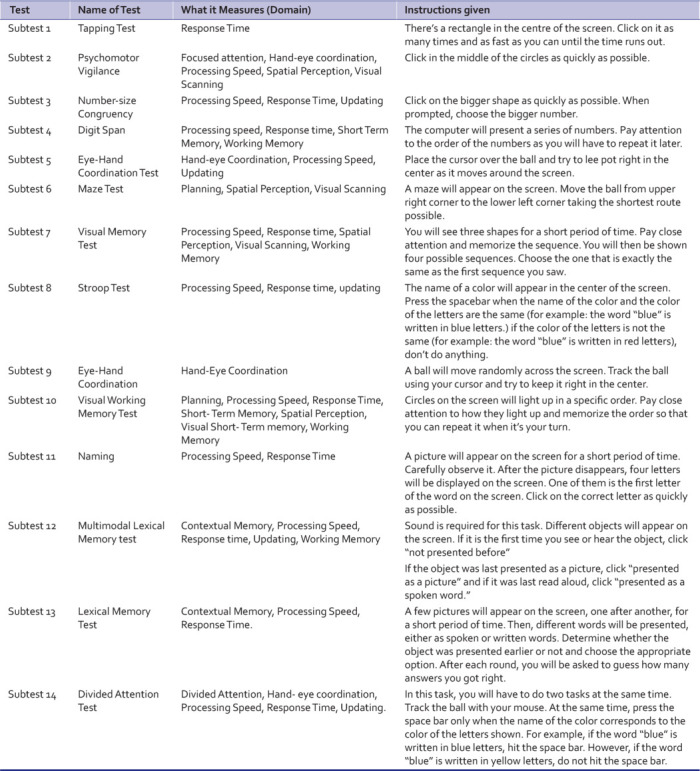
Materials and methods: The study employs a pre- and post-intervention design including six participants (7-11 years), diagnosed with ADHD according to DSM-5 criteria. Each participant underwent 30 hours of computerized cognitive retraining (ReadON.ai) over ten weeks, targeting attention and concentration, working memory, memory and learning, perceptual abilities, and reasoning skills. Assessments before and after intervention included tools like Conners' 4TM Parent version and ReadON.ai CSA. Statistical analysis was conducted using IBM SPSS version 28.
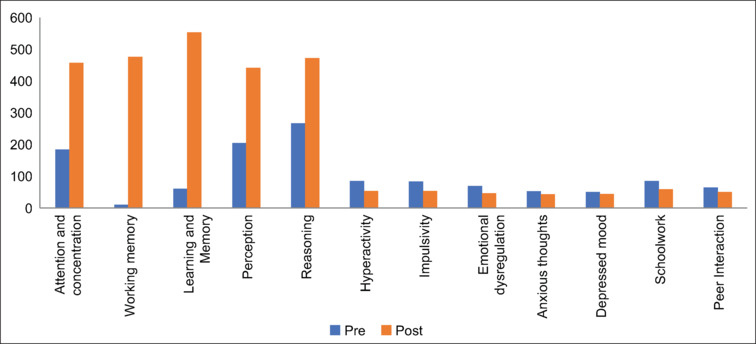
Results: Paired t-test results revealed a significant difference in pre-test and post-test means of attention and concentration (t = -6.873, P < 0.001), working memory (t = -5.771, P < 0.001), learning and memory (t = -12.491, P < 0.001), perception (t = 14.398, P < 0.004), reasoning (t = -3.464, P < 0.018), hyperactivity (t = 11.073, P < 0.001), impulsivity (t = 11.948, P < 0.001), emotional dysregulation (t = 8.242, P < 0.001), anxious thoughts (t = 2.67 P = 0.219), depressed mood (t = 2.924, P = 0.020), school work (t = 7.387, P = 0.001) and peer interaction (t = 4.632, P = 0.006) with medium to large effect size.
Conclusion: Computerized cognitive retraining through ReadON.ai is feasible in enhancing cognitive abilities like attention and concentration, working memory, memory and learning, perception, and reasoning among children with ADHD.





 京公网安备 11010802042870号
京ICP备2023020795号-1
京公网安备 11010802042870号
京ICP备2023020795号-1

 分享
分享

 求助内容:
求助内容: 应助结果提醒方式:
 扫码关注我们
