Zewei Chen , Shangxi Fu , Jun Wu , Xiaoling Luo , Zhiguo Mao , Dechao Xu , Xiang Gao
{"title":"达拉单抗治疗硼替佐米难治性增殖性肾小球肾炎伴同种异体肾移植单克隆免疫球蛋白沉积一例报告。","authors":"Zewei Chen , Shangxi Fu , Jun Wu , Xiaoling Luo , Zhiguo Mao , Dechao Xu , Xiang Gao","doi":"10.1016/j.xkme.2024.100945","DOIUrl":null,"url":null,"abstract":"<div><div>Despite treatment with immunosuppressive or clone-targeted chemotherapy, patients with proliferative glomerulonephritis with monoclonal immunoglobulin deposit (PGNMID) frequently progress into end-stage kidney failure, and early recurrence of PGNMID after kidney transplantation is common. The standard management of PGNMID has been unclear, currently based on data from small cohorts, which requires a need for additional therapeutic regimens in this disease. A human IgG monoclonal antibody that targets CD38 (daratumumab) was recently identified as a potential therapeutic option for treating PGNMID. To date, rare data on the application of daratumumab in patients with PGNMID after kidney transplantation have been reported. Herein, we first described a unique patient with recurrent PGNMID in kidney allograft who was treated with daratumumab after not responding to bortezomib-based regimens. Daratumumab was shown to successfully reduce proteinuria with stabilizing kidney function and was well-tolerated in this patient, which supports that daratumumab appears to be a viable option for treatment-resistant PGNMID.</div></div>","PeriodicalId":17885,"journal":{"name":"Kidney Medicine","volume":"7 2","pages":"Article 100945"},"PeriodicalIF":3.4000,"publicationDate":"2025-02-01","publicationTypes":"Journal Article","fieldsOfStudy":null,"isOpenAccess":false,"openAccessPdf":"https://www.ncbi.nlm.nih.gov/pmc/articles/PMC11786820/pdf/","citationCount":"0","resultStr":"{\"title\":\"Daratumumab for Bortezomib-Refractory Proliferative Glomerulonephritis With Monoclonal Immunoglobulin Deposits in Kidney Allograft: A Case Report\",\"authors\":\"Zewei Chen , Shangxi Fu , Jun Wu , Xiaoling Luo , Zhiguo Mao , Dechao Xu , Xiang Gao\",\"doi\":\"10.1016/j.xkme.2024.100945\",\"DOIUrl\":null,\"url\":null,\"abstract\":\"<div><div>Despite treatment with immunosuppressive or clone-targeted chemotherapy, patients with proliferative glomerulonephritis with monoclonal immunoglobulin deposit (PGNMID) frequently progress into end-stage kidney failure, and early recurrence of PGNMID after kidney transplantation is common. The standard management of PGNMID has been unclear, currently based on data from small cohorts, which requires a need for additional therapeutic regimens in this disease. A human IgG monoclonal antibody that targets CD38 (daratumumab) was recently identified as a potential therapeutic option for treating PGNMID. To date, rare data on the application of daratumumab in patients with PGNMID after kidney transplantation have been reported. Herein, we first described a unique patient with recurrent PGNMID in kidney allograft who was treated with daratumumab after not responding to bortezomib-based regimens. Daratumumab was shown to successfully reduce proteinuria with stabilizing kidney function and was well-tolerated in this patient, which supports that daratumumab appears to be a viable option for treatment-resistant PGNMID.</div></div>\",\"PeriodicalId\":17885,\"journal\":{\"name\":\"Kidney Medicine\",\"volume\":\"7 2\",\"pages\":\"Article 100945\"},\"PeriodicalIF\":3.4000,\"publicationDate\":\"2025-02-01\",\"publicationTypes\":\"Journal Article\",\"fieldsOfStudy\":null,\"isOpenAccess\":false,\"openAccessPdf\":\"https://www.ncbi.nlm.nih.gov/pmc/articles/PMC11786820/pdf/\",\"citationCount\":\"0\",\"resultStr\":null,\"platform\":\"Semanticscholar\",\"paperid\":null,\"PeriodicalName\":\"Kidney Medicine\",\"FirstCategoryId\":\"1085\",\"ListUrlMain\":\"https://www.sciencedirect.com/science/article/pii/S2590059524001560\",\"RegionNum\":0,\"RegionCategory\":null,\"ArticlePicture\":[],\"TitleCN\":null,\"AbstractTextCN\":null,\"PMCID\":null,\"EPubDate\":\"2024/12/15 0:00:00\",\"PubModel\":\"Epub\",\"JCR\":\"Q1\",\"JCRName\":\"UROLOGY & NEPHROLOGY\",\"Score\":null,\"Total\":0}","platform":"Semanticscholar","paperid":null,"PeriodicalName":"Kidney Medicine","FirstCategoryId":"1085","ListUrlMain":"https://www.sciencedirect.com/science/article/pii/S2590059524001560","RegionNum":0,"RegionCategory":null,"ArticlePicture":[],"TitleCN":null,"AbstractTextCN":null,"PMCID":null,"EPubDate":"2024/12/15 0:00:00","PubModel":"Epub","JCR":"Q1","JCRName":"UROLOGY & NEPHROLOGY","Score":null,"Total":0}
Daratumumab for Bortezomib-Refractory Proliferative Glomerulonephritis With Monoclonal Immunoglobulin Deposits in Kidney Allograft: A Case Report
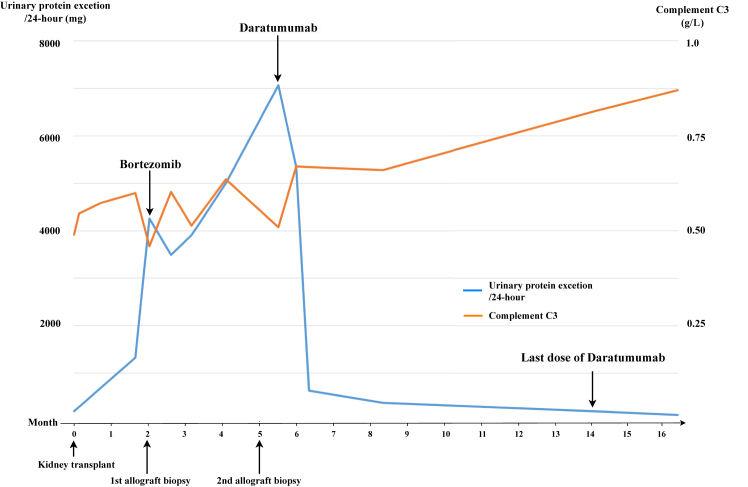
Despite treatment with immunosuppressive or clone-targeted chemotherapy, patients with proliferative glomerulonephritis with monoclonal immunoglobulin deposit (PGNMID) frequently progress into end-stage kidney failure, and early recurrence of PGNMID after kidney transplantation is common. The standard management of PGNMID has been unclear, currently based on data from small cohorts, which requires a need for additional therapeutic regimens in this disease. A human IgG monoclonal antibody that targets CD38 (daratumumab) was recently identified as a potential therapeutic option for treating PGNMID. To date, rare data on the application of daratumumab in patients with PGNMID after kidney transplantation have been reported. Herein, we first described a unique patient with recurrent PGNMID in kidney allograft who was treated with daratumumab after not responding to bortezomib-based regimens. Daratumumab was shown to successfully reduce proteinuria with stabilizing kidney function and was well-tolerated in this patient, which supports that daratumumab appears to be a viable option for treatment-resistant PGNMID.





 京公网安备 11010802042870号
京ICP备2023020795号-1
京公网安备 11010802042870号
京ICP备2023020795号-1

 分享
分享
 求助内容:
求助内容: 应助结果提醒方式:
 扫码关注我们
