Caleb Morgan MD , Amanda Firoved MOT, OTR , Patrick J. Denard MD , Justin W. Griffin MD
{"title":"全肩关节置换术后社区社会经济状况与患者报告的临床改善的关系。","authors":"Caleb Morgan MD , Amanda Firoved MOT, OTR , Patrick J. Denard MD , Justin W. Griffin MD","doi":"10.1016/j.jseint.2024.08.205","DOIUrl":null,"url":null,"abstract":"<div><h3>Background</h3><div>Prior studies have demonstrated higher preoperative pain and decreased patient-reported outcomes (PROs) following total shoulder arthroplasty (TSA) in individuals with lower socioeconomic status (SES). The goal of this study was to investigate the rate of clinical improvement following TSA in individuals with differing SES.</div></div><div><h3>Methods</h3><div>Individuals included in this study underwent anatomic or reverse TSA by 2 surgeons between May 2018 and January 2021. Patients were split into 3 SES groups (low, moderate, and high) based on neighborhood SES level as determined by Area Deprivation Index. PROs were collected preoperatively and at 9 weeks, 26 weeks, 1 year, and 2 years postoperatively. Shoulder-specific PROs included the American Shoulder and Elbows Surgeons shoulder score, 10-point visual analog scale for pain, single-assessment numeric evaluation, and Western Ontario Osteoarthritis of the Shoulder Index. The Veterans Rand 12-Item health survey was used to measure overall well-being. We used a mixed-design analysis of variance to determine the interaction of time and improvement in PROs following surgery followed by 1-way mixed-design analysis of variance with post-hoc analysis.</div></div><div><h3>Results</h3><div>One hundred seventy individuals (low SES n = 34, moderate n = 90, high n = 46) met the inclusion criteria and were included in this study. There were no significant differences between groups for body mass index or age at time of surgery. All groups significantly improved from baseline scores on all PROs (<em>P</em> < .001) with the majority of improvement being achieved within the first year after surgery. There were no significant differences in rate of clinical improvement on PROs among the groups when compared to their respective preoperative scores. Significant differences were discovered when comparing groups independent of time with the low- and moderate-SES groups scoring significantly lower on American Shoulder and Elbows Surgeons shoulder score when compared to the high-SES group (<em>P</em> < .01) and the low-SES group reporting significantly higher visual analog scale pain when compared to the high-SES group (<em>P</em> = .034).</div></div><div><h3>Conclusion</h3><div>Individuals with lower SES at the neighborhood level report higher pain and decreased shoulder function both preoperatively and postoperatively following TSA; however, the rate of clinical improvement following surgery in this group is comparable to individuals with higher SES when compared to baseline scores. All groups demonstrated significant improvement following surgery, suggesting TSA remains a successful operation regardless of SES.</div></div>","PeriodicalId":34444,"journal":{"name":"JSES International","volume":"9 1","pages":"Pages 175-180"},"PeriodicalIF":2.0000,"publicationDate":"2025-01-01","publicationTypes":"Journal Article","fieldsOfStudy":null,"isOpenAccess":false,"openAccessPdf":"https://www.ncbi.nlm.nih.gov/pmc/articles/PMC11784469/pdf/","citationCount":"0","resultStr":"{\"title\":\"Association of neighborhood level socioeconomic status and patient reported clinical improvement following total shoulder arthroplasty\",\"authors\":\"Caleb Morgan MD , Amanda Firoved MOT, OTR , Patrick J. Denard MD , Justin W. Griffin MD\",\"doi\":\"10.1016/j.jseint.2024.08.205\",\"DOIUrl\":null,\"url\":null,\"abstract\":\"<div><h3>Background</h3><div>Prior studies have demonstrated higher preoperative pain and decreased patient-reported outcomes (PROs) following total shoulder arthroplasty (TSA) in individuals with lower socioeconomic status (SES). The goal of this study was to investigate the rate of clinical improvement following TSA in individuals with differing SES.</div></div><div><h3>Methods</h3><div>Individuals included in this study underwent anatomic or reverse TSA by 2 surgeons between May 2018 and January 2021. Patients were split into 3 SES groups (low, moderate, and high) based on neighborhood SES level as determined by Area Deprivation Index. PROs were collected preoperatively and at 9 weeks, 26 weeks, 1 year, and 2 years postoperatively. Shoulder-specific PROs included the American Shoulder and Elbows Surgeons shoulder score, 10-point visual analog scale for pain, single-assessment numeric evaluation, and Western Ontario Osteoarthritis of the Shoulder Index. The Veterans Rand 12-Item health survey was used to measure overall well-being. We used a mixed-design analysis of variance to determine the interaction of time and improvement in PROs following surgery followed by 1-way mixed-design analysis of variance with post-hoc analysis.</div></div><div><h3>Results</h3><div>One hundred seventy individuals (low SES n = 34, moderate n = 90, high n = 46) met the inclusion criteria and were included in this study. There were no significant differences between groups for body mass index or age at time of surgery. All groups significantly improved from baseline scores on all PROs (<em>P</em> < .001) with the majority of improvement being achieved within the first year after surgery. There were no significant differences in rate of clinical improvement on PROs among the groups when compared to their respective preoperative scores. Significant differences were discovered when comparing groups independent of time with the low- and moderate-SES groups scoring significantly lower on American Shoulder and Elbows Surgeons shoulder score when compared to the high-SES group (<em>P</em> < .01) and the low-SES group reporting significantly higher visual analog scale pain when compared to the high-SES group (<em>P</em> = .034).</div></div><div><h3>Conclusion</h3><div>Individuals with lower SES at the neighborhood level report higher pain and decreased shoulder function both preoperatively and postoperatively following TSA; however, the rate of clinical improvement following surgery in this group is comparable to individuals with higher SES when compared to baseline scores. All groups demonstrated significant improvement following surgery, suggesting TSA remains a successful operation regardless of SES.</div></div>\",\"PeriodicalId\":34444,\"journal\":{\"name\":\"JSES International\",\"volume\":\"9 1\",\"pages\":\"Pages 175-180\"},\"PeriodicalIF\":2.0000,\"publicationDate\":\"2025-01-01\",\"publicationTypes\":\"Journal Article\",\"fieldsOfStudy\":null,\"isOpenAccess\":false,\"openAccessPdf\":\"https://www.ncbi.nlm.nih.gov/pmc/articles/PMC11784469/pdf/\",\"citationCount\":\"0\",\"resultStr\":null,\"platform\":\"Semanticscholar\",\"paperid\":null,\"PeriodicalName\":\"JSES International\",\"FirstCategoryId\":\"1085\",\"ListUrlMain\":\"https://www.sciencedirect.com/science/article/pii/S2666638324003979\",\"RegionNum\":0,\"RegionCategory\":null,\"ArticlePicture\":[],\"TitleCN\":null,\"AbstractTextCN\":null,\"PMCID\":null,\"EPubDate\":\"2024/9/14 0:00:00\",\"PubModel\":\"Epub\",\"JCR\":\"Q2\",\"JCRName\":\"Medicine\",\"Score\":null,\"Total\":0}","platform":"Semanticscholar","paperid":null,"PeriodicalName":"JSES International","FirstCategoryId":"1085","ListUrlMain":"https://www.sciencedirect.com/science/article/pii/S2666638324003979","RegionNum":0,"RegionCategory":null,"ArticlePicture":[],"TitleCN":null,"AbstractTextCN":null,"PMCID":null,"EPubDate":"2024/9/14 0:00:00","PubModel":"Epub","JCR":"Q2","JCRName":"Medicine","Score":null,"Total":0}
引用次数: 0
摘要
背景:先前的研究表明,在社会经济地位(SES)较低的个体中,全肩关节置换术(TSA)后术前疼痛较高,患者报告的结果(PROs)较低。本研究的目的是调查不同社会地位的个体在接受TSA后的临床改善率。方法:本研究纳入的个体在2018年5月至2021年1月期间由2名外科医生进行了解剖或反向TSA。根据区域剥夺指数(Area Deprivation Index)将患者分为低、中、高3组。分别于术前、术后9周、26周、1年、2年收集pro。肩关节特异性评分包括美国肩关节外科医生肩关节评分、疼痛的10分视觉模拟量表、单一评估数值评估和西部安大略肩关节指数。退伍军人兰德12项健康调查被用来衡量整体幸福感。我们采用混合设计方差分析来确定手术后PROs的时间和改善之间的相互作用,然后采用单向混合设计方差分析和事后分析。结果:170名符合纳入标准的个体(低社会地位n = 34,中等社会地位n = 90,高社会地位n = 46)被纳入本研究。两组之间的体重指数和手术时的年龄没有显著差异。所有组的所有PROs评分均较基线有显著提高(P P P = 0.034)。结论:社会经济地位较低的个体在TSA术前和术后都报告了更高的疼痛和肩部功能下降;然而,与基线评分相比,该组手术后的临床改善率与SES较高的个体相当。所有组术后表现出显著的改善,表明无论SES如何,TSA仍然是成功的手术。
Association of neighborhood level socioeconomic status and patient reported clinical improvement following total shoulder arthroplasty
Background
Prior studies have demonstrated higher preoperative pain and decreased patient-reported outcomes (PROs) following total shoulder arthroplasty (TSA) in individuals with lower socioeconomic status (SES). The goal of this study was to investigate the rate of clinical improvement following TSA in individuals with differing SES.
Methods
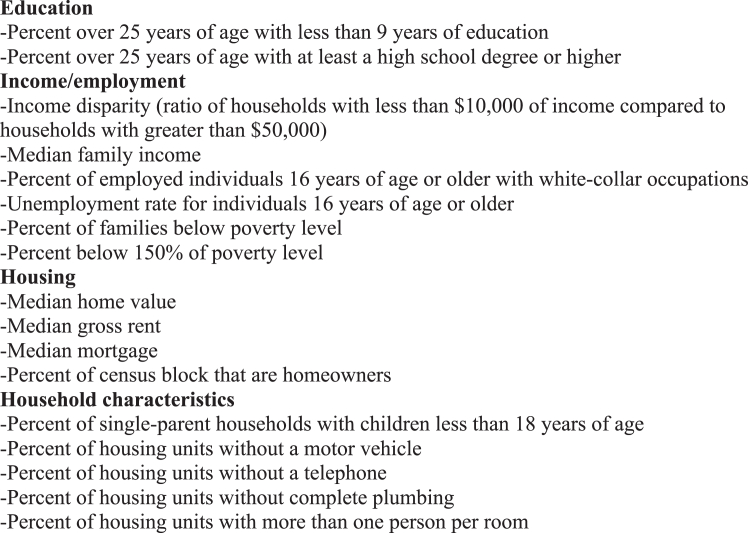
Individuals included in this study underwent anatomic or reverse TSA by 2 surgeons between May 2018 and January 2021. Patients were split into 3 SES groups (low, moderate, and high) based on neighborhood SES level as determined by Area Deprivation Index. PROs were collected preoperatively and at 9 weeks, 26 weeks, 1 year, and 2 years postoperatively. Shoulder-specific PROs included the American Shoulder and Elbows Surgeons shoulder score, 10-point visual analog scale for pain, single-assessment numeric evaluation, and Western Ontario Osteoarthritis of the Shoulder Index. The Veterans Rand 12-Item health survey was used to measure overall well-being. We used a mixed-design analysis of variance to determine the interaction of time and improvement in PROs following surgery followed by 1-way mixed-design analysis of variance with post-hoc analysis.
Results
One hundred seventy individuals (low SES n = 34, moderate n = 90, high n = 46) met the inclusion criteria and were included in this study. There were no significant differences between groups for body mass index or age at time of surgery. All groups significantly improved from baseline scores on all PROs (P < .001) with the majority of improvement being achieved within the first year after surgery. There were no significant differences in rate of clinical improvement on PROs among the groups when compared to their respective preoperative scores. Significant differences were discovered when comparing groups independent of time with the low- and moderate-SES groups scoring significantly lower on American Shoulder and Elbows Surgeons shoulder score when compared to the high-SES group (P < .01) and the low-SES group reporting significantly higher visual analog scale pain when compared to the high-SES group (P = .034).
Conclusion
Individuals with lower SES at the neighborhood level report higher pain and decreased shoulder function both preoperatively and postoperatively following TSA; however, the rate of clinical improvement following surgery in this group is comparable to individuals with higher SES when compared to baseline scores. All groups demonstrated significant improvement following surgery, suggesting TSA remains a successful operation regardless of SES.






 京公网安备 11010802042870号
京ICP备2023020795号-1
京公网安备 11010802042870号
京ICP备2023020795号-1

 分享
分享
 求助内容:
求助内容: 应助结果提醒方式:
 扫码关注我们
