Riva Satya Radiansyah, Yuri Pamungkas, Ilham Ikhtiar
{"title":"镁作为尼莫地平辅助治疗蛛网膜下腔出血:荟萃分析。","authors":"Riva Satya Radiansyah, Yuri Pamungkas, Ilham Ikhtiar","doi":"10.12701/jyms.2025.42.26","DOIUrl":null,"url":null,"abstract":"<p><strong>Background: </strong>Subarachnoid hemorrhage (SAH) is a devastating neurological condition with high morbidity and mortality rates. Although nimodipine is widely used in the management of SAH, the potential benefits of magnesium as adjunct therapy remain unclear. This meta-analysis aimed to evaluate the efficacy and safety of combining magnesium with nimodipine for the management of SAH.</p><p><strong>Methods: </strong>A comprehensive literature search was conducted using PubMed, ScienceDirect, Google Scholar, and the Cochrane Library. Randomized controlled trials and prospective cohort studies comparing magnesium plus nimodipine versus nimodipine alone in patients with SAH were included. Key outcomes included cerebral vasospasm (CV), delayed cerebral ischemia (DCI), functional outcomes, mortality, and adverse events.</p><p><strong>Results: </strong>Twelve studies involving 2,338 patients were included. The combination of magnesium and nimodipine significantly reduced the incidence of CV (odds ratio [OR], 0.53; 95% confidence interval [CI], 0.29-0.95; p=0.03) and DCI (OR, 0.52; 95% CI, 0.31-0.87; p=0.01) compared to nimodipine alone. However, no significant differences were found in functional outcomes (modified Rankin Scale: OR, 0.97; p=0.75; Glasgow Outcome Scale: OR, 0.81; p=0.24), mortality (OR, 0.97; p=0.83), or secondary cerebral infarction (OR, 0.38; p=0.12). The incidence of adverse events was higher in the combination group; however, this difference was not statistically significant (OR, 3.14; p=0.33).</p><p><strong>Conclusion: </strong>Adding magnesium to nimodipine therapy in patients with SAH may help reduce CV and DCI incidence but does not significantly improve functional outcomes or mortality. Further large-scale studies are needed to optimize the dosing regimens and confirm these findings.</p>","PeriodicalId":74020,"journal":{"name":"Journal of Yeungnam medical science","volume":"42 ","pages":"26"},"PeriodicalIF":1.4000,"publicationDate":"2025-01-01","publicationTypes":"Journal Article","fieldsOfStudy":null,"isOpenAccess":false,"openAccessPdf":"https://www.ncbi.nlm.nih.gov/pmc/articles/PMC12005684/pdf/","citationCount":"0","resultStr":"{\"title\":\"Magnesium as an adjunct to nimodipine in subarachnoid hemorrhage: a meta-analysis.\",\"authors\":\"Riva Satya Radiansyah, Yuri Pamungkas, Ilham Ikhtiar\",\"doi\":\"10.12701/jyms.2025.42.26\",\"DOIUrl\":null,\"url\":null,\"abstract\":\"<p><strong>Background: </strong>Subarachnoid hemorrhage (SAH) is a devastating neurological condition with high morbidity and mortality rates. Although nimodipine is widely used in the management of SAH, the potential benefits of magnesium as adjunct therapy remain unclear. This meta-analysis aimed to evaluate the efficacy and safety of combining magnesium with nimodipine for the management of SAH.</p><p><strong>Methods: </strong>A comprehensive literature search was conducted using PubMed, ScienceDirect, Google Scholar, and the Cochrane Library. Randomized controlled trials and prospective cohort studies comparing magnesium plus nimodipine versus nimodipine alone in patients with SAH were included. Key outcomes included cerebral vasospasm (CV), delayed cerebral ischemia (DCI), functional outcomes, mortality, and adverse events.</p><p><strong>Results: </strong>Twelve studies involving 2,338 patients were included. The combination of magnesium and nimodipine significantly reduced the incidence of CV (odds ratio [OR], 0.53; 95% confidence interval [CI], 0.29-0.95; p=0.03) and DCI (OR, 0.52; 95% CI, 0.31-0.87; p=0.01) compared to nimodipine alone. However, no significant differences were found in functional outcomes (modified Rankin Scale: OR, 0.97; p=0.75; Glasgow Outcome Scale: OR, 0.81; p=0.24), mortality (OR, 0.97; p=0.83), or secondary cerebral infarction (OR, 0.38; p=0.12). The incidence of adverse events was higher in the combination group; however, this difference was not statistically significant (OR, 3.14; p=0.33).</p><p><strong>Conclusion: </strong>Adding magnesium to nimodipine therapy in patients with SAH may help reduce CV and DCI incidence but does not significantly improve functional outcomes or mortality. Further large-scale studies are needed to optimize the dosing regimens and confirm these findings.</p>\",\"PeriodicalId\":74020,\"journal\":{\"name\":\"Journal of Yeungnam medical science\",\"volume\":\"42 \",\"pages\":\"26\"},\"PeriodicalIF\":1.4000,\"publicationDate\":\"2025-01-01\",\"publicationTypes\":\"Journal Article\",\"fieldsOfStudy\":null,\"isOpenAccess\":false,\"openAccessPdf\":\"https://www.ncbi.nlm.nih.gov/pmc/articles/PMC12005684/pdf/\",\"citationCount\":\"0\",\"resultStr\":null,\"platform\":\"Semanticscholar\",\"paperid\":null,\"PeriodicalName\":\"Journal of Yeungnam medical science\",\"FirstCategoryId\":\"1085\",\"ListUrlMain\":\"https://doi.org/10.12701/jyms.2025.42.26\",\"RegionNum\":0,\"RegionCategory\":null,\"ArticlePicture\":[],\"TitleCN\":null,\"AbstractTextCN\":null,\"PMCID\":null,\"EPubDate\":\"2025/2/2 0:00:00\",\"PubModel\":\"Epub\",\"JCR\":\"Q3\",\"JCRName\":\"MEDICINE, GENERAL & INTERNAL\",\"Score\":null,\"Total\":0}","platform":"Semanticscholar","paperid":null,"PeriodicalName":"Journal of Yeungnam medical science","FirstCategoryId":"1085","ListUrlMain":"https://doi.org/10.12701/jyms.2025.42.26","RegionNum":0,"RegionCategory":null,"ArticlePicture":[],"TitleCN":null,"AbstractTextCN":null,"PMCID":null,"EPubDate":"2025/2/2 0:00:00","PubModel":"Epub","JCR":"Q3","JCRName":"MEDICINE, GENERAL & INTERNAL","Score":null,"Total":0}
Magnesium as an adjunct to nimodipine in subarachnoid hemorrhage: a meta-analysis.
Background: Subarachnoid hemorrhage (SAH) is a devastating neurological condition with high morbidity and mortality rates. Although nimodipine is widely used in the management of SAH, the potential benefits of magnesium as adjunct therapy remain unclear. This meta-analysis aimed to evaluate the efficacy and safety of combining magnesium with nimodipine for the management of SAH.
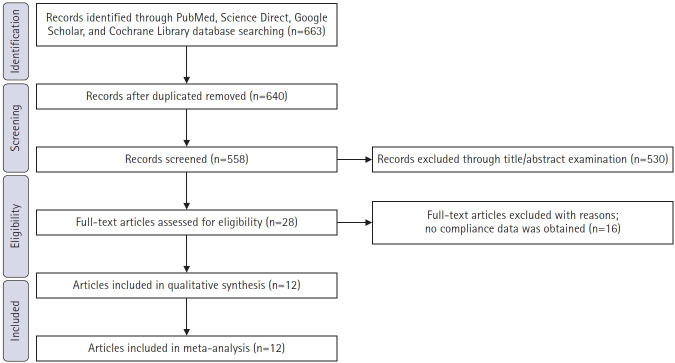
Methods: A comprehensive literature search was conducted using PubMed, ScienceDirect, Google Scholar, and the Cochrane Library. Randomized controlled trials and prospective cohort studies comparing magnesium plus nimodipine versus nimodipine alone in patients with SAH were included. Key outcomes included cerebral vasospasm (CV), delayed cerebral ischemia (DCI), functional outcomes, mortality, and adverse events.
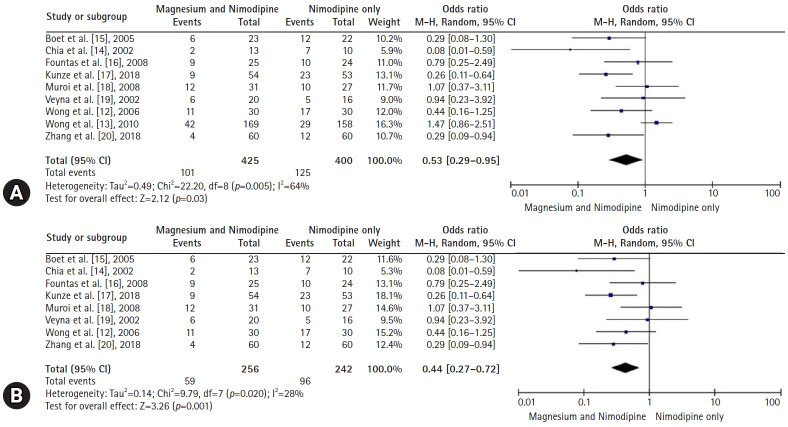
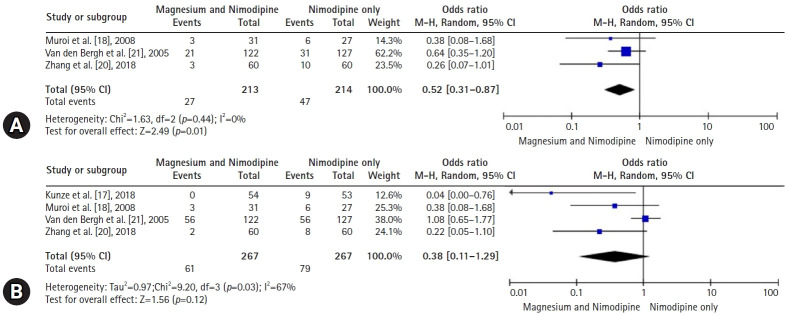
Results: Twelve studies involving 2,338 patients were included. The combination of magnesium and nimodipine significantly reduced the incidence of CV (odds ratio [OR], 0.53; 95% confidence interval [CI], 0.29-0.95; p=0.03) and DCI (OR, 0.52; 95% CI, 0.31-0.87; p=0.01) compared to nimodipine alone. However, no significant differences were found in functional outcomes (modified Rankin Scale: OR, 0.97; p=0.75; Glasgow Outcome Scale: OR, 0.81; p=0.24), mortality (OR, 0.97; p=0.83), or secondary cerebral infarction (OR, 0.38; p=0.12). The incidence of adverse events was higher in the combination group; however, this difference was not statistically significant (OR, 3.14; p=0.33).
Conclusion: Adding magnesium to nimodipine therapy in patients with SAH may help reduce CV and DCI incidence but does not significantly improve functional outcomes or mortality. Further large-scale studies are needed to optimize the dosing regimens and confirm these findings.




 京公网安备 11010802042870号
京ICP备2023020795号-1
京公网安备 11010802042870号
京ICP备2023020795号-1

 分享
分享

 求助内容:
求助内容: 应助结果提醒方式:
 扫码关注我们
