{"title":"探索切换金和铂纳米催化剂层对甲醇电氧化反应的协同影响","authors":"Raman Kumar , Perumal Viswanathan , Kyuwon Kim , Shanmugam Manivannan","doi":"10.1016/j.jelechem.2024.118905","DOIUrl":null,"url":null,"abstract":"<div><div>The quest for highly effective and durable electrocatalysts for methanol oxidation remains a contemporary research endeavour in the direct methanol fuel cells (DMFC) domain. Pt-based electrocatalysts remain the front-runner in DMFC due to their exceptional catalytic performance and stability irrespective of cost. In this regard, the present investigation delves into tuning the inherent synergy of the Au/Pt bi-metallic catalytic system by switching the gold (Au) and platinum (Pt) nanocatalyst layers toward boosting methanol electro-oxidation. The sequential electrodeposition strategy was adopted to form distinct catalyst models; Pt on Au (Au/Pt), Au on Pt (Pt/Au), and Au–Pt alloy. Interestingly, switching the outer layer of Au into Pt nanostructures via changing the order of electrodeposition (Pt/Au to Au/Pt), the resulting Au/Pt electrocatalyst exhibits remarkable efficiency and long-term durability regarding methanol oxidation reaction in comparison with mono-metallic Pt and commercial Pt–C. The synergistic effect attained by tuning Au/Pt catalyst layers arises from the following fact that the top Pt layer favours the direct methanol adsorption and its oxidation, while the underlying Au assists the transformation of electroformed CO-like intermediate species into CO<sub>2</sub> and protects the Pt surface from the CO surface poisoning, which makes present catalyst perform better for long duration.</div></div>","PeriodicalId":355,"journal":{"name":"Journal of Electroanalytical Chemistry","volume":"978 ","pages":"Article 118905"},"PeriodicalIF":4.1000,"publicationDate":"2025-02-01","publicationTypes":"Journal Article","fieldsOfStudy":null,"isOpenAccess":false,"openAccessPdf":"","citationCount":"0","resultStr":"{\"title\":\"Exploring the synergistic impact of switched gold and platinum nanocatalyst layers towards methanol electrooxidation reaction\",\"authors\":\"Raman Kumar , Perumal Viswanathan , Kyuwon Kim , Shanmugam Manivannan\",\"doi\":\"10.1016/j.jelechem.2024.118905\",\"DOIUrl\":null,\"url\":null,\"abstract\":\"<div><div>The quest for highly effective and durable electrocatalysts for methanol oxidation remains a contemporary research endeavour in the direct methanol fuel cells (DMFC) domain. Pt-based electrocatalysts remain the front-runner in DMFC due to their exceptional catalytic performance and stability irrespective of cost. In this regard, the present investigation delves into tuning the inherent synergy of the Au/Pt bi-metallic catalytic system by switching the gold (Au) and platinum (Pt) nanocatalyst layers toward boosting methanol electro-oxidation. The sequential electrodeposition strategy was adopted to form distinct catalyst models; Pt on Au (Au/Pt), Au on Pt (Pt/Au), and Au–Pt alloy. Interestingly, switching the outer layer of Au into Pt nanostructures via changing the order of electrodeposition (Pt/Au to Au/Pt), the resulting Au/Pt electrocatalyst exhibits remarkable efficiency and long-term durability regarding methanol oxidation reaction in comparison with mono-metallic Pt and commercial Pt–C. The synergistic effect attained by tuning Au/Pt catalyst layers arises from the following fact that the top Pt layer favours the direct methanol adsorption and its oxidation, while the underlying Au assists the transformation of electroformed CO-like intermediate species into CO<sub>2</sub> and protects the Pt surface from the CO surface poisoning, which makes present catalyst perform better for long duration.</div></div>\",\"PeriodicalId\":355,\"journal\":{\"name\":\"Journal of Electroanalytical Chemistry\",\"volume\":\"978 \",\"pages\":\"Article 118905\"},\"PeriodicalIF\":4.1000,\"publicationDate\":\"2025-02-01\",\"publicationTypes\":\"Journal Article\",\"fieldsOfStudy\":null,\"isOpenAccess\":false,\"openAccessPdf\":\"\",\"citationCount\":\"0\",\"resultStr\":null,\"platform\":\"Semanticscholar\",\"paperid\":null,\"PeriodicalName\":\"Journal of Electroanalytical Chemistry\",\"FirstCategoryId\":\"92\",\"ListUrlMain\":\"https://www.sciencedirect.com/science/article/pii/S1572665724008841\",\"RegionNum\":3,\"RegionCategory\":\"化学\",\"ArticlePicture\":[],\"TitleCN\":null,\"AbstractTextCN\":null,\"PMCID\":null,\"EPubDate\":\"2024/12/26 0:00:00\",\"PubModel\":\"Epub\",\"JCR\":\"Q1\",\"JCRName\":\"CHEMISTRY, ANALYTICAL\",\"Score\":null,\"Total\":0}","platform":"Semanticscholar","paperid":null,"PeriodicalName":"Journal of Electroanalytical Chemistry","FirstCategoryId":"92","ListUrlMain":"https://www.sciencedirect.com/science/article/pii/S1572665724008841","RegionNum":3,"RegionCategory":"化学","ArticlePicture":[],"TitleCN":null,"AbstractTextCN":null,"PMCID":null,"EPubDate":"2024/12/26 0:00:00","PubModel":"Epub","JCR":"Q1","JCRName":"CHEMISTRY, ANALYTICAL","Score":null,"Total":0}
Exploring the synergistic impact of switched gold and platinum nanocatalyst layers towards methanol electrooxidation reaction
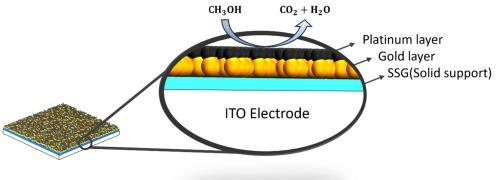
The quest for highly effective and durable electrocatalysts for methanol oxidation remains a contemporary research endeavour in the direct methanol fuel cells (DMFC) domain. Pt-based electrocatalysts remain the front-runner in DMFC due to their exceptional catalytic performance and stability irrespective of cost. In this regard, the present investigation delves into tuning the inherent synergy of the Au/Pt bi-metallic catalytic system by switching the gold (Au) and platinum (Pt) nanocatalyst layers toward boosting methanol electro-oxidation. The sequential electrodeposition strategy was adopted to form distinct catalyst models; Pt on Au (Au/Pt), Au on Pt (Pt/Au), and Au–Pt alloy. Interestingly, switching the outer layer of Au into Pt nanostructures via changing the order of electrodeposition (Pt/Au to Au/Pt), the resulting Au/Pt electrocatalyst exhibits remarkable efficiency and long-term durability regarding methanol oxidation reaction in comparison with mono-metallic Pt and commercial Pt–C. The synergistic effect attained by tuning Au/Pt catalyst layers arises from the following fact that the top Pt layer favours the direct methanol adsorption and its oxidation, while the underlying Au assists the transformation of electroformed CO-like intermediate species into CO2 and protects the Pt surface from the CO surface poisoning, which makes present catalyst perform better for long duration.
期刊介绍:
The Journal of Electroanalytical Chemistry is the foremost international journal devoted to the interdisciplinary subject of electrochemistry in all its aspects, theoretical as well as applied.
Electrochemistry is a wide ranging area that is in a state of continuous evolution. Rather than compiling a long list of topics covered by the Journal, the editors would like to draw particular attention to the key issues of novelty, topicality and quality. Papers should present new and interesting electrochemical science in a way that is accessible to the reader. The presentation and discussion should be at a level that is consistent with the international status of the Journal. Reports describing the application of well-established techniques to problems that are essentially technical will not be accepted. Similarly, papers that report observations but fail to provide adequate interpretation will be rejected by the Editors. Papers dealing with technical electrochemistry should be submitted to other specialist journals unless the authors can show that their work provides substantially new insights into electrochemical processes.




 京公网安备 11010802042870号
京ICP备2023020795号-1
京公网安备 11010802042870号
京ICP备2023020795号-1

 分享
分享
 求助内容:
求助内容: 应助结果提醒方式:
 扫码关注我们
