Jianan Zhang, Jinfeng Liu, Song Chen, Yixuan Wang, Weiyi Chen
{"title":"二氧化钛纳米管组装中空微纤维的制备、微观结构、体外生物相容性和给药性能","authors":"Jianan Zhang, Jinfeng Liu, Song Chen, Yixuan Wang, Weiyi Chen","doi":"10.1016/j.surfin.2025.105952","DOIUrl":null,"url":null,"abstract":"<div><div>Hollow microfibers (HMFs) are extensively employed as cell-supporting matrices in the biomedical applications. In this study, titania nanoparticle (NP) HMFs and titania nanotube (NT) HMFs were synthesized and their microstructure, in vitro biocompatibility and drug delivery property were investigated. Titania NP HMFs were first synthesized using gelatin fibers as sacrificial templates via a sol-gel route and then in situ hydrothermally transformed to titania NT HMFs. The resulting HMFs were systematically characterized by FE-SEM, TEM, XRD, FT-IR, XPS, and N<sub>2</sub> adsorption–desorption techniques. SEM observations show that titania NP HMFs had diameters of 50–200 µm and were constructed by numerous titania NPs with diameters of 50–100 nm, while titania NT HMFs had similar diameters and were constructed by numerous titania NTs with diameters of 10–20 nm. The formation of titania NTs made titania NT HMFs with a nanofibrous surface architecture. TEM observations show that each titania NT had a hollow structure. XRD patterns indicate that titania NT HMFs consisted of both rutile and anatase titania phases. Both types of HMFs showed good biocompatibility and supported adhesion and proliferation of osteoblast MC3T3-E1 cells on their surfaces. Compared to titania NP HMFs, titania NT HMFs enhanced cell adhesion and proliferation due to their nanofibrous surface architectures. Additionally, titania NT HMFs also showed higher drug loading efficiency for tetracycline hydrochloride (model drug) and maintained the biological efficiency of tetracycline hydrochloride against the growth of Escherichia coli. The present titania NT HMFs have the potential as drug-laden cell-supporting matrices.</div></div>","PeriodicalId":22081,"journal":{"name":"Surfaces and Interfaces","volume":"59 ","pages":"Article 105952"},"PeriodicalIF":6.0000,"publicationDate":"2025-02-15","publicationTypes":"Journal Article","fieldsOfStudy":null,"isOpenAccess":false,"openAccessPdf":"","citationCount":"0","resultStr":"{\"title\":\"Fabrication, microstructure, in vitro biocompatibility, and drug delivery property of titania nanotube-assembled hollow microfibers\",\"authors\":\"Jianan Zhang, Jinfeng Liu, Song Chen, Yixuan Wang, Weiyi Chen\",\"doi\":\"10.1016/j.surfin.2025.105952\",\"DOIUrl\":null,\"url\":null,\"abstract\":\"<div><div>Hollow microfibers (HMFs) are extensively employed as cell-supporting matrices in the biomedical applications. In this study, titania nanoparticle (NP) HMFs and titania nanotube (NT) HMFs were synthesized and their microstructure, in vitro biocompatibility and drug delivery property were investigated. Titania NP HMFs were first synthesized using gelatin fibers as sacrificial templates via a sol-gel route and then in situ hydrothermally transformed to titania NT HMFs. The resulting HMFs were systematically characterized by FE-SEM, TEM, XRD, FT-IR, XPS, and N<sub>2</sub> adsorption–desorption techniques. SEM observations show that titania NP HMFs had diameters of 50–200 µm and were constructed by numerous titania NPs with diameters of 50–100 nm, while titania NT HMFs had similar diameters and were constructed by numerous titania NTs with diameters of 10–20 nm. The formation of titania NTs made titania NT HMFs with a nanofibrous surface architecture. TEM observations show that each titania NT had a hollow structure. XRD patterns indicate that titania NT HMFs consisted of both rutile and anatase titania phases. Both types of HMFs showed good biocompatibility and supported adhesion and proliferation of osteoblast MC3T3-E1 cells on their surfaces. Compared to titania NP HMFs, titania NT HMFs enhanced cell adhesion and proliferation due to their nanofibrous surface architectures. Additionally, titania NT HMFs also showed higher drug loading efficiency for tetracycline hydrochloride (model drug) and maintained the biological efficiency of tetracycline hydrochloride against the growth of Escherichia coli. The present titania NT HMFs have the potential as drug-laden cell-supporting matrices.</div></div>\",\"PeriodicalId\":22081,\"journal\":{\"name\":\"Surfaces and Interfaces\",\"volume\":\"59 \",\"pages\":\"Article 105952\"},\"PeriodicalIF\":6.0000,\"publicationDate\":\"2025-02-15\",\"publicationTypes\":\"Journal Article\",\"fieldsOfStudy\":null,\"isOpenAccess\":false,\"openAccessPdf\":\"\",\"citationCount\":\"0\",\"resultStr\":null,\"platform\":\"Semanticscholar\",\"paperid\":null,\"PeriodicalName\":\"Surfaces and Interfaces\",\"FirstCategoryId\":\"88\",\"ListUrlMain\":\"https://www.sciencedirect.com/science/article/pii/S2468023025002135\",\"RegionNum\":2,\"RegionCategory\":\"材料科学\",\"ArticlePicture\":[],\"TitleCN\":null,\"AbstractTextCN\":null,\"PMCID\":null,\"EPubDate\":\"2025/2/1 0:00:00\",\"PubModel\":\"Epub\",\"JCR\":\"Q2\",\"JCRName\":\"CHEMISTRY, PHYSICAL\",\"Score\":null,\"Total\":0}","platform":"Semanticscholar","paperid":null,"PeriodicalName":"Surfaces and Interfaces","FirstCategoryId":"88","ListUrlMain":"https://www.sciencedirect.com/science/article/pii/S2468023025002135","RegionNum":2,"RegionCategory":"材料科学","ArticlePicture":[],"TitleCN":null,"AbstractTextCN":null,"PMCID":null,"EPubDate":"2025/2/1 0:00:00","PubModel":"Epub","JCR":"Q2","JCRName":"CHEMISTRY, PHYSICAL","Score":null,"Total":0}
Fabrication, microstructure, in vitro biocompatibility, and drug delivery property of titania nanotube-assembled hollow microfibers
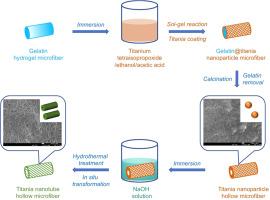
Hollow microfibers (HMFs) are extensively employed as cell-supporting matrices in the biomedical applications. In this study, titania nanoparticle (NP) HMFs and titania nanotube (NT) HMFs were synthesized and their microstructure, in vitro biocompatibility and drug delivery property were investigated. Titania NP HMFs were first synthesized using gelatin fibers as sacrificial templates via a sol-gel route and then in situ hydrothermally transformed to titania NT HMFs. The resulting HMFs were systematically characterized by FE-SEM, TEM, XRD, FT-IR, XPS, and N2 adsorption–desorption techniques. SEM observations show that titania NP HMFs had diameters of 50–200 µm and were constructed by numerous titania NPs with diameters of 50–100 nm, while titania NT HMFs had similar diameters and were constructed by numerous titania NTs with diameters of 10–20 nm. The formation of titania NTs made titania NT HMFs with a nanofibrous surface architecture. TEM observations show that each titania NT had a hollow structure. XRD patterns indicate that titania NT HMFs consisted of both rutile and anatase titania phases. Both types of HMFs showed good biocompatibility and supported adhesion and proliferation of osteoblast MC3T3-E1 cells on their surfaces. Compared to titania NP HMFs, titania NT HMFs enhanced cell adhesion and proliferation due to their nanofibrous surface architectures. Additionally, titania NT HMFs also showed higher drug loading efficiency for tetracycline hydrochloride (model drug) and maintained the biological efficiency of tetracycline hydrochloride against the growth of Escherichia coli. The present titania NT HMFs have the potential as drug-laden cell-supporting matrices.
期刊介绍:
The aim of the journal is to provide a respectful outlet for ''sound science'' papers in all research areas on surfaces and interfaces. We define sound science papers as papers that describe new and well-executed research, but that do not necessarily provide brand new insights or are merely a description of research results.
Surfaces and Interfaces publishes research papers in all fields of surface science which may not always find the right home on first submission to our Elsevier sister journals (Applied Surface, Surface and Coatings Technology, Thin Solid Films)




 京公网安备 11010802042870号
京ICP备2023020795号-1
京公网安备 11010802042870号
京ICP备2023020795号-1

 分享
分享
 求助内容:
求助内容: 应助结果提醒方式:
 扫码关注我们
