{"title":"政府投资、人力资本流动与城市创新:来自中国智慧城市建设的证据","authors":"Yiqi He , Zhihui Li , Xinyue Wang , Xi Chen","doi":"10.1016/j.irfa.2025.103916","DOIUrl":null,"url":null,"abstract":"<div><div>Government investment and Human capital flow significantly promote the improvement of urban innovation level. Government investment provides research and development funds and innovation resources for cities. Technological talents are an important support for national and regional innovation, and their mobility effect can accelerate the improvement of regional innovation development. The construction of smart cities attracts government investment and capital flow, thereby promoting urban innovation. Based on the panel data of 248 prefecture-level cities and quasi-natural experiments of smart city pilot projects from 2009 to 2021, this paper constructs a two-way fixed-effects model and uses the double-difference method to study the impact of smart city construction on the city's innovation level, focusing on the mediating effect of government investment and senior human capital flow in the process of smart city innovation stimulation, and further analyses the space of the mediating effect of talent agglomeration differences. The results of the study show that: (1) Smart city construction plays an important role in promoting urban innovation. (2) Smart city construction can promote urban innovation through human capital flow and government investment mechanism. (3) There is heterogeneity in the impact of smart city construction on the level of urban innovation. (4) In the eastern region, advanced human capital flow plays the most significant mediating effect in the process of smart city construction promoting urban innovation development.</div></div>","PeriodicalId":48226,"journal":{"name":"International Review of Financial Analysis","volume":"99 ","pages":"Article 103916"},"PeriodicalIF":9.8000,"publicationDate":"2025-03-01","publicationTypes":"Journal Article","fieldsOfStudy":null,"isOpenAccess":false,"openAccessPdf":"","citationCount":"0","resultStr":"{\"title\":\"Government investment, human capital flow, and urban innovation: Evidence from smart city construction in China\",\"authors\":\"Yiqi He , Zhihui Li , Xinyue Wang , Xi Chen\",\"doi\":\"10.1016/j.irfa.2025.103916\",\"DOIUrl\":null,\"url\":null,\"abstract\":\"<div><div>Government investment and Human capital flow significantly promote the improvement of urban innovation level. Government investment provides research and development funds and innovation resources for cities. Technological talents are an important support for national and regional innovation, and their mobility effect can accelerate the improvement of regional innovation development. The construction of smart cities attracts government investment and capital flow, thereby promoting urban innovation. Based on the panel data of 248 prefecture-level cities and quasi-natural experiments of smart city pilot projects from 2009 to 2021, this paper constructs a two-way fixed-effects model and uses the double-difference method to study the impact of smart city construction on the city's innovation level, focusing on the mediating effect of government investment and senior human capital flow in the process of smart city innovation stimulation, and further analyses the space of the mediating effect of talent agglomeration differences. The results of the study show that: (1) Smart city construction plays an important role in promoting urban innovation. (2) Smart city construction can promote urban innovation through human capital flow and government investment mechanism. (3) There is heterogeneity in the impact of smart city construction on the level of urban innovation. (4) In the eastern region, advanced human capital flow plays the most significant mediating effect in the process of smart city construction promoting urban innovation development.</div></div>\",\"PeriodicalId\":48226,\"journal\":{\"name\":\"International Review of Financial Analysis\",\"volume\":\"99 \",\"pages\":\"Article 103916\"},\"PeriodicalIF\":9.8000,\"publicationDate\":\"2025-03-01\",\"publicationTypes\":\"Journal Article\",\"fieldsOfStudy\":null,\"isOpenAccess\":false,\"openAccessPdf\":\"\",\"citationCount\":\"0\",\"resultStr\":null,\"platform\":\"Semanticscholar\",\"paperid\":null,\"PeriodicalName\":\"International Review of Financial Analysis\",\"FirstCategoryId\":\"96\",\"ListUrlMain\":\"https://www.sciencedirect.com/science/article/pii/S1057521925000031\",\"RegionNum\":1,\"RegionCategory\":\"经济学\",\"ArticlePicture\":[],\"TitleCN\":null,\"AbstractTextCN\":null,\"PMCID\":null,\"EPubDate\":\"2025/1/5 0:00:00\",\"PubModel\":\"Epub\",\"JCR\":\"Q1\",\"JCRName\":\"BUSINESS, FINANCE\",\"Score\":null,\"Total\":0}","platform":"Semanticscholar","paperid":null,"PeriodicalName":"International Review of Financial Analysis","FirstCategoryId":"96","ListUrlMain":"https://www.sciencedirect.com/science/article/pii/S1057521925000031","RegionNum":1,"RegionCategory":"经济学","ArticlePicture":[],"TitleCN":null,"AbstractTextCN":null,"PMCID":null,"EPubDate":"2025/1/5 0:00:00","PubModel":"Epub","JCR":"Q1","JCRName":"BUSINESS, FINANCE","Score":null,"Total":0}
Government investment, human capital flow, and urban innovation: Evidence from smart city construction in China
Government investment and Human capital flow significantly promote the improvement of urban innovation level. Government investment provides research and development funds and innovation resources for cities. Technological talents are an important support for national and regional innovation, and their mobility effect can accelerate the improvement of regional innovation development. The construction of smart cities attracts government investment and capital flow, thereby promoting urban innovation. Based on the panel data of 248 prefecture-level cities and quasi-natural experiments of smart city pilot projects from 2009 to 2021, this paper constructs a two-way fixed-effects model and uses the double-difference method to study the impact of smart city construction on the city's innovation level, focusing on the mediating effect of government investment and senior human capital flow in the process of smart city innovation stimulation, and further analyses the space of the mediating effect of talent agglomeration differences. The results of the study show that: (1) Smart city construction plays an important role in promoting urban innovation. (2) Smart city construction can promote urban innovation through human capital flow and government investment mechanism. (3) There is heterogeneity in the impact of smart city construction on the level of urban innovation. (4) In the eastern region, advanced human capital flow plays the most significant mediating effect in the process of smart city construction promoting urban innovation development.
期刊介绍:
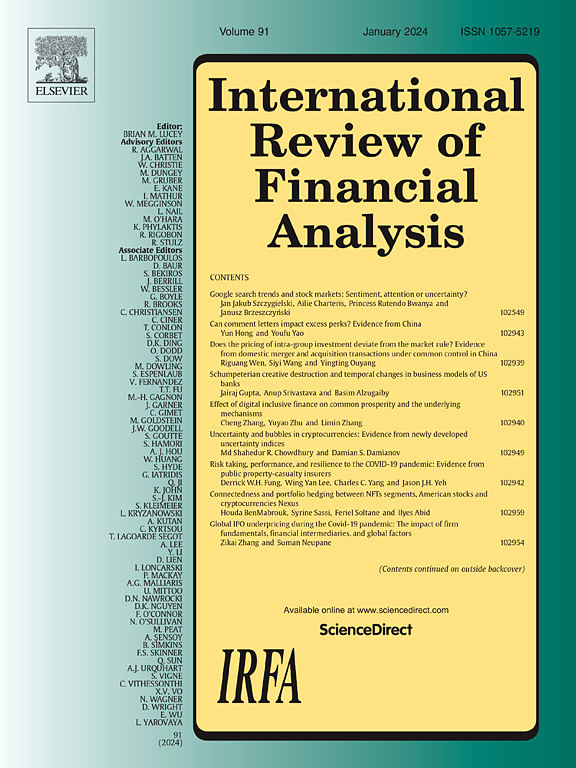
The International Review of Financial Analysis (IRFA) is an impartial refereed journal designed to serve as a platform for high-quality financial research. It welcomes a diverse range of financial research topics and maintains an unbiased selection process. While not limited to U.S.-centric subjects, IRFA, as its title suggests, is open to valuable research contributions from around the world.




 京公网安备 11010802042870号
京ICP备2023020795号-1
京公网安备 11010802042870号
京ICP备2023020795号-1

 分享
分享
 求助内容:
求助内容: 应助结果提醒方式:
 扫码关注我们
