Lin Li, Hongkai Jie, Rongcheng Mao, Yudong Li, Guidong Chen, Qiang Yang, Hao Lu
{"title":"快速旋流聚结过滤:可替代传统斜板气浮处理炼油厂污水","authors":"Lin Li, Hongkai Jie, Rongcheng Mao, Yudong Li, Guidong Chen, Qiang Yang, Hao Lu","doi":"10.1016/j.jwpe.2024.106920","DOIUrl":null,"url":null,"abstract":"<div><div>Efficient oil–solid removal from refinery sewage, especially highly concentrated electric desalting sewage, is key to ensuring the stability of subsequent biochemical treatment processes and meeting the sewage purification standards. The conventional inclined plate–air flotation process, which relies on chemical flocculation, is unable to meet the pretreatment requirements owing to the continuously increasing levels of petroleum pollutants and suspended substances (SSs) in refinery sewage. Herein, a physical oil–solid removal process, named fast swirl–coalescence filtration, is proposed and verified via pilot tests. This technology can reduce the average oil concentration of refinery and electric desalting sewage to 11.08 and 19.62 mg/L, with average oil removal efficiencies of 96.47 % and 99.89 %, respectively. Further, the average SSs concentration can be reduced to 16.47 and 70.90 mg/L, with average suspension removal efficiencies of 87.46 % and 91.09 %, respectively. Compared with the conventional treatment process, the proposed treatment process reduces the equipment footprint by 75 %, eliminates the use of chemical agents, and shows good adaptability to incoming sewage fluctuations, providing a new strategy for green and efficient treatment of refinery sewage.</div></div>","PeriodicalId":17528,"journal":{"name":"Journal of water process engineering","volume":"70 ","pages":"Article 106920"},"PeriodicalIF":6.7000,"publicationDate":"2025-02-01","publicationTypes":"Journal Article","fieldsOfStudy":null,"isOpenAccess":false,"openAccessPdf":"","citationCount":"0","resultStr":"{\"title\":\"Fast swirl–coalescence filtration: Alternative to conventional inclined plate–air flotation for refinery sewage treatment\",\"authors\":\"Lin Li, Hongkai Jie, Rongcheng Mao, Yudong Li, Guidong Chen, Qiang Yang, Hao Lu\",\"doi\":\"10.1016/j.jwpe.2024.106920\",\"DOIUrl\":null,\"url\":null,\"abstract\":\"<div><div>Efficient oil–solid removal from refinery sewage, especially highly concentrated electric desalting sewage, is key to ensuring the stability of subsequent biochemical treatment processes and meeting the sewage purification standards. The conventional inclined plate–air flotation process, which relies on chemical flocculation, is unable to meet the pretreatment requirements owing to the continuously increasing levels of petroleum pollutants and suspended substances (SSs) in refinery sewage. Herein, a physical oil–solid removal process, named fast swirl–coalescence filtration, is proposed and verified via pilot tests. This technology can reduce the average oil concentration of refinery and electric desalting sewage to 11.08 and 19.62 mg/L, with average oil removal efficiencies of 96.47 % and 99.89 %, respectively. Further, the average SSs concentration can be reduced to 16.47 and 70.90 mg/L, with average suspension removal efficiencies of 87.46 % and 91.09 %, respectively. Compared with the conventional treatment process, the proposed treatment process reduces the equipment footprint by 75 %, eliminates the use of chemical agents, and shows good adaptability to incoming sewage fluctuations, providing a new strategy for green and efficient treatment of refinery sewage.</div></div>\",\"PeriodicalId\":17528,\"journal\":{\"name\":\"Journal of water process engineering\",\"volume\":\"70 \",\"pages\":\"Article 106920\"},\"PeriodicalIF\":6.7000,\"publicationDate\":\"2025-02-01\",\"publicationTypes\":\"Journal Article\",\"fieldsOfStudy\":null,\"isOpenAccess\":false,\"openAccessPdf\":\"\",\"citationCount\":\"0\",\"resultStr\":null,\"platform\":\"Semanticscholar\",\"paperid\":null,\"PeriodicalName\":\"Journal of water process engineering\",\"FirstCategoryId\":\"5\",\"ListUrlMain\":\"https://www.sciencedirect.com/science/article/pii/S2214714424021536\",\"RegionNum\":2,\"RegionCategory\":\"工程技术\",\"ArticlePicture\":[],\"TitleCN\":null,\"AbstractTextCN\":null,\"PMCID\":null,\"EPubDate\":\"2025/1/5 0:00:00\",\"PubModel\":\"Epub\",\"JCR\":\"Q1\",\"JCRName\":\"ENGINEERING, CHEMICAL\",\"Score\":null,\"Total\":0}","platform":"Semanticscholar","paperid":null,"PeriodicalName":"Journal of water process engineering","FirstCategoryId":"5","ListUrlMain":"https://www.sciencedirect.com/science/article/pii/S2214714424021536","RegionNum":2,"RegionCategory":"工程技术","ArticlePicture":[],"TitleCN":null,"AbstractTextCN":null,"PMCID":null,"EPubDate":"2025/1/5 0:00:00","PubModel":"Epub","JCR":"Q1","JCRName":"ENGINEERING, CHEMICAL","Score":null,"Total":0}
Fast swirl–coalescence filtration: Alternative to conventional inclined plate–air flotation for refinery sewage treatment
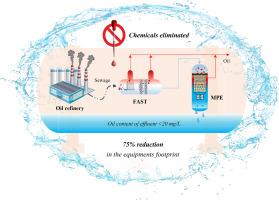
Efficient oil–solid removal from refinery sewage, especially highly concentrated electric desalting sewage, is key to ensuring the stability of subsequent biochemical treatment processes and meeting the sewage purification standards. The conventional inclined plate–air flotation process, which relies on chemical flocculation, is unable to meet the pretreatment requirements owing to the continuously increasing levels of petroleum pollutants and suspended substances (SSs) in refinery sewage. Herein, a physical oil–solid removal process, named fast swirl–coalescence filtration, is proposed and verified via pilot tests. This technology can reduce the average oil concentration of refinery and electric desalting sewage to 11.08 and 19.62 mg/L, with average oil removal efficiencies of 96.47 % and 99.89 %, respectively. Further, the average SSs concentration can be reduced to 16.47 and 70.90 mg/L, with average suspension removal efficiencies of 87.46 % and 91.09 %, respectively. Compared with the conventional treatment process, the proposed treatment process reduces the equipment footprint by 75 %, eliminates the use of chemical agents, and shows good adaptability to incoming sewage fluctuations, providing a new strategy for green and efficient treatment of refinery sewage.
期刊介绍:
The Journal of Water Process Engineering aims to publish refereed, high-quality research papers with significant novelty and impact in all areas of the engineering of water and wastewater processing . Papers on advanced and novel treatment processes and technologies are particularly welcome. The Journal considers papers in areas such as nanotechnology and biotechnology applications in water, novel oxidation and separation processes, membrane processes (except those for desalination) , catalytic processes for the removal of water contaminants, sustainable processes, water reuse and recycling, water use and wastewater minimization, integrated/hybrid technology, process modeling of water treatment and novel treatment processes. Submissions on the subject of adsorbents, including standard measurements of adsorption kinetics and equilibrium will only be considered if there is a genuine case for novelty and contribution, for example highly novel, sustainable adsorbents and their use: papers on activated carbon-type materials derived from natural matter, or surfactant-modified clays and related minerals, would not fulfil this criterion. The Journal particularly welcomes contributions involving environmentally, economically and socially sustainable technology for water treatment, including those which are energy-efficient, with minimal or no chemical consumption, and capable of water recycling and reuse that minimizes the direct disposal of wastewater to the aquatic environment. Papers that describe novel ideas for solving issues related to water quality and availability are also welcome, as are those that show the transfer of techniques from other disciplines. The Journal will consider papers dealing with processes for various water matrices including drinking water (except desalination), domestic, urban and industrial wastewaters, in addition to their residues. It is expected that the journal will be of particular relevance to chemical and process engineers working in the field. The Journal welcomes Full Text papers, Short Communications, State-of-the-Art Reviews and Letters to Editors and Case Studies




 京公网安备 11010802042870号
京ICP备2023020795号-1
京公网安备 11010802042870号
京ICP备2023020795号-1

 分享
分享
 求助内容:
求助内容: 应助结果提醒方式:
 扫码关注我们
